Showing posts with label middle east. Show all posts

Aga Khan

Aga Khan I
Aga Khan I

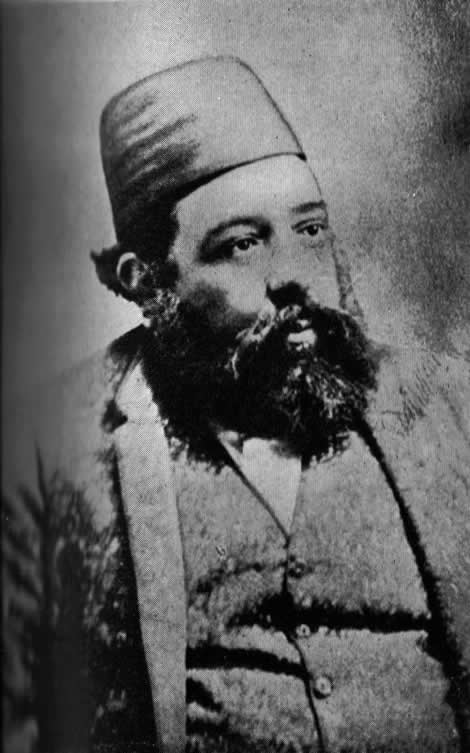
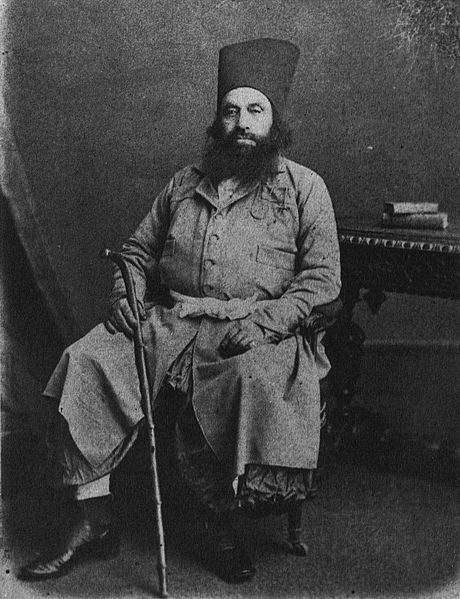
Aga Khan, the title ascribed to the imam of the Nizari Ismaili community, was first bestowed on Aga Hasan Shah by Fateh Ali, the Shah of Persia, in 1818. The Ismaili branch of Islam is the second-largest Shi'i community after the Twelvers. The Ismailis and Twelvers both accept the same initial imams from the descendants of the prophet Muhammad.

However, a dispute arose on the succession of the sixth imam, Jafar as-Sadiq. Although the Ismailis accepted the legitimacy of Jafar Sadiq's eldest son, Ismael, as the next rightful imam, the Twelvers accepted his younger son, Musa al-Kazim.

The first Aga Khan was appointed as the governor of the province of Kirman. He also aided the British during the first Anglo-Afghan War (1839–42) and in the conquest of Sind in India (1842–43). Ali Shah, who was also known as Aga Khan II, died in 1885.


Upon the death of Aga Khan II, his son, Sultan Muhammad (1877–1957), assumed the title of Aga Khan III. He played an active role in supporting the continuance of British colonial rule over the Indian subcontinent. Aga Khan III was also the founder of the All-India Muslim League, the lead political party that later demanded a separate homeland for Muslims be carved out of India.

He was also the president of the Muslim League from 1909 to 1914. In the preindependence years of India, Aga Khan III made a number of high-profile visits abroad, including the imperial conference in London in 1930–31, the Geneva Disarmament Conference in 1932, and the League of Nations in 1932 and in 1934–37. In 1937, he was appointed the president of the General Assembly of the League of Nations for his pioneering leadership role.

Aga Khan II
Aga Khan II

In 1937, Aga Khan III was succeeded by his grandson, Prince Karim, who assumed the title of Aga Khan IV. He was very committed to the promotion of Islamic architecture and instituted a series of awards for architectural excellence and artistic innovation in architecture. Aga Khan IV also donated very generously to various developmental projects in a number of countries with a sizable Ismaili population.

Prince Sadruddin Aga Khan is the grandson of Aga Khan IV. He has an impressive educational record with degrees from Harvard University at the Centre of Middle Eastern Studies in 1957. Sadruddin Aga Khan worked strenuously for the ideals and programs of UNESCO, particularly for the promotion of cultural heritage sites worldwide as well as for the UN High Commission for Refugees.

Aga Khan IV
Aga Khan IV

In 1965, he was appointed the UN High Commissioner for Refugees and continued in this prestigious position until 1977. He is the founder of the Bellerive Foundation, which is an international corporate group that funds programs for the alpine environment. In 1978, the prince was made a special adviser and chargé de mission to the secretary general of the United Nations to promote the cause of universal human rights.

Qasim Amin

Qasim Amin
Qasim Amin

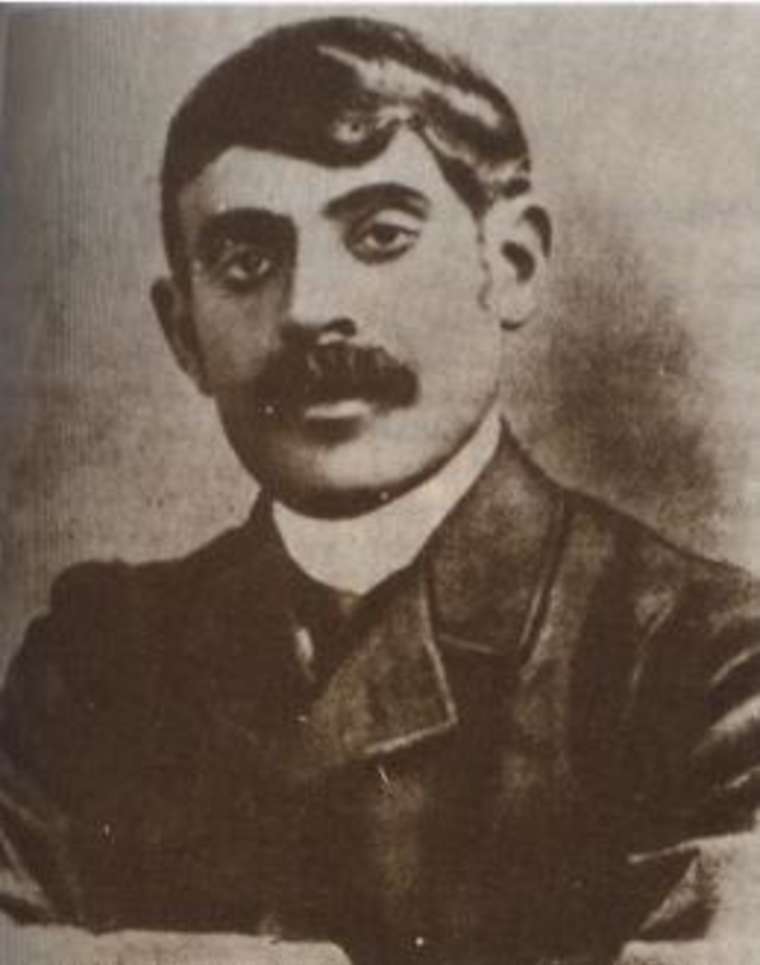
Qasim Amin was a noted Egyptian intellectual and advocate of reform in the later 19th and early 20th centuries. His father was a Turkish Ottoman official and landowner married to an Egyptian woman. Amin was educated in Cairo and at the School of Law and Administration.

He was a follower of the earlier reformer Muhammad Abduh, who sought to resolve the conflict of Islamic practices and tradition with the adoption of Western scientific thought and development.

As a highly respected lawyer, Amin was sent on a government educational mission to France, where he spent several years in the 1880s. Amin wrote a number of works on social issues, and in Les Egyptiens he focused on the national rights of Egyptians. He was best known for his works on the status of women.


He addressed the issues of polygamy, marriage laws, education for women, seclusion, and veiling in The Liberation of Women, published in 1899. Amin argued that sharia (Islamic law) and Islamic custom did not mandate either the seclusion of women in the home or veiling. Both were commonly practiced among upper and middle classes of the era.

Poor peasant families could not afford the luxury of secluding or veiling women who commonly worked alongside men in the fields. Amin emphasized that sharia granted legal rights to women and that the corruption or decline of morals by outside forces had been responsible for the decline of Islamic societies.

He stressed the importance of women in building modern nations and in national struggles and advocated improved education for women. According to Amin, education for women should not be limited to matters of household management but should include subjects that would enable them to participate in life outside the home.


Although by contemporary standards Amin's advocacy of gradual reform was not revolutionary, his book on the status of women aroused massive public debate about the role of women and Islam. Amin was severely criticized by conservative religious leaders and the palace.

Amin repudiated his critics in a second more radical—for the age—book, The New Woman, in 1900. In this second book he dropped a discussion of Islamic law and tradition to justify reforms and instead applied Western thought to augment his arguments. Amin stated that with education and reforms in status, women would ultimately have almost the same rights and status as men.

Amin supported the Egyptian nationalist movement, in which both men and women were full participants, in his memoirs, Kalimat. He also stressed the need for scientific knowledge in order for nations to advance. An early Egyptian nationalist, Amin was friendly with Sa'd Zaghlul and Tal'at Harb, both of whom became leaders of the Egyptian nationalist movement.

Arab-Israeli War (1948)

Israel army
Israel army

After World War II Great Britain was no longer able economically, politically, or militarily to control Palestine. The Labour government was elected to power in 1945, and the new foreign minister, Ernest Bevin, attempted to placate mounting Arab opposition to a Jewish state by enforcing limitations on Jewish immigration into Palestine.

Even during World War II some Revisionist Zionist groups had begun attacking British officials and forces in attempts to force the British to vacate Palestine. The Irgun, led by Menachem Begin, and LEHI (Stern Gang) both attempted to kill Sir Harold MacMichael, the British high commissioner in Palestine, and in 1944 LEHI killed Lord Moyne, the British minister of state for the Middle East.

In 1946 the Irgun bombed the King David Hotel, the British headquarters in Jerusalem, killing over 90 people. The British branded the Irgun a terrorist organization and arrested many of its members. The Irgun retaliated by kidnapping British soldiers; British arms depots were also raided.


Although the United States was reluctant to ease its own immigration quotas, it pressured Britain to allow increased Jewish immigration into Palestine. In the aftermath of the Holocaust, the forced return or imprisonment on Cyprus of illegal Jewish immigrants fleeing Europe was an untenable moral and political position.

From the Zionist perspective there was no such thing as an "illegal" Jewish immigrant into Palestine, and numerous means of circumventing or evading British border controls were devised to allow the landing of new Jewish immigrants.

Some Zionists, including Chaim Weizmann, recognized the potential problem posed by the displacement of Palestinians, but he argued that the Jewish need was greater. David Ben-Gurion and others in Palestine continued to claim all of Palestine for the Jewish state.

Palestinian irregulars near a burnt armored Haganah supply truck, the road to Jerusalem, 1948
Palestinian irregulars near a burnt armored Haganah supply truck,
the road to Jerusalem, 1948

Following the war, the United States issued several public statements favoring the creation of a Jewish state. In the face of its domestic weakness and reliance on U.S. economic assistance, the British government in 1947 announced that it was turning over the entire problem of Palestine to the newly formed United Nations.

The UN then created the UN Special Committee on Palestine (UNSCOP), composed of 11 member states, to investigate the situation and to make recommendations as to what should be done regarding the mounting conflict between Zionist demands for a Jewish state and Palestinian demands for an independent Arab state in Palestine.

In 1947 UNSCOP traveled to Palestine, where it was well received by the Zionists and boycotted by the Arab Higher Command of Palestine under the mufti Hajj Amin al-Husseini, an implacable opponent of a Jewish state.

Proposed separation of Palestine by UN

From the Palestinian point of view, any Jewish state would result in a loss of territory that was considered part of the Palestinian national homeland. However, by boycotting the negotiations, the Palestinians lost an opportunity to present their side to the general Western public and politicians.

UNSCOP submitted a minority and majority report; the minority recommended a binational state, and the majority recommended partition. The proposed partition plan allotted approximately 50 percent of the land for the Jewish state and 50 percent for an Arab state, with Jerusalem and a large area around the city to be under international control.

The projected Jewish state included most of the north and coastal areas with the better agricultural land and sea access as well as the Negev desert in the south. Jaffa, totally surrounded by the proposed Jewish state, was to be an Arab port.


Although the plan did not include all the territory the Zionists had claimed, Ben-Gurion and the majority Labor Party reluctantly accepted the UN partition scheme and launched an all-out effort to make an independent Jewish state a reality and to obtain recognition from the international community.

At the time there were 1.26 million Palestinian Arabs, or two-thirds of the total population, and 608,000 Jews, or one-third of the population, in Palestine, and Arabs still owned over 80 percent of the total land within Palestine.

Consequently, the Palestinians and other Arab states rejected the plan. At the pan-Arab conference in Bludan, Syria, in 1937, the Arabs had already unanimously rejected any partition of Palestine, so the rejection in 1947 came as no surprise to either side.

The United States lobbied several nations that were poised to abstain or vote against partition: Members of the UN narrowly voted in favor of the partition plan in November 1947.

Violence immediately broke out in Palestine and elsewhere in the Arab world, and in waves of anti-Semitism Jewish quarters and businesses in Cairo, Baghdad, and elsewhere were attacked. The mufti called for a three-day strike in Palestine, during which violence between the two communities escalated.

The British withdrew from Palestine in May 1948, and war immediately broke out. By the time of the British withdrawal the Haganah effectively controlled the area allotted to the Jewish state by the partition plan.

On May 14, 1948, Ben-Gurion proclaimed the establishment of the independent state of Israel amid widespread rejoicing among Jewish communities. Ben-Gurion became the first Israeli prime minister in a coalition government dominated by the Labor Party, and the Haganah became the Israeli Defense Force (IDF).

The new state was immediately recognized by both the United States and the Soviet Union; however, the celebrations were tempered by the certainty of impending war with the surrounding Arab states and the Palestinians.

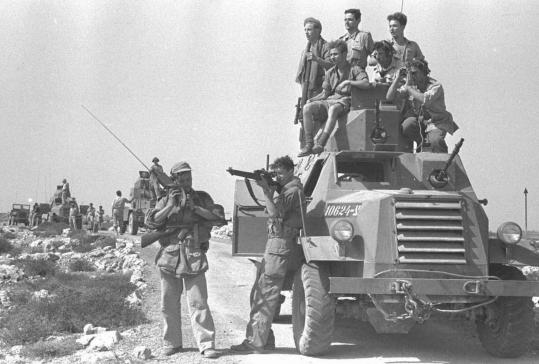
Israeli forces were well organized and trained with a unified chain of command and a plan for securing all the territory allotted to the new state. With the IDF, the Palmach, or shock troops, the police, and the Irgun and Stern Gang Israeli forces numbered about 60,000 in addition to 40,000 reservists. The Irgun and Stern Gang were not incorporated in the IDF but on some occasions coordinated efforts with it.

Arabs forces also numbered about 40,000 and included the Arab Liberation Army, volunteer forces led by Fawzi al-Kawakji, and the Jordanian Arab Legion, commanded by a British officer, Glubb Pasha. The legion was the best trained of the Arab forces.

Abd al-Kader al-Husseini commanded Palestinians in Jerusalem; Iraqi and Syrian soldiers also fought in the war. The Arab League supported the Palestinian cause but refused to provide money to the mufti or to recognize the establishment of a Palestinian state in exile.

The Palestinian population remained demoralized from their earlier defeat by the British in the Arab Revolt of 1936–39 and had no real unified political or military leadership. Arab armies also suffered from inferior armaments and corrupt leadership, and they had not coordinated their efforts or devised an effective plan for military victory.

Palestinian Refugees

By the time the war broke out massive numbers of Palestinians had already become refugees in neighboring Arab countries. Some upperand middle-class Palestinians had left for jobs and businesses in other Arab countries during the mandate period, and the peasantry, by far the majority of the Palestinian population, was frightened by the mounting violence and impending war.

The causes for the mass exodus remain highly controversial, with both sides blaming the other for the refugee problem. Some Palestinians undoubtedly left what was soon to become a war zone in the belief that they would return home after the war was over and the Arabs had been victorious. Attacks by Israeli forces, especially the Irgun, also terrorized the peasants and incited many to flee.

In the spring of 1948 the Irgun and LEHI attacked Deir Yasin, a peaceful village near Jerusalem, killing over 200 Palestinian civilians. The massacre at Deir Yasin spread terror among Palestinian peasants, who feared the same fate might befall their villages.

Palestinians left Haifa and the northern area of Tiberias; those from northern Palestine fled into Syria and Lebanon, those in the central area went to the West Bank and across the Jordan River into Jordan, and those in the south crowded into the Gaza Strip along the Mediterranean Sea. By the end of April over 150,000 Palestinians had left, and by May the numbers reached 300,000.

The 1948 war is known as the war of independence in Israel and called al-Nakba, or disaster, by the Palestinians. Military engagements in the war fell into three parts. In the first part, lasting from May to June, Egyptian forces crossed into the Negev in the south on May 15, and the Iraqis subsequently marched through Jordan into Palestine and Israel and at one juncture were within 10 miles of the Mediterranean.

According to an earlier secret agreement between the Zionists and King Abdullah of Jordan, Jordanian troops would not move into areas allotted to the Jewish state, in return for which Abdullah was to secure the West Bank.

The agreement held during the war, but since there had been no agreement regarding Jerusalem, Jordanian and Israeli forces fought over the city, and the Jews were forced to surrender the Jewish quarter in the old part of the walled city. The Syrians were halted in the north, and there was no Lebanese resistance.

The UN sent Count Folke Bernadotte of Sweden, a leading figure in the International Red Cross, to mediate; Bernadotte secured a truce in mid-June that lasted for four weeks, during which time the Israelis secured arms from Czechoslovakia and elsewhere.

Great Britain suspended the supply of arms to Iraq, Transjordan, and Egypt. The truce ended in July, followed by 10 days of fierce fighting during which time the Israeli victory became apparent. Israeli forces took all of northern Palestine and restored communication between Jerusalem and Tel Aviv.

A second truce was negotiated in July, when al-Kawakji's forces had been decisively defeated and Israel held all Galilee; however, the eastern part of Jerusalem, including the Old City, remained under Jordanian control. In the negotiations Bernadotte had angered both sides, and there was fear among Israelis that his final report due in September would be favorable to the Arabs.

His report supported the partition plan but with the right of Palestinian repatriation; he also recommended that the Negev go to the Arabs, that Galilee be Jewish, the creation of a UN boundary patrol, and that Haifa be a free port. Jerusalem was to remain under UN auspices. The Stern Gang assassinated Bernadotte in September, and the report was never implemented. The U.S. diplomat Ralph Bunche was appointed the new mediator.

In October the Israelis attacked the Egyptian forces in the Negev. A small group of Egyptian soldiers including a young officer, Gamal Abdul Nasser, held out for several months at Falluja but, lacking reinforcements or relief from Egypt, were ultimately forced to surrender.

Nasser blamed the corrupt regime of King Faruk for the loss and would lead a successful revolution against the monarchy in 1952. In December Israel moved further into the Negev and northern Sinai but reluctantly withdrew from the Gaza Strip, which was administered by the Egyptian military.

The 1948 war resulted in the partition of Jerusalem, with west Jerusalem held by Israel and east Jerusalem by Jordan. Through military victories Israel had increased its territory by about one-third more than the original partition plan had called for.

As far as Israel was concerned, the gains were nonnegotiable, and the land was immediately incorporated into the new state. The mufti attempted to establish a Palestinian state based in Gaza, but he was thwarted by King Abdullah.

Israel map by the end of the war

In December Abdullah announced the unification of the West Bank and east Jerusalem with Jordan; Abdullah's claim as sovereign of Palestine was supported by handpicked notables, and the Palestinians remained without a state of their own.

Peace negotiations were held at Rhodes in early 1949. Because the Arabs refused to recognize Israel, Bunche had to shuttle back and forth between the Arab and Israeli delegations, and the negotiations became known as the Proximity Talks.

An armistice was reached with Egypt in February 1949, Lebanon in March, Jordan in April with clauses for the withdrawal of Iraqi forces from Jordanian territory, and Syria in July. No formal armistice was ever reached with Iraq.

Arab refugees in northern Israel on the road to Lebanon, November 1948

Setting the Stage

The losses in the 1948 war left the Arabs humiliated and unforgiving and set the stage for future political upheavals through much of the region. Attempts by the UN to secure a full peace failed; although fullscale fighting ceased, technically the Arabs and Israel remained at war.

Nor was the Palestinian refugee issue resolved. Fearing the creation of a possible fifth column within its new borders and a possible Arab majority in the new Jewish state, Israel refused to permit the return of most of the refugees and blamed the Arab governments for having created the problem in the first place. The Arabs blamed Israel. The Palestinians were determined to return to their homes in the future and refused resettlement elsewhere.

Arab states were also ill equipped to deal with the influx of refugees; some Arab regimes also used the refugees as pawns in their own struggles with Israel. Only Syria volunteered to discuss granting citizenship to the refugees. Ben-Gurion refused to negotiate unless his preconceived terms were met, and the offer was dropped.

By 1949 there were about 800,000 Palestinian refugees, and the United Nations established an agency that became UNRWA (UN Relief and Works Administration) to provide minimal assistance of about 16 cents per day for them. As the conflict continued and as successive generations were born in the camps, the number of refugees grew. The issues of repatriation, reparations, or compensation for land and businesses lost remained unresolved into the 21st century.

The new Israeli government set about incorporating its territorial gains and assimilated over half a million new Jewish immigrants, many of whom came from Arab states, especially Iraq and Yemen. No peace settlement was reached between the Arabs and Israel, and the conflict continued to fester until full-scale war broke out again in 1956.
Arab Nationalism

Arab Nationalism
Arab Nationalism

Arab nationalism emerged in the 19th century as the ruling Ottoman Empire continued its long decline. Arabs, who constituted the single largest ethnic group in the empire, were particularly resistant to the program adopted by the ruling Committee of Union and Progress stressing Turkish history, language, and ethnicity after 1908.

Arabs were particularly opposed to the teaching of the Turkish language as the first language in schools. Both Arab and Turkish nationalists such as the Young Turks grappled with the questions of what to do about the Ottoman Empire and whether separation along nationalist lines or decentralization was preferable.

Prior to World War I, when many still hoped that the Ottoman Empire might be reformed, a number of Arab intellectuals and activists formed clubs and published essays dealing with the problems of the empire and offering possible solutions to its problems.


In 1905 Negib Azoury (d. 1916), a French-educated Syrian Christian, published Le Reveil de la Nation Arabe. Azoury separated religion from government and openly demanded Arab independence from the Ottomans. He envisioned one Arab nation with the full equality of Muslims and Christians; however, Azoury did not include Egypt or North Africa in the projected Arab state. Amin al-Rihani and others emphasized Arabism over either Christianity or Islam.

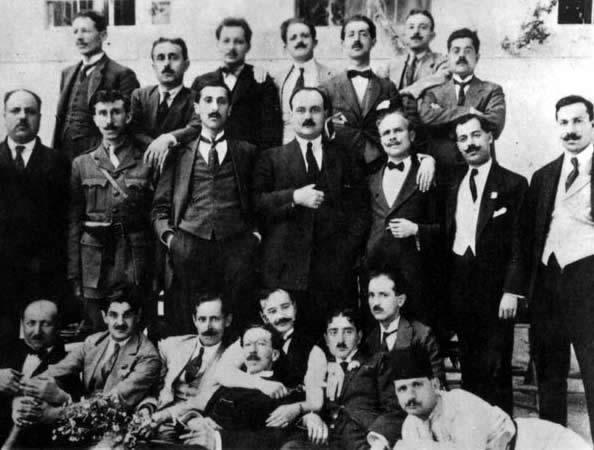
A number of small nationalist clubs and political organizations were also established. Al-Qahtaniyya, formed in 1909, was made up of Arab officers in the Ottoman army who discussed the issues of ethnic and national identity. Many of the same officers joined Al-Ahd (the Pact), led by the Egyptian major Aziz Ali al-Misri. Misri was anti-Turkish and aimed for full Arab independence.

In 1911 Al-Fatat (the Youth) had several hundred Christian and Muslim members who called for the decentralization of the empire under some sort of dual monarchy along the lines of the Austro-Hungarian Empire. An Arab congress met in Paris in 1913 and recommended the decentralization of the Ottoman government and that Arabic be the official language in Arab provinces. All of these groups aimed for the creation of a secular, democratic state.

Al-Fatat members
Al-Fatat members

When the Ottomans joined the Central Powers in World War I and declared jihad, or holy war, in the fight against the Allies, most Arab Muslims rejected the call, arguing that both sides of the European conflict were predominantly Christian and that it made no sense to fight on religious grounds.

Sherif Husayn of the Hashemite family used the war as an opportunity to gain what he believed to be British support for an independent Arab state after the war in the Sherif Husayn–McMahon correspondence. Sherif Husayn's son Faysal met with Arab nationalists in Syria to secure their backing for his father's efforts.

Misri and other Arab nationalists supported the Hashemites and in the Damascus Protocol of July 1915 agreed to Anglo-Arab cooperation in the war. Consequently, the Arabs raised the standard of revolt in June 1916 and fought with the British against the Ottomans and Germany for the duration of the war.


Misri and another Arab Ottoman officer of Iraqi origin, Jafar Pasha Al-Askari, were among the most notable soldiers to join the fight against the Ottomans. In 1916 Ottoman Turkish soldiers commanded by Ahmed Jemal Pasha publicly hanged several known Arab nationalists in downtown Beirut.

However, during the war the British made two other conflicting agreements, the Sykes-Picot Agreement and the Balfour Declaration, regarding the future of the Arab world. After the war the Arabs did not receive national independence. The Arab provinces of the old Ottoman Empire, including presentday Iraq, Syria, Lebanon, Jordan, Palestine, and Israel—none of which existed as independent states at the time—were divided up between the British and the French.

Egypt, the Sudan, and North Africa also remained under French, British, or Italian control. When the Arabs failed to achieve self-determination, one Arab nationalist reputedly remarked, "Independence is never given, it is always taken."

In Syria representatives had gathered at the General Syrian Congress in 1919, and in the spring of 1920 they declared Syria's independence governed as a constitutional monarchy under Emir Faysal.

To enforce their mandate over Lebanon and Syria, French forces attacked the fledgling Syrian army, defeating it at Maysalun Pass, near Damascus. Faysal was forced into exile but was subsequently made king of Iraq by the British.

During the interwar years Arab nationalist parties from Morocco to Iraq adopted a wide variety of tactics including economic boycotts, strikes, demonstrations, and negotiations in the struggles against imperial control.

When all of these failed some turned to more violent methods, joining armed paramilitary groups. There were also periodic and often spontaneous revolts and insurrections against the European occupiers from Egypt, to Iraq, to Syria. The Syrian revolt in 1925 was a major grassroots uprising against the French occupation.

The revolt failed, and the French retained control of the Syrian mandate. Although the British granted facades of independence to Iraq, Transjordan (later Jordan), and Egypt, most of the other Arab territory remained under direct or indirect Western control until after World War II.

Sati al Husri, a Syrian, was one of the foremost theoreticians of pan-Arabism. An Ottoman official prior to World War I, Husri supported Sherif Husayn and his son Faysal in the Arab revolt against the Ottoman Turks. In the 1940s Husri was responsible for the Iraqi educational curriculum that emphasized Arab history and culture.

A prolific writer, Husri argued that the Arabs were a single people, including Egyptians and Maghrabis (North Africans), and that their common identity was based on a common language and history. His books included In Defence of Arabism.

Husri and other Arab writers recognized the importance of Islam for Christian as well as for Muslim Arabs in their history and culture but foresaw the creation of one unified secular democratic Arab state. After World War II Husri became director general of cultural affairs of the League of Arab States, where he continued to champion pan-Arabism.

With the encouragement of the British, the first Arab conference was held in Alexandria, Cairo, in 1944; it resulted in the formation of the League of Arab States, ratified in 1945. The league was headquartered in Cairo, and Egypt often dominated the organization. Member states were usually represented by their foreign ministers at meetings.

Abd al-Rahman Azzam, an Egyptian who had fought in the nationalist Libyan war from 1911 to 1912, became the first secretary-general of the league and remained in that position until 1952. Azzam was a tireless champion of the league and of a pan-Arabism that would be all inclusive. As Arab states became independent in the postwar era, all joined the league.

The league supported the Palestinian cause and, as part of the struggle against Israel after the Arab losses in the 1948 war, implemented an Arab boycott of Israeli goods. The boycott was administered from Damascus, but individual Arab governments enforced it in a haphazard fashion; it had minimal impact.

In 1950 league members signed a Joint Defence and Economic Cooperation Treaty as a cooperative effort to protect members against Israel. Pan-Arabism reached its apogee during the Nasserist era in the 1950s and 1960s, when there were numerous efforts to unify the separate Arab states.

Balfour Declaration

Balfour Declaration effect

The Balfour Declaration was a statement by the British government regarding Zionist aspirations for the creation of an independent Jewish state in Palestine. The statement took the form of a public letter from Lord Arthur James Balfour, the British foreign secretary, to Lord Rothschild, a prominent British Zionist and member of the renowned banking family.

After many preliminary drafts the final statement, issued on November 2, 1917, read that His Majesty's government viewed "with favour the establishment in Palestine of a national home for the Jewish people."

It went on to say that the British government would use its "best endeavours" to achieve that goal and that nothing should be done to prejudice "the civil and religious rights of existing non-Jewish communities in Palestine, or the rights and political status enjoyed by Jews" in other nations.


Chaim Weizmann, a leading figure in the World Zionist Organization and a skillful diplomat, had been instrumental in securing British support for a Jewish state. Weizmann was a personal friend of Balfour's and had met with many key British officials to gain their sympathy for a Jewish state.

There were many motivations for the British to issue the Balfour Declaration in 1917. Some Christian Zionists supported a Jewish state for religious and moral reasons. But most government officials supported the declaration for political and wartime reasons.

It was hoped that the declaration would encourage Russia to stay in the war in spite of the revolutionary upheaval at the time. Some also thought the statement would prod the United States, where some key Zionists, especially Louis Brandeis of the Supreme Court, had important positions, to enter the war.

However, the arguments that a Jewish state would support Britain in the Middle East and help to protect the vital Suez Canal were probably paramount in convincing many in the British cabinet to support the declaration.

Because most people in the West knew little or nothing about Palestine, many assumed that there were only a few non-Jews in Palestine and that their civil and religious (but not political) rights should be protected.

However, in 1917, when the Balfour Declaration was issued, Palestinian Arabs, a mix of Muslims and Christians, made up over 80 percent of the population in Palestine. It was a predominantly agricultural society, and most people lived in settled villages. Palestinian Arabs and Arab nationalists, especially Sherif Husayn, immediately expressed their opposition to the Balfour Declaration.

Sherif Husayn also argued that the statement contradicted the earlier Sherif Husayn– McMahon correspondence regarding the creation of an Arab state. But the Balfour Declaration did not mention the Palestinian Arab population by name, and they remained largely invisible to the Western world.

Interestingly, some Jews also opposed the statement. Sir Edwin Montagu, a British Jew and secretary of state for India, opposed the creation of a Jewish state on the grounds that it would raise problems of dual nationality and might actually increase anti-Semitism.

The Balfour Declaration was a major step forward in the Zionist struggle to create a Jewish state in Palestine. At the Paris Peace Conference after the war, Weizmann used the Balfour Declaration to justify the creation of a Jewish state.

However, neither Arab nor Jewish national aspirations would be realized after the war because the British and French implemented the Sykes-Picot Agreement, which essentially divided the Arab world between the two imperial powers. The division was formalized in the San Remo Treaty, and Britain made key decisions on how to rule its newly gained Arab territories, including Palestine, at the Cairo Conference in 1921.