Négritude

Négritude
Négritude

Négritude was a literary and then a political movement that developed from the 1930s by a number of intellectuals from French African backgrounds, the most wellknown proponents being Aimé Césaire from Martinique, Leopold Sédar Senghor from Senegal, and Léon Damas from French Guiana. They saw the common African heritage as a uniting force against the French colonial system and the inherent racism in French rule.

The original ideas of négritude drew from the Harlem Renaissance and were influenced by the works of African Americans such as Richard Wright, Langston Hughes, and James Weldon Johnson. These ideas were distilled by Aimé Césaire in the third issue of the journal L'Étudiant Noir, the word négritude being used for the first time.

The magazine was established in Paris by Césaire and two other students, Leopold Senghor and Léon Damas, and became a focus for the concept of a united heritage of the black diaspora in the French colonies; a similar movement, negrismo, was used to describe the same ideas in former Spanish colonies.


After World War II, the concept of négritude became a powerful force, with Césaire being elected as mayor of Fort de France, the capital of Martinique, and then to the French chamber of deputies.

In 1948 Jean-Paul Sartre endorsed the ideas of négritude in an essay called Orphée Noir (Black Orpheus), which was published as an introduction to an anthology of African poetry compiled by Léopold Senghor, who was urging for independence for Senegal. He became its first president, remaining in office from 1960 until 1980. In 1958 the French film Orfeu Negro (Black Orpheus) was released, set around the Rio de Janeiro carnival.

Sartre idealized négritude as a more powerful force than that of French colonial racism, but the négritude concept became criticized in the 1960s with some subsequent African scholars and political thinkers feeling that it never went far enough, as it defined the French African diaspora more by what it was against than standing by its own values. Nevertheless, it remained an important development in political thinking in the period of decolonization.

Mongolian People’s Republic

Flag of Mongolian People’s Republic

During the Q'ing (Ching) dynasty in China (1644–1911) Mongolia had been a part of the Chinese Empire under a theocratic government, with the ruler, the Jebtzun Damba (Living Buddha), acknowledged as the Bogd Khan (Holy King). During the Chinese revolution of 1911, the status of Mongolia was briefly in doubt until in May 1915 the Treaty of Kyakhta, signed by Chinese, Russian, and Mongolian officials, granted Mongolia limited autonomy.

During the Russian Revolution in October 1917 and the subsequent Russian Civil War, Xu Shucheng (Hsü Shu-Cheng), a Chinese warlord, sent his soldiers into the area and captured Urga (modern-day Ulan Bator) in 1919. Two years later the White Russians were decisively defeated in western Russia, retreated to Siberia, and took over Mongolia, occupying Urga on February 4.

Seeing the White Russians as a potential long-term army of occupation, some Mongolians contacted the Bolsheviks. This allowed the Mongolians under Damdin Sükhbaatar to take over Urga with the aid of Russian Communists.


Soon afterward the White Russian leader, Baron von Ungern-Sternberg, who claimed to be a reincarnation of Genghis Khan, was shot, and Sükhbaatar helped form the Mongolian People's Party, the first political party in the country, with Soliyn Danzan as the first chairman of the party's central committee.

Sükhbaatar met Vladimir Lenin in November 1921, and in January 1922 serfdom was abolished throughout Mongolia. These moves gave great impetus to the proclamation of the Mongolian People's Republic on November 26, 1924, making it the second Communist nation in the world. The capital was then renamed Ulan Bator (Red Hero).

Map of Mongolia
Map of Mongolia

After the death of Lenin, Joseph Stalin was initially more anxious to assert his control over the Communist Party of the Soviet Union, allowing Mongolia some independence. However, by the late 1920s Stalin began to assert some control over the country through the renamed Mongolian People's Revolutionary Party. Stalin eventually found a willing ally in Khorloogiin Choibalsan (or Choybalsan).

Born in 1895 at Tsetsenkhan Aimak, a village near a town that bears his name, Choibalsan was a monk who turned to politics. He had been a leader in a pro-Communist Mongolian revolutionary group as early as October 1919 and had supported Sükhbaatar's formation of the Mongolian People's Party. When the Bogd Khan died in May 1924, Choibalsan did not allow the discovery of his new reincarnation to take place.

In that year Choibalsan became commander in chief of the Mongolian army, a post he held until 1928, and he was appointed chairman of the presidium of the state little hural (the parliament) in January 1929. In 1930 Choibalsan became the minister of foreign affairs. Choibalsan helped introduce land reform, and land seized from landlords was handed over to peasants or turned into cooperatives.

Mongolia national dress

On December 27, 1933, the Japanese puppet state Manchukuo officially claimed sovereignty over Mongolia. The Japanese were anxious to expand their control in the region, and several Mongolian princes had been persuaded to move to Japan many years earlier.

One of them, Prince Kanjurab, had been married to Yoshiko Kawashima, a member of the Qing (Ch'ing) imperial family and a Japanese agent who was rapidly emerging as one of the most powerful people in Manchukuo.

In November 1934 the chairman of the council of people's commissars, Peljidiyn Genden, negotiated a military alliance between Mongolia and the Soviet Union. Soon afterward Genden was executed, suspected of being a Japanese spy.

Mongolian camp
Mongolian camp

Choibalsan became marshal in 1936 and in 1939 took Genden's position as the chairman of the council of people's commissars, which became the council of ministers in 1946.

In 1939 Choibalsan signed a Soviet-Mongolian mutual assistance treaty, sending Mongolian soldiers to help the Red Army when they faced the Japanese in several engagements along the Soviet Union's border with Japanese-occupied China.

It was the stiff resistance that the Japanese faced at the Battle of Halhyn-gol that convinced the Japanese high command not to attack the Soviet Union but to proceed with plans to invade Southeast Asia.


In 1944 the small autonomous state of Tannu Tuva decided to officially become a part of the Soviet Union. Most of its people were Mongolian. Salchack Toka, the nominal leader of Tannu Tuva, met Choibalsan to try to persuade him to bring Mongolia into the Soviet Union.

However, Choibalsan refused. He even sent 80,000 Mongolian soldiers into Inner Mongolia hoping to exploit the Japanese military weaknesses toward the end of the Pacific war but was forced to withdraw them after demands from the Soviet Union on behalf of its Chinese Communist allies.

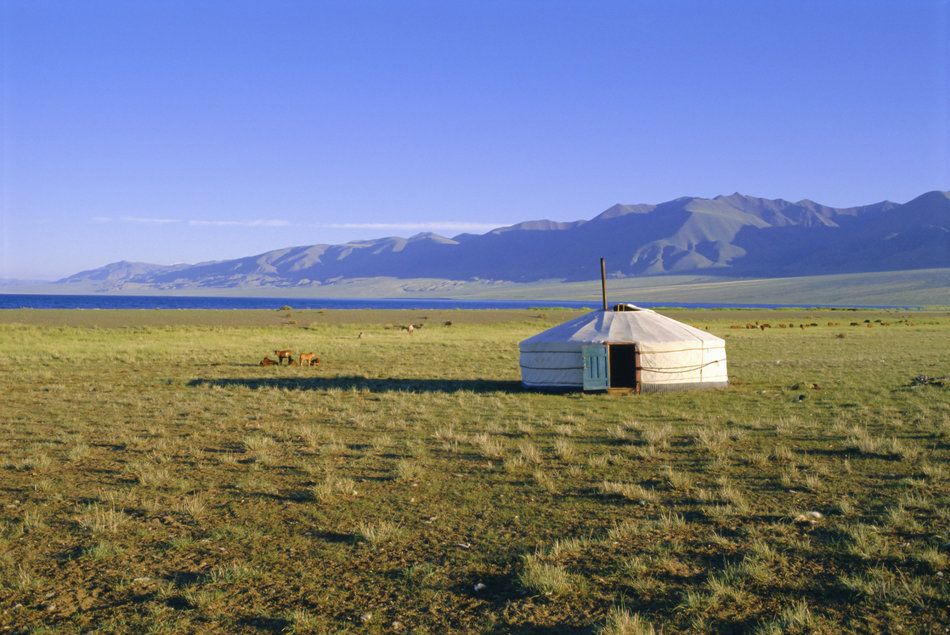
steppes of mongolia
steppes of mongolia

At Yalta in February 1945, the United States and Great Britain agreed that Mongolia should belong to the Soviet sphere of influence—in the previous year U.S. vice president Henry Wallace had visited Ulan Bator. A plebiscite was held on October 20, 1946, in which nearly all the people voted for Mongolian "independence."

Nationalist China was forced to waive any claims to Mongolia and recognized the Mongolian People's Republic on January 5, 1946. Choibalsan died on January 26, 1952. Choibalsan is commemorated by a town in eastern Mongolia built during his rule in his honor, and also Choibalsan State University, founded in Ulan Bator in 1942.

Houses of Mitsui and Mitsubishi

Houses of Mitsui and Mitsubishi

Before the conclusion of World War II, Mitsui and Mitsubishi were two of the four major zaibatsu (family centered banking and industrial combines) in Japan; the others were Sumitomo and Yasuda.

The term zaibatsu refers to a particular economic and social arrangement characteristic of large capitalist enterprises in Japan in the 19th and first half of the 20th centuries. Each zaibatsu was controlled by a single family that owned companies in many different spheres of economic activity, including banking and industry.

The zaibatsu developed after the Meiji restoration in 1868, when the government wanted to encourage industrial development. The zaibatsu were a very strong economic and political force in early 20thcentury Japan.


For instance, in 1937 most heavy industry and one-third of all bank deposits in Japan were directly controlled by the four major zaibatsu. After Japan's surrender in World War II, the Allied occupation authorities ordered the zaibatsu dissolved.

This meant that officially individual companies were freed from the control of their parent companies. However, many reformed their ties later in a less-formal arrangement, so some aspects of the control and coordination of the zaibatsu lived on in reality if not in law.

Mitsui

Mitsui is one of the largest publicly traded companies in contemporary Japan. The origins of Mitsui date back to the House of Mitsui, a merchant house of the Tokugawa period (1603–1867). Mitsui is thus the oldest of the four leading zaibatsu of early 20th-century Japan. The history of the House of Mitsui begins with the enterprises of Mitsui Takatoshi (1622–94), who opened a number of successful textile shops in Edo (Tokyo) and Kyoto.

House of Mitsui in Edo

He later expanded his enterprises into financial services, including moneylending. In 1691 members of the Mitsui family were granted the status of gyo shonin (chartered merchants) by the shogunate, which gave them considerable influence within the government.

The Mitsui family drew up a "constitution" in 1694, detailing matters such as the duties of the family council and the amount of property due each branch of the family; these arrangements remained in force into the 20th century.

In 1876 the Mitsui bank became the first private bank in Japan. Minomura Rizaemon (1821–77), an orphan who worked his way upto the top position in the Mitsui exchange brokerage, became president of the Mitsui bank and helped launch Mitsui into other enterprises that allowed it to succeed in the changing financial world of modern Japan.


The Mitsui family owned more than 270 companies by the end of World War II. Although the Mitsui zaibatsu was officially broken up in 1946, many of the companies involved formed themselves into keiretsu in the 1950s. The name Mitsui means "three wells," and the three wells are represented in the company logo.

Mitsubishi

The Mitsubishi group's origins lie with Yataro Iwasaki (1835–85), who founded the shipping firm the Mitsubishi Commercial Company in 1873. This company grew to be Japan's largest shipping firm, partly due to financial assistance from the Meiji government.

The second and third heads of Mitsubishi were family members: Yataro was succeeded by his brother, then by his son. The family expanded into many industries, including coal mining, shipbuilding, banking, insurance, paper, steel, oil, and real estate. In 1893 the holding company Mitsubishi, Ltd., was created to organize these diverse business interests.

The principal arms of the company in the early 20th century were
  1. Mitsubishi Bank, founded in 1919 and currently part of Mitsubishi UFJ Financial Group, the largest bank in Japan; 
  2. Mitsubishi Corporation, founded in 1893, which provides internal financing; and 
  3. Mitsubishi Heavy Industries, which includes the photographic equipment company Nikon and the Mitsubishi Motor Corporation. 
Mitsubishi was an important military contractor during World War II, building warships and the Zero aircraft used in the attack on Pearl Harbor in 1941.

After the zaibatsu were required to disband in 1946, the companies forming the Mitsubishi zaibatsu became independent entities. However, some voluntarily recombined after the outbreak of the Korean War and formed a keiretsu known as the Mitsubishi group.

The name Mitsubishi means "three diamonds" and is not a family name. Rather, it refers to the three stacked diamonds of Yataro Iwasaki's family crest, which appear in the Mitsubishi trademark.

Motilal Nehru


Motilal Nehru was one of the prominent leaders of the Indian National Congress (INC) and father of India's first premier, Jawaharlal Nehru (1889–1964). Descended from a Kashmir Brahmin family, Motilal was born on May 6, 1861, to Gangadhar and Jeorani in Agra.

He studied at Muir Central College, Allahabad. After passing the law examination in 1883, he began to practice in Allahabad, where his elder brother, Nandlal, had a roaring practice. Motilal's legal practice was also very successful. In 1899 and 1900 he went to Europe and began to develop a Westernized outlook.

This liberal outlook was in line with that of the moderates in congress. He began to attend the congress's annual sessions. His rise in politics was gradual: member of the U.P. council, member of the Allahabad municipal board, and ultimately president of the U.P. congress.


World War I brought momentous changes in the Indian struggle for independence, and Motilal Nehru emerged as a prominent leader in Indian politics. The ministry (1911–15) of Herbert Henry Asquith (1852– 1928) declared India at war with the Central Powers.

Nationalist leaders like Nehru supported the war efforts of the British government with the hope that India would be suitably rewarded in its path toward self-government. Nehru followed a strategy of cooperation with the colonial power to achieve self-government. A resolution of self-government on December 1916 was passed by the INC.

The moderate and extremist wings of the INC were united at the Lucknow session of 1916. Nehru played an important role in this. His contribution also was present in bringing about Hindu-Muslim unity in the Lucknow Pact of 1916.

This was also the time of the Home Rule League, which was founded by the English theosophist Annie Besant (1847–1933), who had emigrated to India. After much deliberation, Nehru joined the league when Annie Besant was imprisoned in June 1917. He was made the president of the Allahabad branch of the Home Rule League and demanded home rule or self-government of India after the end of World War I.

The British government initiated the Montagu-Chelmsford Reforms, and the INC wanted major changes to the British proposal. Nehru attended the Bombay session of the INC and supported the congress's demand. He also published a daily newspaper called the Independent beginning in February 1919.

In Indian politics events were moving fast. Mohandas K. Gandhi had called for a general strike in April 1919 after the enactment of the draconian Rowlatt Act, which empowered authorities to arrest and detain without trial. The Jallianwalla bagh massacre followed. Nehru was a member of the inquiry committee that had been constituted to investigate the massacre.

He argued the cases of persons who had been booked by British authorities. Nehru became the president of the Amritsar session of the INC in December 1919. The next year he was the general secretary of the congress.

The emergence of Gandhi brought a new direction to the Indian freedom movement. It greatly affected Motilal Nehru and his family. Nehru cast his lot with Gandhi and supported the noncooperation movement. He resigned from the U.P. council and gave up his lucrative law practice. Nehru began to wear traditional Indian dress and lead a spartan lifestyle. The British government arrested him in December 1921 and put him in jail for six months.

After his release Nehru found that the noncooperation movement was in decline. Gandhi had called it off in February after the Chauri Chaura incident. Nehru gave up noncooperation and made plans for entry into the legislative councils.

He was one of the founding members of the Swaraj (self-rule) Party in January 1923 and contested the elections. R. K. Shanmukham Chetty (1892–1953), the first finance minister of independent India, was the chief whip of the Swaraj Party. It became the largest party in the central legislative assembly and in some legislatures of the provinces.

Nehru found it difficult to control different factions in the Swaraj Party in spite of his dominating role. He returned to the mainstream of the INC, and the Swaraj Party functioned as a political wing of the INC from 1925 onward. The INC opposed the formation of the Simon Commission of 1927, as it contained no Indians.

It was boycotted, and an all-party conference appointed a committee headed by Nehru to prepare a constitution for a free India. The Nehru Report spelled out dominion status for India like that of Australia, New Zealand, and Canada.

The radical wing of the INC, led by Motilal's son Jawaharlal, opposed the Nehru Report. They wanted complete independence, and the Calcutta session of the INC in December 1928, presided over by Motilal Nehru, witnessed heated debates. Gandhi's intervention averted a split.

It was decided that the INC would launch civil disobedience for complete independence if the British would not grant dominion status within a year. Jawaharlal Nehru was the president of the historic Lahore session of the INC in 1929. Gandhi launched the salt satyagraha with his famous Dandi March in March 1930. Nehru was arrested but released, as he was not in good health. He died on February 6, 1931.

Motilal Nehru was one of the important figures in the history of the INC. He was a great parliamentarian and an eloquent speaker and organizer. Although overshadowed by his famous son, Motilal Nehru had carved a niche for himself in the Indian anticolonial struggle.

U.S. New Deal

U.S. New Deal
U.S. New Deal

In his acceptance speech at the 1932 Democratic National Convention, Franklin Delano Roosevelt pledged "a new deal for the American people." The term was subsequently used to describe the spate of government programs and reform laws enacted during the first months of Roosevelt's presidency in 1933; 15 major bills impacting industry, agriculture, banking, and the unemployed were passed during Roosevelt's first hundred days in office to combat the crisis of the Great Depression.

Another round of legislation, known as the Second New Deal, was adopted in 1935. The various New Deal programs marked an unprecedented effort by the U.S. federal government to stabilize the country and improve the daily lives of Americans.

Among the most significant legislation was the National Industrial Recovery Act (NIRA) of 1933. The act attempted to stabilize the economy through careful planning, striking a balance between supply and demand.


A primary cause of the depression had been the disparity between industrial productivity and consumer purchasing power: While manufacturing output, spurred by rapid technological advances, increased 50 percent during the 1920s, per capita income rose much more slowly at 9 percent, and the result was a precariously inefficient, wasteful national economy. The Roosevelt administration responded by calling for fair competitive practices, production quotas, price controls, and increased wages.

To gain the crucial support of business leaders, the administration suspended antitrust laws and permitted major industries and trade associations to govern themselves by establishing compacts under the auspices of the National Recovery Administration (NRA). To gain the support of labor, the administration enforced a minimum wage, a 40hour workweek, and the outlawing of child labor.

Agriculture

The Roosevelt administration similarly sought to rationalize the agricultural sector of the economy through the Agricultural Adjustment Administration (AAA). Even during the 1920s, American farmers were faced with overproduction, low crop prices, and a heavy debt load, and their plight dramatically worsened during the depression years.

The nation's net farm income, worth $6.1 billion in 1929, plummeted to $2 billion in 1932. Sheriff's sales were commonplace in rural areas, as farmers could not meet their mortgages; on a single day in 1932 in Mississippi, 25 percent of the land in the state was foreclosed. The AAA made payments to farmers to reduce acreage and eliminate livestock.

National Recovery Administration (NRA)
National Recovery Administration
(NRA)
For example, in 1933 the government subsidized the destruction of 10 million acres of cotton, 6 million piglets, and 200,000 sows. To fend off foreclosures, the Farm Credit Administration lent out $100 million in 1933 to facilitate the refinancing of mortgages.

While the New Deal attempted to address structural problems in the American economy, there was a pressing need for immediate relief. At the time of Roosevelt's inauguration in 1933, 25 percent of the workforce was unemployed.

In response, Congress appropriated $500 million to form the Federal Emergency Relief Administration (FERA), which disbursed emergency grants to state and local agencies for direct distribution to the poor.

In addition, the administration created the Civil Works Administration, a temporary organization that provided small construction and repair jobs for 4 million workers during the winter of 1933–34.

As part of the National Industrial Recovery Act, the Public Works Administration (PWA) was established to sponsor large-scale public works enabling steady employment. Among other projects, the PWA completed the Grand Coulee Dam, the Triborough Bridge in New York City, and hundreds of school buildings.

The New Deal produced a hodgepodge of other programs reflecting the administration's ad hoc experimentation in the face of crisis. The Civilian Conservation Corps, one of the president's pet projects, employed approximately 3 million young unmarried men on environmental projects, such as building firebreaks and campgrounds in national parks.
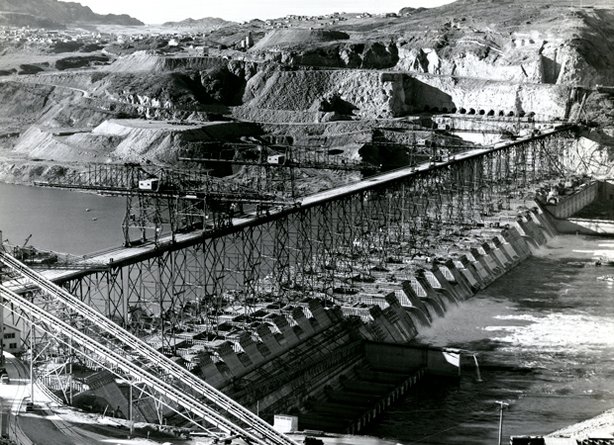
Building of Grand Coulee Dam

The Tennessee Valley Authority (TVA), another project of special interest to Roosevelt, was an effort to bring hydroelectric power to the underdeveloped Tennessee River region, where only 2 percent of farms had electricity in 1932. The TVA built 30 dams to reclaim floodplains and more than a dozen power plants to generate cheap electricity.

In 1934 Congress passed the Securities and Exchange Act, which successfully reined in some of the speculative stock market practices that had contributed to the crash in 1929. The New Deal became involved in cultural efforts such as Federal Project One, a relief program established in 1935 to provide work for writers, actors, musicians, and artists.

Roosevelt's administration made little effort to aid minority groups and had a particularly poor record on African-American civil rights, as the president hesitated to offend influential southern Democratic congressmen. Nevertheless, the Indian Reorganization Act of 1934 allowed Native Americans increased autonomy on their reservations.


American Liberty League

The most serious political challenge to the New Deal was mounted between 1934 and 1936. During those years, prominent conservative businessmen created a well-publicized lobby group, the American Liberty League, to denounce what they saw as the New Deal commitment to class warfare and incipient communism.

The populist Louisiana governor Huey Long accused the Roosevelt administration of placating wealthy businessmen, advocating a "Share the Wealth" program that would force the rich to pay for social programs for the poor. A mass movement led by a retired doctor, Francis Townsend, supported the creation of an "Old Age Revolving Pension," by which every American over the age of 60 would receive a monthly federal payment.

The Supreme Court dealt the New Deal a blow through several unfavorable decisions; the most significant, Schechter Poultry Corp v. United States, ruled unanimously that the National Recovery Administration was unconstitutional.

Always a nimble politician, the president sought to defuse populist discontent by offering moderate versions of the favored programs of his most prominent critics. Historians regard the Second New Deal in 1935 as more directly committed to assisting the unemployed, industrial workers, and the elderly than the First New Deal of 1933–34.

The administration instituted the Works Progress Administration (WPA), a considerable expansion of earlier work relief programs that eventually employed more than 8 million people. The National Labor Relations Act extended the labor rights of the NIRA by establishing a National Labor Relations Board to arbitrate collective bargaining.

This guaranteed unions increased protections and served to systematize relations between massproduction workers and their employers. Perhaps the most far-reaching legislation of the New Deal era, the Social Security Act established a "safety net" for Americans, providing not only an old-age pension but also unemployment insurance and federal assistance for needy, dependent children and the disabled.

Despite its enormously ambitious agenda, the New Deal did not produce the hoped-for economic recovery. The gross national product slowly increased during Roosevelt's first term in office, but in 1937 the country suffered through a significant downturn known as the "Roosevelt Recession," when business profits dropped by 80 percent.

Farm prices increased by 50 percent between 1932 and 1936, but much of the scarcity in agriculture was brought on by an environmentally devastating dust bowl that engulfed the Plains states. The problem of unemployment remained intractable.

Unemployment statistics looked much the same throughout the New Deal era: 21.7 percent of American workers were unemployed in 1934, 20.1 percent in 1935, and 19.0 percent in 1938. The general economic mobilization during World War II—and not New Deal policy—finally enabled the country to recover from the Great Depression.

Historians have pointed to several problems with the implementation of New Deal programs that impeded their effectiveness. For example, the National Recovery Administration struggled with the unwieldy task of administering competition and production codes for more than 550 separate industries.

Small businessmen complained about having no voice in the NRA, and fewer than 10 percent of the code authorities included labor representatives. Large businesses sought to protect their own self-interest and so engaged in pricefixing measures, instituting rules that forbade selling "below cost." Consumers were thus denied the chance to buy inexpensive goods.

The benefits of the Agricultural Adjustment Administration were also unevenly distributed, favoring rural landowners rather than tenant farmers and sharecroppers, who constituted onefourth of the population in the South during the 1930s. A widespread practice by landowners was to evict their tenants, take that land out of production, and collect payment from the AAA.

The president expressed ambivalence about his administration's relief efforts. Although these programs were established with the idea that work relief could restore a sense of dignity among the unemployed, Roosevelt was concerned that relief would become "a habit with the country."

Historians have debated the legacy of the New Deal. During the 1950s, many viewed the New Deal as a triumph for liberalism and democracy. In the 1960s, revisionist historians argued that the New Deal consistently pushed an agenda of "corporate liberalism."

Their analysis held that the depression decade offered an unprecedented opportunity to substantively change the American economic system. Instead, the Roosevelt administration, influenced by corporate and financial elites, used strategic moderate reforms to defuse popular discontent, thereby safeguarding capitalism.

More recent historians have countered that Roosevelt had no mandate to restructure American society through radical reform. They point to the inherent conservatism of the American people during the 1930s. Corporate interests remained hostile to the New Deal even after it introduced banking and securities reforms that effectively stabilized the financial system.

Many of Roosevelt's congressional allies, particularly western and southern senators, were only willing to support the emergency measures of the First New Deal. They were deeply suspicious of expanding federal bureaucratic power and fought against nonemergency reforms.

The New Deal established the template for federal activism—but the Roosevelt administration also understood that this activism should be tempered by the desires of constituents. The New Deal philosophy insisted that Americans had the right to basic welfare protections, initiating "safety net" policies that lasted through the 20th century. Primarily, however, the New Deal was an expedient, improvisatory response to the emergency conditions of the Great Depression.