Showing posts with label africa. Show all posts

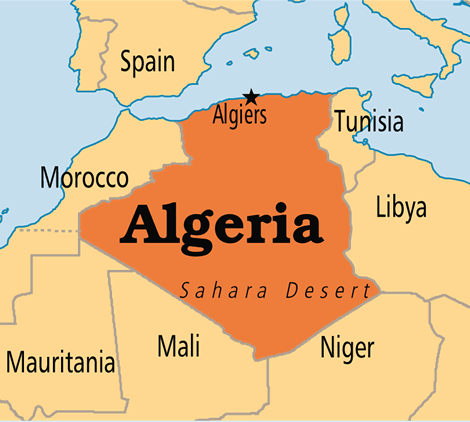
Algeria

Algeria
Algeria

Algeria remained part of the French Empire throughout the first half of the 20th century, but nationalist movements for independence became increasingly more vocal and determined. Several hundred thousand Algerians fought or worked for the French military during World War I. After the war they expected reforms and changes in French policies of assimilation and favoritism toward the colons, but the colons blocked government reforms announced in 1919.

French government policies dating from the 19th century onward had gradually increased the ownership of the best land by the colons and had resulted in the impoverishment of Algerian peasants. By 1950 most Algerians owned small plots of less than 10 acres.

To survive, peasants became sharecroppers or seasonal workers or fled to the cities where they were generally either day laborers or unemployed. The growing economic and social disparity between the colons and the majority Muslim Algerian population contributed to civil unrest and nationalist discontent.

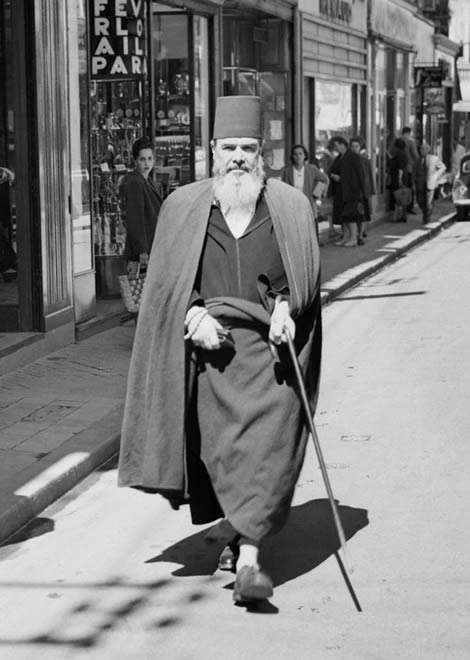
In the early 1920s, Algerian workers in Paris, led by Messali al-Hajj, established the Star of North Africa, a social action, leftist movement, which attracted considerable popular support. In the interwar years, two major approaches toward the relationship with France emerged among Algerians. The first group wanted assimilation and participation as full-fledged French citizens. The second advocated Algerian independence as a separate nation.

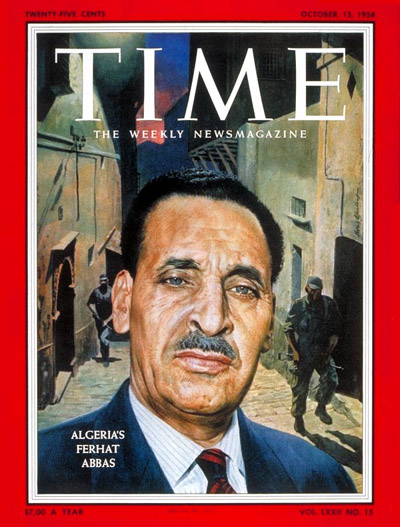
Ferhat Abbas, a pharmacist by profession, represented the first when he said, "If I had discovered an Algerian nation, I would be a nationalist ... I have not found it." Hadj Ben Ahmed Messali championed the second approach, asserting that "Islam is our religion, Algeria our country, Arabic our language." The French often jailed Messali for his uncompromising nationalist stances.

To minimize Algerian opposition, the French adopted a divide and rule tactic by favoring the Muslim Berber population that lived in the mountainous Kabyle region and encouraging it as a separate entity from the Muslim Arab population. These attempts failed as Berbers played key roles in the nationalist movement and were particularly attracted to Messali's approach.

The Algerian Muslim Congress drew up a list of grievances in 1936 but fell far short of advocating complete independence for Algeria. Many Muslim leaders still hoped that a form of assimilation could be devised whereby Muslims could become French citizens without abrogating Islamic law or tradition.

Messali al-Hajj
Messali al-Hajj

In response to the problem, the Blum-Violette proposals in 1937 provided for the gradual extension of suffrage whereby some 20,000 Algerians would become citizens with more to follow over time.

However, the colons adamantly opposed any reforms that widened Algerian participation and lessened their own political and economic power. The weakness and instability of French regimes in Paris prevented the implementation of reform programs that might have ameliorated the differences.

When the Vichy French regime came to power during World War II, it instituted Nazi racist policies that imperiled both Muslim Algerians and Algerian Jews, who had been granted French citizenship in the late 19th century. These decrees were abolished when the Allied-supported French committee of national liberation took power in 1943.

Ferhat Abbas
Ferhat Abbas

Encouraged by Allied support, Abbas and his supporters issued the Manifesto of Algerian People in 1943. The manifesto paid respect to French culture but noted that assimilation had failed and that reforms were needed. Some French were willing to consider reforms, but others felt that the manifesto would lead to independence and flatly rejected it.

Abbas then formed the Friends of the Manifesto and of Liberty and called for an autonomous republic in Algeria while counseling patience. His movement attracted mostly urban middle-class Algerians. The working class, far greater in numbers, supported Messali's calls for complete independence.

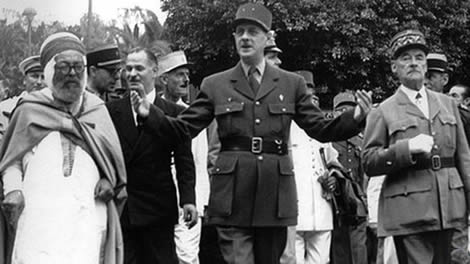
The leader of the Free French, Charles de Gaulle, tried to conciliate the differences by proposing that more Algerians could become French citizens without giving up their Qur'anic rights, but this compromise failed to satisfy many Muslims and infuriated the colons. In 1945 the French put Abbas under house arrest, and Messali was exiled.

In the spring of 1945 parades in Setif (southwest of Constantine) celebrating the end of World War II in Europe quickly turned into nationalist demonstrations. Violence spread to cities and other areas. In the rioting and French reprisals that quickly followed, hundreds of colons and thousands of Algerians (the figures vary widely ranging from 1,500 to 80,000) were killed.

The Algerian Statute of 1947 in which assimilation was stopped and two separate communities were recognized pleased no one. Under the new law, the French prime minister appointed a governor-general who was assisted by a council of six with the right to apply French law.

The Algerian Assembly was to have two houses, one European and one for "natives." Europeans controlled both houses. Colons were against even this compromise, and Messali responded by demanding complete independence.

Charles de Gaulle in Algeria

By this time, the majority of Algerians had concluded that the French were never going to grant full equality and that independence was the only solution. By 1950 many Algerian nationalists had either been arrested by the French, were in exile, or had escaped into the mountains of the Kabyle. The conflict remained unresolved until full-scale war broke out in 1954.

Qasim Amin

Qasim Amin
Qasim Amin

Qasim Amin was a noted Egyptian intellectual and advocate of reform in the later 19th and early 20th centuries. His father was a Turkish Ottoman official and landowner married to an Egyptian woman. Amin was educated in Cairo and at the School of Law and Administration.

He was a follower of the earlier reformer Muhammad Abduh, who sought to resolve the conflict of Islamic practices and tradition with the adoption of Western scientific thought and development.

As a highly respected lawyer, Amin was sent on a government educational mission to France, where he spent several years in the 1880s. Amin wrote a number of works on social issues, and in Les Egyptiens he focused on the national rights of Egyptians. He was best known for his works on the status of women.


He addressed the issues of polygamy, marriage laws, education for women, seclusion, and veiling in The Liberation of Women, published in 1899. Amin argued that sharia (Islamic law) and Islamic custom did not mandate either the seclusion of women in the home or veiling. Both were commonly practiced among upper and middle classes of the era.

Poor peasant families could not afford the luxury of secluding or veiling women who commonly worked alongside men in the fields. Amin emphasized that sharia granted legal rights to women and that the corruption or decline of morals by outside forces had been responsible for the decline of Islamic societies.

He stressed the importance of women in building modern nations and in national struggles and advocated improved education for women. According to Amin, education for women should not be limited to matters of household management but should include subjects that would enable them to participate in life outside the home.


Although by contemporary standards Amin's advocacy of gradual reform was not revolutionary, his book on the status of women aroused massive public debate about the role of women and Islam. Amin was severely criticized by conservative religious leaders and the palace.

Amin repudiated his critics in a second more radical—for the age—book, The New Woman, in 1900. In this second book he dropped a discussion of Islamic law and tradition to justify reforms and instead applied Western thought to augment his arguments. Amin stated that with education and reforms in status, women would ultimately have almost the same rights and status as men.

Amin supported the Egyptian nationalist movement, in which both men and women were full participants, in his memoirs, Kalimat. He also stressed the need for scientific knowledge in order for nations to advance. An early Egyptian nationalist, Amin was friendly with Sa'd Zaghlul and Tal'at Harb, both of whom became leaders of the Egyptian nationalist movement.

Boer War

Boer War
Boer War

The Boer War, from 1899 to 1902, was a conflict between Great Britain and the Boers, or Dutch settlers, in South Africa. The Boers were mostly farmers who had settled as early as the 18th century in South Africa. The British wanted to unify their Cape Colony and Natal colonies and the Boer republics of the Orange Free State and the South African Republic.

The discovery of gold in Transvaal in 1886 led more English settlers to South Africa. These new settlers, called Uitlanders by the Boers, raised Boer concerns over the possible loss of valuable farmland to the English, who were predominantly interested in the mineral resources of South Africa.

After British leaders attempted to incite an uprising among the English in Transvaal in the Jameson Raid of 1896, the rift between the British and the Boers widened. As a result, the Boer leader Paul Kruger won the 1898 election as president of the South African Republic.


To undercut possible British moves, the Boers demanded that the British withdraw all their troops; when the ultimatum was rejected, the Boers attacked the Cape Colony and Natal, laying siege to the cities of Kimberley, Mafeking, and Ladysmith. The defense of Mafeking was led by Robert Baden-Powell, the founder of the Boy Scouts. The future prime minister of Britain Winston Churchill also participated in the war, as did the Indian nationalist leader Mohandas K. Gandhi, who served in the British medical corps.

After initial defeats, the British rallied their troops and in 1900 appointed Horatio Herbert Kitchener, who had just successfully taken the Sudan, as the commander in chief. With superior firepower the British army successfully lifted the sieges, but the Boers then resorted to hit-and-run guerrilla warfare tactics, some of which they had learned from the Zulus in earlier confrontations.

Boer leader Paul Kruger

To defeat the Boers, Kitchener adopted techniques that were used against guerrilla fighters throughout the world in the 20th century. These included slash-and-burn attacks against civilian farms and cutting off supplies of food and arms to Boer fighters by placing the civilian population in concentration camps.

Thousands of Boer women and children were rounded up and placed in armed camps, where many starved to death. Their farms were then burned to the ground, thereby depriving the Boer fighters of cover and food supplies. Many indigenous Africans were also placed in camps.

Boer militiamen
Boer militiamen

Some were sent to camps in Bermuda, India, and St. Helena. Almost 30,000 Boers, mostly women and children, and 14,000 Africans died in the camps. The destruction of much of the countryside also led to food shortages. In the spring of 1902 the Boers were forced to accept defeat. Under the Treaty of Vereeniging all of South Africa became part of the British Empire.

Joseph Ephraim Casely Hayford

Joseph Ephraim Casely Hayford
J. E. Casely Hayford made enormously important contributions to the theory of Pan-Africanism and organized the National Congress of British West Africa. Casely Hayford became an inspiration for Ghana's independence movement leader and first president, Kwame Nkrumah, though Nkrumah's generation no longer accepted the British presence in the way that Casely Hayford and his colleagues had.

Born in 1866, the man whom many would later describe as the "uncrowned king of West Africa" enjoyed educational opportunities in Africa and in England. He completed his secondary education at a Wesleyan (Methodist) boys' high school in Cape Coast, the major port in the colony known to the British as the Gold Coast. He spent several years as a teacher and principal in Wesleyan schools in both Accra (Nigeria) and Cape Coast.

Following an apprenticeship to a European lawyer, he traveled to London in 1893 to become a lawyer himself. He completed legal training in 1896 and soon returned to Cape Coast, where he established an active, admired private practice.

Casely Hayford largely identified himself with other professional, European-educated black Africans, but he did not forget the traditions and worldview characteristic of the Fanti. During his youth Casely Hayford's father had participated in protests against the British erosion of native autonomy and customs, particularly with regard to land distribution and usage.

This early exposure to political activism and to debates about the virtues (and flaws) of traditional, as opposed to British, law prepared Casely Hayford to become involved in the activities of the Aboriginal Rights Protection Society (ARPS) that formed at the end of the 19th century.

Shortly after the introduction of the 1897 Lands Bill into the British parliament, traditional elites and intellectuals of the Gold Coast joined together in the ARPS to resist this proposed introduction of British property laws. Casely Hayford and John Mensah Sarbah supported the ARPS's effort by authoring pamphlets that explicated the traditional systems and presented cogent arguments against the Lands Bill.

Over the next few decades, he augmented his already strong reputation by publishing several books that revealed his intelligence and his passionate commitment to achieving prosperity in Africa. Gold Coast Native Institutions, published in 1903, dealt with the issues at stake in the Lands Bill controversy.

He asserted that these societies already possessed democratic institutions and a high degree of civilization. He thought of native institutions as an asset, not a liability, in the quest for progress and modernization.

In his 1911 autobiographical novel, Ethiopia Unbound: Studies in Race Emancipation, Casely Hayford provided a fictionalization of Pan-Africanist themes and ideals. By evoking the achievements and influence of the "Ethiopian" (in Pan-Africanist ideology, this signified all Africans and not just the inhabitants of a particular country in Africa), Casely Hayford boasted that the African could feel proud of his heritage despite the various racial theories that cast him as inferior.

The goal of activism should be to encourage the expansion of education, the preservation of indigenous customs where they proved durable and useful, and the unification of Africans both within a single colony and within a region governed by a single imperial power. Eventually, this unity should extend across Africa and would reap tremendous economic, political, and cultural benefits for all Africans as they strived to modernize.

In keeping with his ideology, Casely Hayford worked to organize the National Congress of British West Africa in the years immediately following World War I. The group met for the first time in 1920, and Casely Hayford became its vice president.

The congress's agenda of promoting economic development, education, and democratic institutions without seeking complete independence from Britain reflected Casely Hayford's own hopes. He expected that British West Africa would become the continent's leader in the overall effort to modernize.

Future generations might criticize Casely Hayford for his gradualism and willingness to accept British rule. Even when frustrated by British intransigence, he never resorted to violence or other radical tactics that might have gotten results.

Despite his relatively few concrete achievements, he became the leader of his generation and urged his fellow citizens to prepare to govern themselves and to take pride in their culture and traditions.

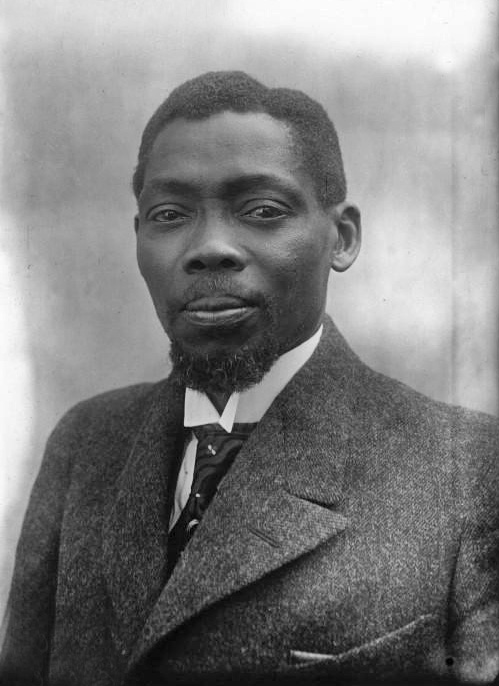
Blaise Diagne

Blaise Diagne
Blaise Diagne

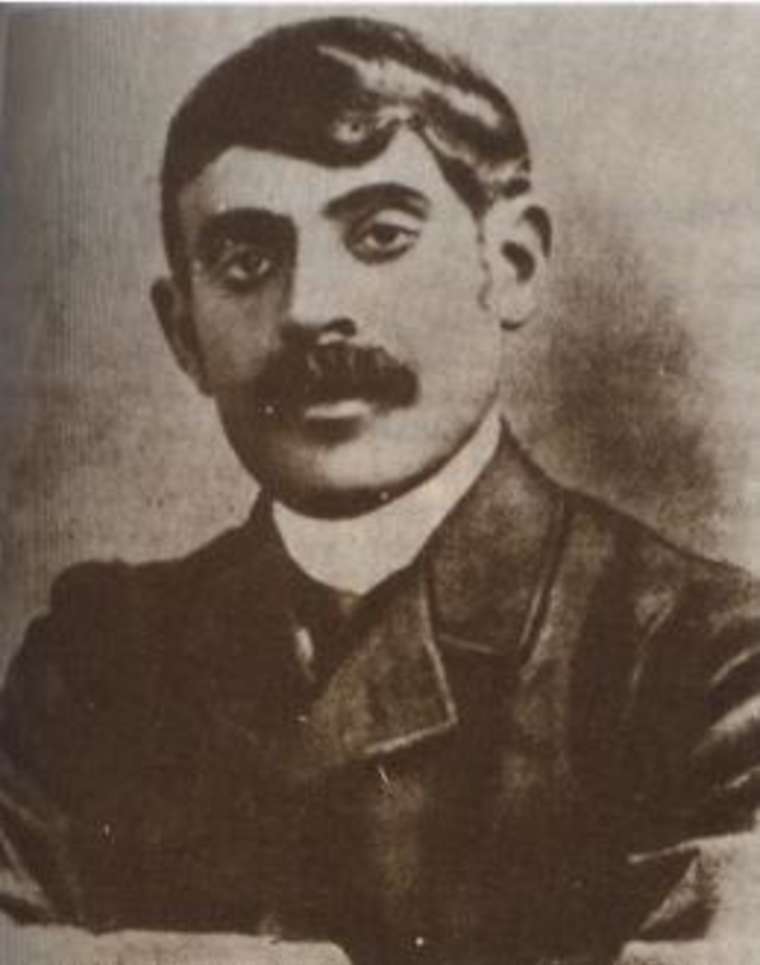
Gaiaye M'Baye Diagne was born on the island of Gorée, the old slave trade base, in 1872. His energy and intelligence attracted the attention of wealthy mulattoes (people of mixed race), who sponsored his education at a religious school, where he was baptized as Blaise.

Diagne was educated in Senegal and France and entered the French colonial administrative service in 1891. He served in a number of administrative posts in parts of the French West African empire. In 1909 he married a Frenchwoman.

A proponent of assimilation and African rights as equal participants in French political and cultural life, Diagne became the first black African member of the French parliament in 1914. He became the first African member of the French government when he was appointed commissioner of the republic in West Africa in 1918; in the 1930s he became undersecretary of state for the colonies.


During World War I he was particularly active in recruiting Africans to serve in the French army. Large numbers of Africans from throughout the huge French West African empire served with distinction during the war, but many were disappointed by their subsequent treatment as inferiors once the war was over.

Diagne's vision of assimilation was not realized, and many former African soldiers in the French army consequently became active supporters and leaders of the nationalist movements that struggled to secure independence from the French in the first half of the 20th century.

Ethiopia (Abyssinia) and Italian Aggression

Ethiopia (Abyssinia) and Italian Aggression

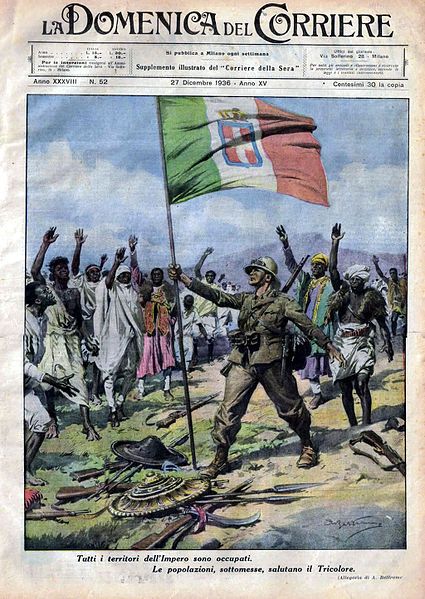
In October 1935 Italian armies invaded Abyssinia (Ethiopia), beginning an eight-month war and a sixyear occupation. Starting purely as an Italian colonial venture to expand Italy's control as well as to impress European nations, it came to have a significance all out of proportion to its original objectives.

Italy, as a unified nation, did not come into existence until the Risorgimento of 1870. For that reason, it was very late in developing an overseas empire; most of the colonial pickings had been taken by France and Britain.

Italy had managed in the closing years of the 19th century to establish itself in eastern Africa (Eritrea), although a sound beating by the Abyssinians in 1896 at the Battle of Adowa stopped their progress there. Although Adowa was to be the most severe defeat ever suffered by Europeans in Africa, Italy managed to not only keep its Eritrean possessions but gain a bit more as well.


In 1908 Somalia was declared to be an Italian colony, and the border between Somalia and Ethiopia was agreed on. Additionally, in 1911–12 Italy had managed to seize the Ottoman possessions in Libya. None of this, however, managed to satisfy a nation that as part of its mythic past looked back on the Roman Empire.

Compounding that sense of unfulfilled entitlement, Italy, although an ally in World War I, had not gained the territory it believed was its due. The sense of injury and historic destiny was given an added impetus in the 1920s and 1930s with the rise of the Fascists.

In the interim several events occurred. Although Abyssinia was an independent nation, it was not altogether considered to be the equal of other nations; when it applied for membership in the League of Nations, there were several delegates who were opposed to its entry.

Italian soldiers marching to the Italo-Ethiopian border.

At first Italy opposed Abyssinia's application but then supported it. Abyssinia became a full member of the league in 1923. That fact would have later consequences, as membership meant that Italy could not attack Abyssinia without the threat of action of the entire league.

Italy and Abyssinia signed a treaty of friendship in 1928, but the Italians would maintain a very strong military presence on their borders and on occasion send military detachments across the borders to see how far they could push without starting a war.

By 1932 Benito Mussolini was committed to an eventual war of conquest in the area, and military planning began at about this time. Finally, in 1934 the Italians engineered a border incident that would eventually become the official cause of the war, which would start in October 1935.


The extent of military planning and the allocation of Italy's resources for this war would become a major effort. While in retrospect the campaign was one of tanks, aircraft, and machine guns against a primitively armed native population, there was no assumption of an easy military victory. Adowa, less than 40 years before, had been a serious and sobering defeat.

Even new weapons, as the British, Spanish, and French had learned, did not guarantee victory in colonial wars. The Abyssinians, with their population of an estimated 12 million living in a rugged and wide-ranging homeland, could not be counted on to surrender at the first sight of an Italian tank or airplane.

On October 3, 1935, Italian forces attacking from Eritrea in the north and Italian Somaliland in the south invaded Abyssinia, meeting with substantial opposition from the very beginning. Mechanized and motorized forces and aircraft overpowered organized resistance.

Italian armor forces

By May 5, 1936, the Italians had managed to defeat the Abyssinian army and entered the capital of Addis Ababa. Italian forces suffered about 5,000 casualties; most of these were natives serving as part of the Italian force.

With the capture of Abyssinia's capital, the Italians believed their mission accomplished and organized their African possessions into one large colony, Africa Orientale Italia (AOI), which they divided into six governorships. Occupying the territory and controlling all of it turned out to be a different matter: They never succeeded in holding more than half of the country.

There was widespread opposition throughout the countryside that grew in severity. In 1937 an attempted assassination of Marshall Badoglio, the commander of the region, spurred extensive reprisals. This opposition kept up until the Italians were finally driven out in 1941 by the British.

Invasion map
Invasion map
Aside from the military aspects of the campaign, which showed how new technology could be effectively applied against native armies, the war had a political significance on an international scale. The conflict showed very quickly the ineffectiveness of the League of Nations. Further, it demonstrated both splits between what were supposed to be solid allies and the lack of internal resolution of those allies.

On October 10, 1935, the league agreed to impose economic sanctions against Italy as punishment for its unprovoked invasion in direct defiance of the league's rules. The sanctions were not enthusiastically endorsed, although Canada suggested additional oil sanctions be applied.

Part of the problem was that the league's standing did not support strong measures. Another factor was that despite the fact that Abyssinia was a member, many other members considered it to be little more than a very backward region.

In their view, despite the unanimous declaration of 1923, Abyssinia should not be thought of as an independent nation. Also, sanctions were useless unless they were supported by everyone. The United States, which was not a member of the league, increased its exports of oil to Italy at this time.

There were attempts to resolve the crisis by diplomacy of individual nations, but these were not only ineffective but did not reflect well of the proposing nations. In negotiations with the Italians, the British and French offered to let Italy have large parts of the country. Britain would then donate part of British Somaliland, one of its ports, to Abyssinia.

Neither Haile Selassie nor any member of his government was brought into these talks. These negotiations were not looked on well by several members of the league who rightly thought it was rewarding aggression. Thus, the plan died, and Italy continued its war.

Abyssinian emperor Haile Selassie went to the League of Nations for assistance in June 1936. He got nothing for his efforts. Italian claims of atrocities partially undermined Ethiopia's case, although it was clear that the league would not have supported Ethiopia in any event.

The occupation of Abyssinia was not a quiet experience for occupiers or occupied. The Italians brought in the machinery and infrastructure of a colonial government, but nothing went exactly as it had been planned.

For one thing, there was the active opposition of the natives, which never decreased from the day Addis Ababa fell until the British liberated the country. In 1935 Italians opened a concentration camp in Somalia. Eventually, more than 6,000 people from all over the AOI, but principally Abyssinia, were processed there.

Its peak operating period was from the major repression of 1937 until the British arrived in 1941. In 1937 some opponents of the regime were sent to Eritrea and from there on to Italy. In a reversal, political detention camps were opened in the AOI that were used to house Italian political dissidents. There were reported to be mass executions as well.

There were some positive developments. The Italians did bring an improvement in health care. Also, they stopped much of the intertribal fighting that had always plagued Abyssinia. These advantages must be seen, however, against the larger issue of Italy forcefully occupying a nation and repressing its people.

One of the major reforms was a negative one that had to do with education. Italy feared the educated elite in Abyssinia, which they correctly saw as the backbone of opposition. The Italians repressed this elite and also ensured that there would be no schooling beyond the most basic for the general population.

Finally, the area was liberated in 1941 and administered by the British until after the war. Then Italy returned but only as a mandatory power for Eritrea and Somaliland. These countries eventually gained their independence. Abyssinia, more commonly referred to now as Ethiopia, regained its independence with the return of its emperor.

For what started as a colonial venture, the war between Italy and Abyssinia had far-reaching consequences. It demonstrated what military force could do against civilian populations and how far international bullying could go as well as improving the chances for a war in Europe.

Mussolini's popularity and political strength in Italy were improved by the war. In the minds of many, the victory and acquisition of land removed some of the perceived disgrace that came from the consequences of World War I. Mussolini, who often ruled by the creation and management of crises, mobilized a great deal of support for the prosecution of the war.

In addition, the threat of league sanctions helped strengthen popular resolve because the Italian government managed to stir the population into a feeling that it was united against the league, improving the degree of political cohesion, at least for a while. Even the Catholic Church, which sometimes opposed Mussolini's policies, came down publicly in favor of the Italian effort in Africa.

Another development of great significance was the deployment of the technology of destruction. The Italians used their air force extensively in this war. Pioneers in the use of aircraft against ground targets, they had used aircraft in Libya against the Ottomans and later used them against the Libyan natives from 1921 to 1931.

Now, after also leading the world in developing the theory of air power, they showed themselves to be expert practitioners. The latest in modern weaponry was used more widely and ruthlessly than ever against not only combatants but against the civilian population.

The Italians also bombed Red Cross stations, hospitals, ambulances, and civilian targets. In a way, the air attacks on the Abyssinians prefigured not only Guernica but later Warsaw, Rotterdam, and London.

On the continental scale, the war accelerated the political decisions and rivalries in Europe. It destroyed the good will that had existed between Britain and Mussolini's Fascist government. The crisis surrounding the war highlighted and increased the mutual suspicion between France and Britain. That impression was reinforced at Munich in 1938, leading Adolf Hitler and Mussolini into assumptions that would lead them to war in 1939 and 1940.

The alienation of Italy from its former allies and Europe at large brought it closer to Hitler's Germany. At the same time it deepened the contempt that Hitler and Mussolini had for the western powers, in large part because of their inability to do anything constructive.

Finally, it signaled the effective end of the League of Nations as a body capable of protecting small nations from aggression and preventing aggressive war. There had been defections from the league at least as far back as the 1920s based on smaller nations stating that the league was useless in protecting them.

The Japanese invasion of Manchuria in 1931 and the invasion of Abyssinia only demonstrated and reinforced the perceived weaknesses of the league. While the league could point to accomplishments in areas such as improving health of people in poorer nations, it could not stop a war.
French West Africa (Afrique occidentale française)

French West Africa (Afrique occidentale française)

French West Africa came into being in 1895 when France decided to consolidate its African holdings. Initially, French West Africa was a temporary combination of Senegal, French Guinea (now Guinea), French

Sudan (now Mali), and Côte d'Ivoire. In 1904 it became permanent, with territories including Dahomey (now Benin), French Guinea, French Sudan, Côte d'Ivoire, Mauretania, Niger, Senegal, and Upper Volta (now Burkina Faso).

The federation was ruled by a governor-general first from Saint-Louis and then, after 1902, from Dakar, both in Senegal. The federation supported Vichy France during World War II before accepting the Free French in November 1942.


The federation occupied an area of 4,689,000 square kilometers, most of which was desert or semidesert in the interior of Niger, Sudan, and Mauretania. One of the largest colonial possessions in Africa, the federation reached from westernmost Africa at Cape Verde to deep within the Sahara. Population at its creation was over 10 million. When the federation dissolved, its population was about 25 million.

West Africa was not a primitive area when the Europeans arrived. Precolonial empires and states included Ghana, Mali, Songhai, and Hausa. The precolonial era was also a time when Islam expanded into West Africa. The Europeans entered and disrupted a highly complex society.

The slave trade in West Africa expanded greatly beginning in the late 16th century and continued to grow into the mid-19th century. By the 18th century the slave trade was an important ingredient in the European interest in Africa, especially for providing slaves to New World plantation economies. The increasing New World demand coincided with Islamic jihads and rivalries between the precolonial states.

The capture and transfer of Africans into slavery became the dominant commerce for the Portuguese, then the Dutch, then the British and French. The British, Dutch, and Portuguese controlled the major slave ports between Ghana and the Cameroons. Africans also facilitated the slave trade.

The French early on regarded their African possessions as overseas provinces. The early efforts to colonize were unsuccessful, though, and in the mid-19th century interest shifted from colonization to mercantile prospects. Trade with the savanna of the interior coincided with the race for Africa of the late 19th century.

The Berlin Act of 1885 formalized the partition of Africa, including West Africa. By 1890 the French had signed treaties with African leaders that in theory authorized their annexation of much of western Sudan. Military superiority allowed the French to acquire large territories, most of it desert or otherwise worthless. The French did not turn to commercial development until early in the 20th century.

In the early 1890s France conquered Dahomey, made Côte d'Ivoire a formal colony, and obtained territory in Upper Volta. French Africa ran from Algeria to the Gulf of Guinea.

The administrative unit known as French West Africa included the coastal colonies— Senegal, French Guinea, and Côte d'Ivoire—as well as the French Sudan, the large interior territory that included present-day Mali, Niger, and Burkina Faso. Dahomey became part of French West Africa in 1899. French Sudan became Haut Senegal-Niger in 1904.

Mauretania became a protectorate in 1905. Upper Volta separated from Haut Sénégal–Niger in 1919, and the remaining Haut Sénégal–Niger became French Sudan once more. Mauretania became a colony and part of French West Africa in 1920. Niger separated from French Sudan in 1922.

Senegal was the only part of French West Africa with even token assimilation, and participation by Africans in French affairs was confined to Saint-Louis. Elsewhere in French West Africa, inhabitants were subjects, not citizens. The European French were increasingly skeptical about the ability of the Africans to become "suitable" French citizens.

The assimilationist philosophy of the original exploration was gone by the time of the French West African Federation in 1895. Rather than allow local authority, the French established direct rule in the form of a governor-general taking his orders directly from the minister of colonies and the government in Paris.

The governor-general relayed orders and financing to his lieutenant governors in the territories. Senegal had representative government as a residue of the original assimilationist impulse—citizens could represent the Senegalese in France.

The French effort to make the colony pay its own way led to their pushing the productivity of groundnuts and cotton where suitable. Extraction of valuable resources was also emphasized. Taxes forced the population into the cash economy.

Inhabitants of areas where cash crops were impractical were encouraged to migrate to wage-earning areas. Servitude nearing slavery was tolerated in the interest of profitability. The French did provide at least a small amount of missionary effort as well as minimal educational and health services. The economic benefit accrued to the French only.

After World War I France relaxed its rule somewhat. Occasional revolts as well as a rediscovery of African tradition encouraged the easing of the slavery and aristocratic rule that had characterized the decades from the mid-1890s until the war. Tribal leaders were more respected after France reinstated them.

Initially loyal to Vichy France during World War II, French West Africa shifted to the Allies after the U.S. invasion of North Africa and the occupation of Dakar, Senegal, by the Allies. The Free French under General Charles de Gaulle took control of French West Africa.

When World War II was over, the Europeans were worn out, unwilling politically, and unable economically to resist demands for political reform in colonies that were increasingly an intolerable financial burden.

The Europeans living in Africa were an issue. Also, the colonies provided valuable resources. But the benefits were far from matching the costs. And independence came in the 1960s. France also had an ego at stake in the postwar era. Defeat and occupation were not preconditions for an easy abandonment of the empire.

After World War II France's overseas colonies in Africa became overseas territories. Their inhabitants became eligible for French citizenship. They also received the right to organize political parties and have representation in the French legislature.

When given the choice of complete independence or self-governance as members of the new French Community (France and its former colonies), which was intended for common defense, foreign policy, education, and other common matters, all elected to join the community except French Guinea, which became independent Guinea in October 1958. With the establishment of the French Community, French West Africa was no more.

The autonomous states of French Sudan, Senegal, Upper Volta, and Dahomey united into the Federation of Mali, named for the ancient African Mali Empire, in 1958. Upper Volta and Dahomey withdrew before the federation became operational in January 1960. By August 1960, when Senegal withdrew, the federation was defunct.

Postwar nationalism and the example of the newly independent English colonies, led by Ghana in 1957, produced a strong impulse toward independence in French West Africa. Between August and November 1960, Dahomey, Niger, Upper Volta, Côte d'Ivoire, Senegal, Mali, and Mauretania gained their independence.