Showing posts with label egypt. Show all posts

Qasim Amin

Qasim Amin
Qasim Amin

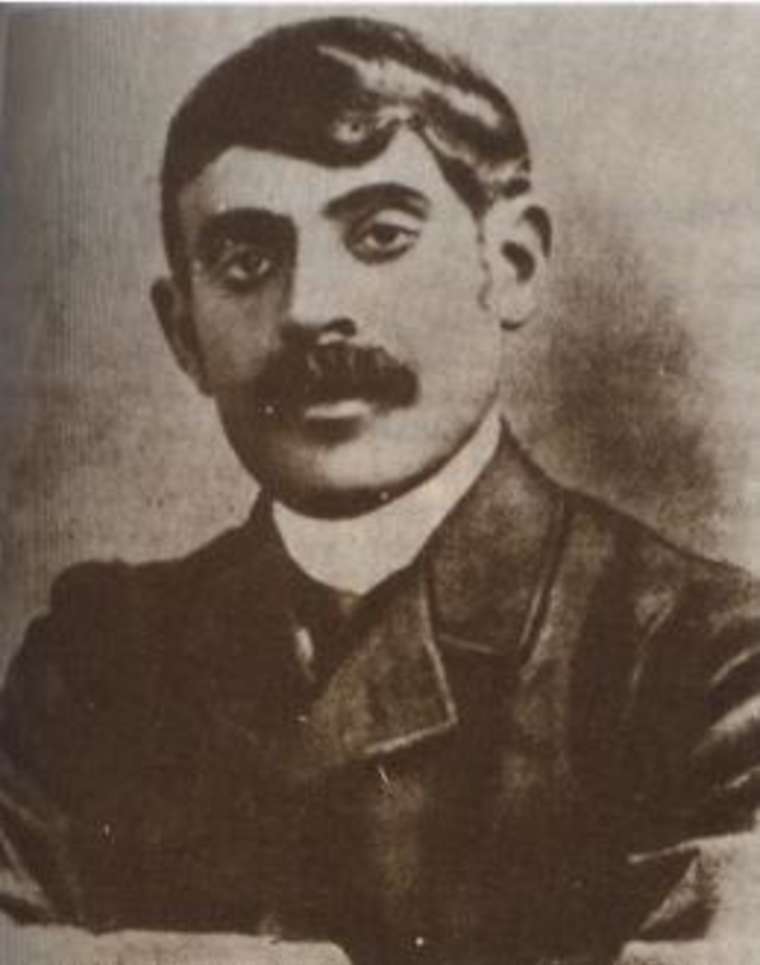
Qasim Amin was a noted Egyptian intellectual and advocate of reform in the later 19th and early 20th centuries. His father was a Turkish Ottoman official and landowner married to an Egyptian woman. Amin was educated in Cairo and at the School of Law and Administration.

He was a follower of the earlier reformer Muhammad Abduh, who sought to resolve the conflict of Islamic practices and tradition with the adoption of Western scientific thought and development.

As a highly respected lawyer, Amin was sent on a government educational mission to France, where he spent several years in the 1880s. Amin wrote a number of works on social issues, and in Les Egyptiens he focused on the national rights of Egyptians. He was best known for his works on the status of women.


He addressed the issues of polygamy, marriage laws, education for women, seclusion, and veiling in The Liberation of Women, published in 1899. Amin argued that sharia (Islamic law) and Islamic custom did not mandate either the seclusion of women in the home or veiling. Both were commonly practiced among upper and middle classes of the era.

Poor peasant families could not afford the luxury of secluding or veiling women who commonly worked alongside men in the fields. Amin emphasized that sharia granted legal rights to women and that the corruption or decline of morals by outside forces had been responsible for the decline of Islamic societies.

He stressed the importance of women in building modern nations and in national struggles and advocated improved education for women. According to Amin, education for women should not be limited to matters of household management but should include subjects that would enable them to participate in life outside the home.


Although by contemporary standards Amin's advocacy of gradual reform was not revolutionary, his book on the status of women aroused massive public debate about the role of women and Islam. Amin was severely criticized by conservative religious leaders and the palace.

Amin repudiated his critics in a second more radical—for the age—book, The New Woman, in 1900. In this second book he dropped a discussion of Islamic law and tradition to justify reforms and instead applied Western thought to augment his arguments. Amin stated that with education and reforms in status, women would ultimately have almost the same rights and status as men.

Amin supported the Egyptian nationalist movement, in which both men and women were full participants, in his memoirs, Kalimat. He also stressed the need for scientific knowledge in order for nations to advance. An early Egyptian nationalist, Amin was friendly with Sa'd Zaghlul and Tal'at Harb, both of whom became leaders of the Egyptian nationalist movement.

Cairo Conference (1921)

Cairo Conference (1921)

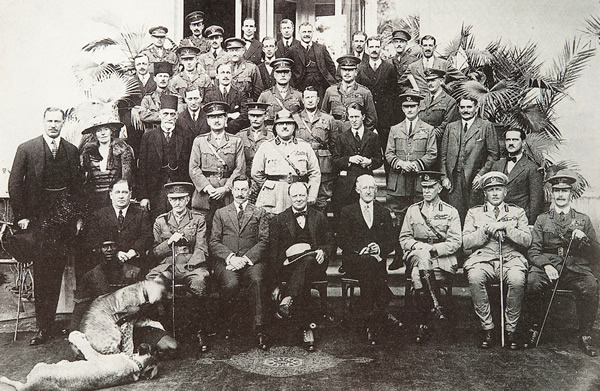
The Cairo Conference was convened by the British to decide how to govern their newly gained Arab territories after World War I. Opening in March 1921, the conference represented a virtual who's who of British experts on the Middle East from the foreign office and the military.

Lawrence of Arabia (T. E. Lawrence), champion of the Arab revolt; Gertrude Bell, an expert on Iraqi tribes and politics; as well as Sir Percy Cox, high commissioner for Iraq, and Sir Herbert Samuel, high commissioner for Palestine, all participated. The conference was chaired by Winston Churchill, then secretary of state for the colonies.

The San Remo Treaty in 1920 had formalized British control over Iraq and Palestine, formerly territories of the now-defunct Ottoman Empire. However, the British had been caught off guard by the 1920 violent revolt against their occupation of Iraq. If possible, they wanted to avoid future confrontations that necessitated the deployment of British or imperial troops and that placed heavy financial burdens on the British treasury.


At the conference it was agreed that a plebiscite should be held in Iraq to elect a king who would rule in close conjunction with British advisers. Faysal, Sherif Husayn's son and a favorite of the British, was proposed as the British nominee. After some hesitation he accepted the position. Faysal won subsequent elections that were held under British supervision, and he duly became the king of Iraq.

His heirs continued to rule Iraq until they were overthrown in a violent militaryled revolution in 1958. The installation of an Arabled government made Iraq ostensibly independent, and it was ultimately granted entry into the League of Nations. But Iraq remained linked with Britain by a treaty that granted Britain extensive control over its foreign affairs and allowed the British military access whenever it chose.

Faysal's older brother Abdullah was selected to become amir (prince) and ultimately king of the land east of the River Jordan. Churchill coined this new entity, Transjordan, meaning on the other side of the Jordan.

Cairo Conference map

Abdullah was dependent on Britain for economic and military support, and his main military force, the Arab Legion, was led by a British military officer. This territory ultimately became the Hashemite monarchy in Jordan under the rule of Abdullah and his heirs.

His great grandson, Abdullah II, ruled Jordan in the early 21st century. The creation of allegedly independent countries was meant to assuage Sherif Husayn and Arab demands that the promises regarding Arab independence after the war seemingly made by the British in the Sherif Husayn–McMahon correspondence be met.

In Palestine the British retained direct political and military control and assured their security concerns in the region, especially the protection of the vital Suez Canal. During the interwar years the British retained their preeminent position while attempting, with various degrees of success, to balance the conflicting national demands of the Palestinian Arabs for an independent Arab state and the Zionists for an independent Jewish state.


The British mandate in Palestine lasted until after World War II, when the British could no longer economically or militarily afford to maintain order in Palestine, and they consequently turned over the entire issue of who should rule Palestine to the newly formed United Nations.

The decisions made at the Cairo Conference failed to satisfy either Arab or Zionist demands for self-determination. They also formalized the division of the Arab territories into separate nations ruled by regimes established and in large part maintained by the British. The nationalist hostility and resentment fostered throughout the Arab world by the actions taken at the Cairo Conference lasted throughout the 20th century.

Cairo Conference (1943)

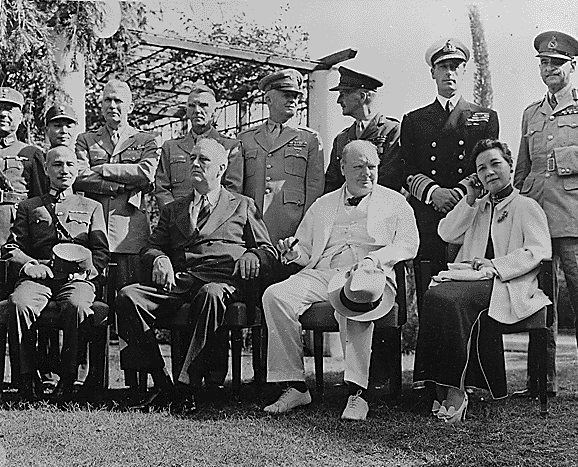
Kai-shek, Roosevelt, Churchill, and Madame Chiang seated at the Cairo Conference in November 1943
Cairo Conference (1943)

China was Japan's first target during World War II and fought alone from July 1937 until Japan attacked the U.S. Pacific naval base at Pearl Harbor, the Philippines, and British interests in East and Southeast Asia in December 1941. These events led to a general declaration of war between the Allied and Axis powers and an expansion of World War II to Asia.

China's military position and diplomatic status improved significantly after December 1941. Militarily, it no longer fought alone. The Allies established the China-Burma-India theater of war, and Chinese leader Chiang Kai-shek was appointed supreme commander of the China theater (which included Vietnam and Thailand) effective January 1, 1942.

U.S. Lend-Lease aid to China increased, U.S. general Joseph Stilwell was appointed Chiang's chief of staff, and the until-now U.S. volunteers of the Flying Tigers were incorporated into the U.S. Fourteenth Air Force under the command of General Claire Chennault.


On the diplomatic front, China was now recognized as one of the Big Four Powers among the 26 anti-Axis nations; it also became a founding member of the United Nations (UN) and a permanent member of the UN Security Council. New treaties were negotiated and signed between China, the United States, and Great Britain in 1943 that ended a century of inequality for China.

President Franklin D. Roosevelt, a proponent of personal diplomacy, proposed a joint meeting with British prime minister Winston Churchill, Soviet leader Joseph Stalin, and Chiang (Roosevelt had numerous meetings with Churchill). However, Chiang did not wish to meet Stalin due to his anger over the Soviet-Japanese Neutrality Treaty (1941) and Soviet assistance to the Chinese communists, both damaging to his war effort.

Roosevelt agreed to meet first with Chiang and Churchill at Cairo, Egypt, and then with Stalin at Tehran, Iran. Accompanied by his popular U.S.–educated wife, Mei-ling Soong Chiang, Chiang met Roosevelt and Churchill in November 1943.

The Cairo Declaration, published on December 1, 1943, stipulated the unconditional surrender of Japan, the complete restoration to China of territories that it had lost to Japan since 1895, the return of southern Sakhalin and the Kurile Islands to the Soviet Union, and that Japan give up the north Pacific islands it had received as mandates after World War I.

The Cairo Conference was the only one during World War II that focused solely on Asia. It was also the first time in modern times that China's leader played a major world role. Roosevelt declared in his Christmas message in 1943: "Today we and the Republic of China are closer together than ever before in deep friendship and in unity of purpose."

El Alamein

British defence in El Alamein

El Alamein is railway station west of the Egyptian port of Alexandria where a series of three battles were fought in 1942. The result was the end of German and Italian aspirations of conquering Egypt and advancing into the Middle East. El Alamein was one of the most decisive battles of World War II not only because of its strategic results but also because of how it altered perceptions about who could win the war.

In 1940 Libya was an Italian colony that bordered on Egypt, where British troops were stationed in force. When the Italians joined the war in June 1940 on Germany's side, they expected that they would be able to attack France and gain some quick and easy concessions. They did not expect that the British, outnumbered by the Italians, would attack.

Yet under the direction of Generals O'Connor and Wavell, that is exactly what they did. The British captured the port city of Benghazi. They were well on their way toward capturing all of Libya when they were counterattacked by the Germans, reinforcing the Italians.


The Germans took the city of Benghazi back from the British and then advanced to Egypt and the Suez Canal. The German commander Erwin Rommel next attacked the city of Tobruk, was in turn attacked by the British, and was forced to retreat. The British managed to force him back deep into Libya.

In the next year Rommel counterattacked, retaking Benghazi and capturing Tobruk. From there he again advanced and crossed the border into Egypt. He was stopped at the First Battle of El Alamein in July 1942. Both sides waited for a time.

The British solidified their positions, while Rommel gathered his increasingly small amount of supplies, including fuel for his vehicles. In the first week of September, Rommel felt he had to attack and so launched an assault on the British positions at a place called Alam Halfa in what became known as the Second Battle of El Alamein.

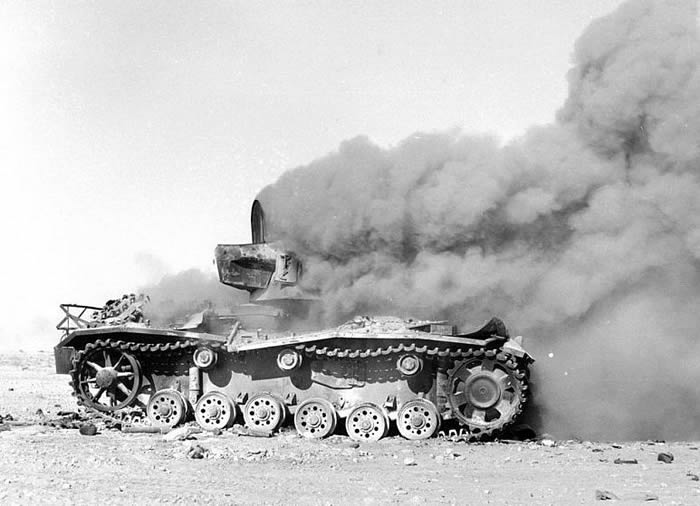
German panzer destroyed in El Alamein battle field
German panzer destroyed

Repulsed by the British, Rommel now began efforts to fortify his positions, creating obstacles through the use of minefields. He had no realistic expectation of attacking again and so had to remain in place. Although he had advanced so far into Egypt, the situation now favored the British.

The troops under the British commander Montgomery outnumbered Rommel's nearly two to one and had at least twice as many tanks. In all aspects the British supply situation was much better. Rommel had so little fuel that his ability to move was severely limited. At the same time, the British gasoline was more plentiful than water.

That logistical superiority was to translate into immense tactical superiority on the night of October 23, 1942. That night the British opened with a massive artillery barrage using over 600 guns.


This extensive artillery preparation lasted several hours and moved its focal point up and down the German line. Then it moved forward to allow the combat engineers with supporting tanks to disarm the extensive minefields that formed the backbone of Rommel's defenses.

The process of attacking by the 8th British Army was slow and methodical and would concentrate first on one part of the German line and then on another. Montgomery referred to this process as "crumbling" the enemy's defenses.

The Germans counterattacked but failed in their attempt to drive the British back. Finally, on November 2 the British broke through the last belt of minefields, and the attack could begin. By November 4 Rommel decided to retreat to the west.

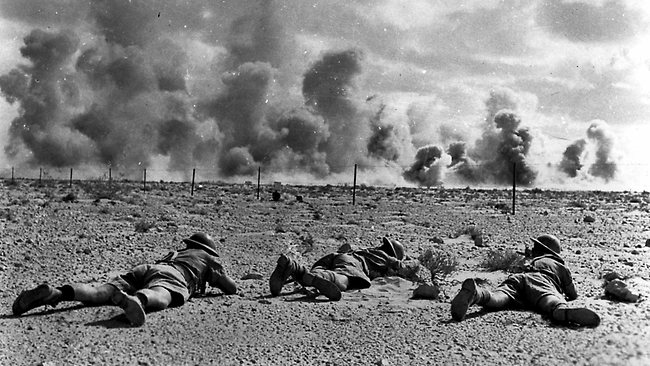
Australian troops crawling along the ground during the Battle of El Alamein in 1942
Australian troops crawling along the ground

From the west, in French North Africa, the Americans landed an army of over 400,000 men, who advanced eastward. Caught between the British and the Americans, Rommel's army surrendered in Tunisia in May 1943. The war in Africa was over.

At El Alamein Rommel was at his farthest point from his base of supplies. He had one route that followed the coastline; everything had to come to him that way from the Italians in Libya. Their bases were supplied by ship from Italy. This supply route was under constant attack by British submarines and aircraft.

Italian and German ships were sunk, and much of what was supposed to go to Rommel never reached him. Supply superiority translated into tangible benefits: more tanks and cannon as well as massive air superiority. That also translated into intangibles such as better morale helped by ample stores of food and other supplies.

If the British had lost at El Alamein, they could have lost all of Egypt, which would have been catastrophic. The Germans had hoped to link up with their soldiers in Russia by this route. The Germans could have captured the Suez Canal and controlled the Mediterranean. A push further would have brought them into Palestine.

There was no oil there, but a pipeline from Iraq built in the 1930s would have given them access to it. Considering that the government in Iraq was pro-Nazi, that would have solved Germany's oil problems. Further, the loss would have damaged British prestige and credibility.

Egyptian Revolution (1919)

Egyptian Revolution (1919)

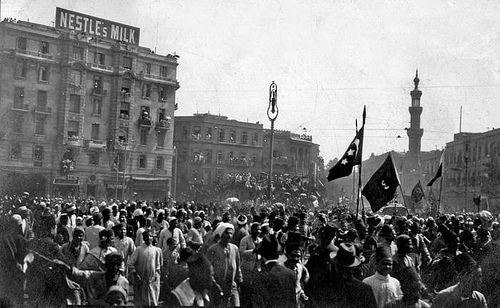
The revolution in Egypt broke out in March 1919 after the British arrested Sa'd Zaghlul, the leader of the Wafd Party, the main Egyptian nationalist party, and several other Wafdists. They were then deported to Malta. The exile of these popular leaders led to student demonstrations that soon escalated into massive strikes by students, government officials, professionals, women, and transport workers.

Nationalist discontent had been fueled by the protectorate established by the British at the beginning of the war, wartime shortages of basic goods, increased prices, the forced conscription of peasants as laborers for the military, and the presence of huge numbers of Western soldiers in Egypt.

Within a week all of Egypt was paralyzed by general strikes and rioting. Violence resulted, with many Egyptians and Europeans killed or injured when the British attempted to crush the demonstrations. European quarters and citizens were attacked by angry crowds who hated the special privileges and economic benefits given to foreigners.


Rail and telegraph lines were cut, and students refused to attend classes. Zaghlul had worked hard in the weeks prior to his arrest to mold the Wafd into an efficient political party. He traveled around the countryside gathering support and collecting money. In spite of martial law, which was imposed by the British at the beginning of the war, large-scale public meetings were held.

In his absence Zaghlul's wife, Safia, played a key role in party politics. Led by Safia and Huda Shaarawi, upper-class Egyptian women staged a political march through the streets of Cairo, throwing off their veils, waving banners, and shouting nationalist slogans.

Wafdist cells throughout the country coordinated the demonstrations and strikes through a central committee chain of command. Religious leaders, especially the sheikhs at al-Azhar, the premier Muslim university, also participated.

Propaganda leaflets, posters, and postcards with pictures of Sa'd and Safia Zaghlul were distributed throughout the country. The Wafd's central committee maintained an active role within unions, student groups, and professional organizations.

Determined to maintain control over Egypt, the British government replaced High Commissioner Reginald Wingate, who was considered weak and too moderate, with General Edmund Allenby, the greatest British hero from World War I.

Allenby promptly met with leading Egyptians, who convinced him that the only way to restore order was to release the Wafd leaders. A realist, Allenby complied and permitted Zaghlul and others to travel to Paris.

The Wafd kept up the pressure in Egypt, organizing boycotts of British goods and refusing to meet with the Milner Mission that had been sent out from London to investigate the situation. Steps were taken for more economic independence, and Talat Harb established an Egyptian bank in 1920.

Negotiations were held between the Wafd and the British in London in 1920, but the Wafd failed to secure a withdrawal of British troops, the end of the protectorate or the capitulations (favored status granted to foreign residents), or full independence. Nevertheless, the Wafd leaders were greeted as heroes when they returned home. When Zaghlul was again arrested and deported in 1921, a new wave of nationalist demonstrations erupted.

In light of the determined nationalist movement, Allenby forced a reluctant foreign office to end the protectorate, and in 1922 the British unilaterally declared Egyptian independence under a constitutional monarchy led by King Fu'ad.

However, Britain retained widespread powers, including the stationing of troops in Egypt and a role in determining Egyptian foreign affairs as well as control over the Sudan. Consequently, Egyptian nationalists continued in opposition to Britain throughout the interwar years.

Muslim Brotherhood

Muslim Brotherhood
Muslim Brotherhood

The Muslim Brotherhood, or the Society of the Muslim Brothers (also known as the Ikhwan), was established in Egypt by Hassan al-Banna in 1928. The new organization stressed community, games, and healthful pursuits. Although al-Banna denied it, some alleged that the brotherhood was patterned on the YMCA, which had opened branches in several Arab countries, including Egypt.

Born in 1906 in a lower-middle-class family, al-Banna was influenced by Sufi orders and took an active role in school activities. He attended school at Dar al 'Ulum and taught at a government school in Ismailia, where the brotherhood began.

A good speaker, al-Banna visited mosques and began to attract youthful members to his new organization. The organization, divided into cells with an individual leader, had a gradation of members who advanced by passing examinations.


Periodically, leaders would convene at congresses to coordinate programs. Women's sub-branches were also established. During the 1930s and 1940s, like other political forces in Egypt, such as the Wafd Party with its Blue Shirts and the fascist Young Egypt with its Green Shirts, the Brotherhood also had a secret paramilitary force.

The Ikhwan sought to eradicate all foreign influences. It had pan-Islamic aims and ultimately gained a following outside Egypt, especially among Palestinians in the Gaza Strip, and in Syria and Jordan. The brotherhood advocated the unification of Egypt and Islamic nations on Qur'anic principles.

The organization's aims broadened over the years. Al-Banna sought to use science to increase national wealth and to establish social welfare programs including pension plans.

The Ikhwan also considered reviving the caliphate. Initially, many observers underestimated the potential of the organization, which emphasized the rejuvenation of the Egyptian nation through a return to Islamic principles.

In 1933 al-Banna transferred the headquarters of the brotherhood to Cairo, where he used radio broadcasts to popularize his program. He also sent letters to politicians and began to increase the brotherhood's commercial activities, including ownership of printing presses. These were used to produce a magazine, pamphlets, and various other publications.

From 1939 to 1945 the brotherhood took an active role in Egyptian politics and became a major political force. The brotherhood attracted young members who had become disenchanted with the Wafd, the major political party of the era.

Generally eager for immediate results, students were dismayed and angry over the Wafd's compromises and alliances with the British. The brotherhood was also periodically courted by the palace in order to discredit and undermine the Wafd.

In 1948 then prime minister Mahmud Nuqrashi arrested and imprisoned al-Banna. A member of the brotherhood took revenge by assassinating Nuqrashi in 1949. But in 1949 al-Banna was in turn killed, probably with the complicity of both the palace and the government.

Al-Banna and the brotherhood strongly supported the Palestinian cause, and many members volunteered to fight for the Palestinians in the 1930s and in the 1948 Arab-Israeli War. By the late 1940s the brotherhood probably had close to half a million members.

After al-Banna's death, Ismail al-Hudaybi became the leader, or director general. A lawyer, Hudaybi was not as charismatic as al-Banna, but he doggedly pursued the programs of the organization. The Ikhwan quietly supported the 1952 revolution led by Gamal Abdul Nasser, but when the new regime refused to institute an Islamic state, the brotherhood became disenchanted.

After the brotherhood attempted to assassinate Nasser in 1954, its members were persecuted, imprisoned, or went into exile to other African or Arab nations. Many of the exiles became teachers and subsequently converted students to the cause.

The Muslim Brotherhood fostered an Islamic revival that had major consequences for the 20th and 21st centuries. Many contemporary Islamist movements are offshoots or were influenced by the tenets and approaches of the Muslim Brotherhood.

However, many present-day Islamist leaders, believing that the policies and approaches of the brotherhood are too moderate, have adopted more radical programs and strategies to force the establishment of regimes operating in accordance with their narrow interpretations of Islamic law and tradition.