Showing posts with label france. Show all posts

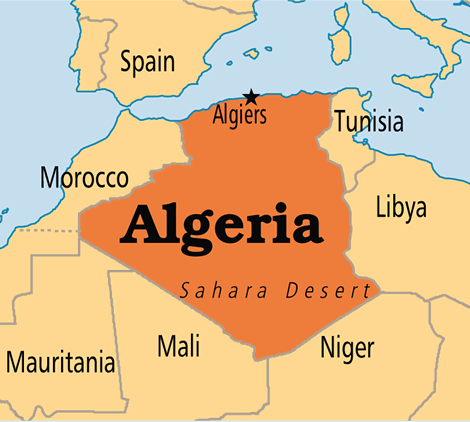
Algeria

Algeria
Algeria

Algeria remained part of the French Empire throughout the first half of the 20th century, but nationalist movements for independence became increasingly more vocal and determined. Several hundred thousand Algerians fought or worked for the French military during World War I. After the war they expected reforms and changes in French policies of assimilation and favoritism toward the colons, but the colons blocked government reforms announced in 1919.

French government policies dating from the 19th century onward had gradually increased the ownership of the best land by the colons and had resulted in the impoverishment of Algerian peasants. By 1950 most Algerians owned small plots of less than 10 acres.

To survive, peasants became sharecroppers or seasonal workers or fled to the cities where they were generally either day laborers or unemployed. The growing economic and social disparity between the colons and the majority Muslim Algerian population contributed to civil unrest and nationalist discontent.

In the early 1920s, Algerian workers in Paris, led by Messali al-Hajj, established the Star of North Africa, a social action, leftist movement, which attracted considerable popular support. In the interwar years, two major approaches toward the relationship with France emerged among Algerians. The first group wanted assimilation and participation as full-fledged French citizens. The second advocated Algerian independence as a separate nation.

Ferhat Abbas, a pharmacist by profession, represented the first when he said, "If I had discovered an Algerian nation, I would be a nationalist ... I have not found it." Hadj Ben Ahmed Messali championed the second approach, asserting that "Islam is our religion, Algeria our country, Arabic our language." The French often jailed Messali for his uncompromising nationalist stances.

To minimize Algerian opposition, the French adopted a divide and rule tactic by favoring the Muslim Berber population that lived in the mountainous Kabyle region and encouraging it as a separate entity from the Muslim Arab population. These attempts failed as Berbers played key roles in the nationalist movement and were particularly attracted to Messali's approach.

The Algerian Muslim Congress drew up a list of grievances in 1936 but fell far short of advocating complete independence for Algeria. Many Muslim leaders still hoped that a form of assimilation could be devised whereby Muslims could become French citizens without abrogating Islamic law or tradition.
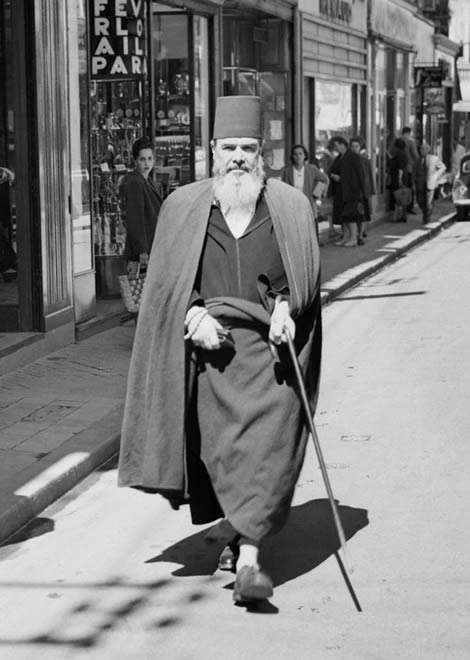
Messali al-Hajj
Messali al-Hajj

In response to the problem, the Blum-Violette proposals in 1937 provided for the gradual extension of suffrage whereby some 20,000 Algerians would become citizens with more to follow over time.

However, the colons adamantly opposed any reforms that widened Algerian participation and lessened their own political and economic power. The weakness and instability of French regimes in Paris prevented the implementation of reform programs that might have ameliorated the differences.

When the Vichy French regime came to power during World War II, it instituted Nazi racist policies that imperiled both Muslim Algerians and Algerian Jews, who had been granted French citizenship in the late 19th century. These decrees were abolished when the Allied-supported French committee of national liberation took power in 1943.
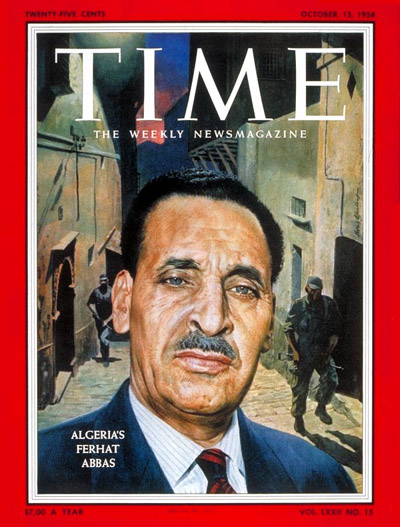
Ferhat Abbas
Ferhat Abbas

Encouraged by Allied support, Abbas and his supporters issued the Manifesto of Algerian People in 1943. The manifesto paid respect to French culture but noted that assimilation had failed and that reforms were needed. Some French were willing to consider reforms, but others felt that the manifesto would lead to independence and flatly rejected it.

Abbas then formed the Friends of the Manifesto and of Liberty and called for an autonomous republic in Algeria while counseling patience. His movement attracted mostly urban middle-class Algerians. The working class, far greater in numbers, supported Messali's calls for complete independence.

The leader of the Free French, Charles de Gaulle, tried to conciliate the differences by proposing that more Algerians could become French citizens without giving up their Qur'anic rights, but this compromise failed to satisfy many Muslims and infuriated the colons. In 1945 the French put Abbas under house arrest, and Messali was exiled.

In the spring of 1945 parades in Setif (southwest of Constantine) celebrating the end of World War II in Europe quickly turned into nationalist demonstrations. Violence spread to cities and other areas. In the rioting and French reprisals that quickly followed, hundreds of colons and thousands of Algerians (the figures vary widely ranging from 1,500 to 80,000) were killed.

The Algerian Statute of 1947 in which assimilation was stopped and two separate communities were recognized pleased no one. Under the new law, the French prime minister appointed a governor-general who was assisted by a council of six with the right to apply French law.

The Algerian Assembly was to have two houses, one European and one for "natives." Europeans controlled both houses. Colons were against even this compromise, and Messali responded by demanding complete independence.
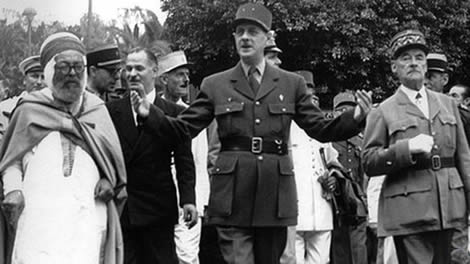
Charles de Gaulle in Algeria

By this time, the majority of Algerians had concluded that the French were never going to grant full equality and that independence was the only solution. By 1950 many Algerian nationalists had either been arrested by the French, were in exile, or had escaped into the mountains of the Kabyle. The conflict remained unresolved until full-scale war broke out in 1954.

Georges Clemenceau

Georges Clemenceau
Georges Clemenceau

Georges Clemenceau was one of the most famous political figures in the Third French Republic and a major contributor to the Allied victory in World War I. He was born in 1841 in the small village of Mouilleron-enPareds in the Vendée, a region on the western coast of France. Trained as a doctor, he gave up the practice of medicine for a life in politics.

He began his career as mayor of Montmartre and in 1876 was elected to the Chamber of Deputies, where he identified with leftist causes and became a powerful figure in the Radical Party. A brilliant orator and a fiery critic of republicans in the Center and on the Right, he was instrumental in overthrowing many ministries, earning in the process the nickname "The Tiger." Implicated in the Panama Canal scandal, he lost his seat in the elections of 1893 and for the following nine years earned his living as a journalist.

Clemenceau was elected to the senate in 1902 and in 1906 served as interior minister in the Jean Sarrien cabinet. When Sarrien resigned in October 1906, Clemenceau formed his own cabinet, which endured until 1909.


While in office he strengthened ties with Britain and Russia to counter Germany's growing challenge to France. At home he continued his predecessors' anticlerical policies and adopted a hard-line stance toward striking workers, alienating large sections of the political left.

A sudden no-confidence vote after a violent debate brought down the government in the summer of 1909. Clemenceau returned to the senate and spent the years prior to 1914 urging the buildup of France's armed forces. In 1913 he founded a newspaper so he could warn the country about the need to rearm.

When World War I broke out in August 1914 Clemenceau was disappointed that he was not recalled to the helm. After the stalemate set in on the western front he assailed the French High Command for its fruitless offensives and for failing to make adequate preparations at Verdun, the target of a German onslaught in 1916.

As 1917 wore on, the war was going badly for the Allies with the impending loss of Russia, a disastrous Italian defeat at Caporetto, and defeatism threatening both the military and civilian strength of France. In this particularly dark moment the president, Raymond Poincaré, called on the 76-year-old Clemenceau to form a government after the last one had fallen in November.

Council of Four at the WWI Paris peace conference, May 27, 1919. Prime Minister David Lloyd George (Great Britian) Premier Vittorio Orlando, Italy, French Premier Georges Clemenceau, President Woodrow Wilson
Council of Four at the WWI Paris peace conference, May 27, 1919

On taking office Clemenceau's single purpose was to win the war, subordinating all other considerations. He ended internecine fighting in the cabinet by selecting minor figures on whose loyalty he could depend. With the acquiescence of parliament he established a virtual dictatorship in order to prosecute the war more effectively. He cracked down on pacifists, defeatists, and traitors, anyone he considered uncommitted to total victory.

He secured greater control over the military; made frequent visits to the front, where he spoke not only to generals but to ordinary soldiers; and helped bring about a unified command. His unflinching style of waging war revived popular morale and was instrumental in helping the nation withstand the series of German hammer blows in the spring of 1918.

Clemenceau presided over the Paris Peace Conference in 1919, where he sought to punish and disarm Germany. It soon became apparent that Clemenceau's demands for France's security clashed with the postwar aims of Britain and the United States.


Clemenceau fought hard to create a buffer state in the Rhineland under permanent French control but reluctantly gave up the idea on receiving an Anglo-American pledge of assistance in case Germany again attacked France.

What Clemenceau did not foresee was that the treaties would be repudiated by the U.S. Senate and Britain's parliament. Although the Versailles Treaty imposed harsh terms on Germany, Clemenceau was criticized by a sizable section of the French citizenry who considered it too lenient.

Clemenceau hoped to be elected president, a largely ceremonial post, when Poincaré's term expired in February 1920. Of all the candidates he seemed the most deserving in view of his wartime services. As it happened, the chamber and the senate rejected him in favor of the undistinguished Paul Deschanel. He resigned as premier the day after his defeat and left the senate as well. He died in 1929 and according to his wish was buried near his father at Colombier in his native Vendée.

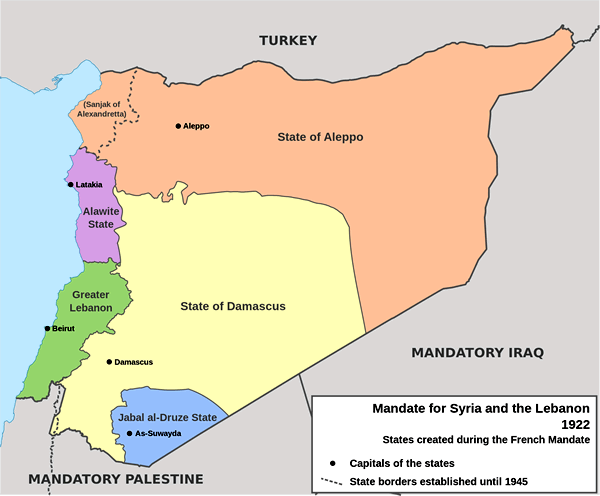
French Mandate in Syria and Lebanon

French Mandate in Syria and Lebanon

Following the defeat and the subsequent collapse of the Ottoman Empire in 1918, the geographic area of greater Syria came under French mandate rule as stipulated by the League of Nations in 1920.

Under French rule, the mandate authority, in addition to expanding the Ottoman Wilayat of Lebanon at the expense of Syria, divided Syria into four new separate districts: Aleppo, Latikia, Damascus, and Jebel Druze. French rule in Syria faced violence, rebellions, and political opposition by the Syrians, who never accepted French domination

The country now known as Lebanon was created on September 1, 1920, by enlarging the Ottoman Wilayat of Lebanon to include previously Syrian-held territory north and south of its borders.


The entity of greater Lebanon (1920–26), as the new state was called, was fashioned after French republican ideals with a constitution and an executive president elected by a parliament.

In 1932 a census was conducted that resulted in the confirmation of 18 religious sects in the country. In an attempt to provide better representation in the government, the results of the 1932 census were incorporated in Article 95 of the constitution, establishing a confessional system.

The Kingdom of Syria (1918–20) was declared soon after the Ottoman army had been defeated in 1918. Headed by the Hashemite king Faysal (also Feisal) I, the kingdom rejected the French mandate.

The opposition to French rule did not end with the demise of the Hashemite Kingdom of Syria. On the contrary, it was fortified by a strong nationalist sentiment, and rebellions periodically erupted throughout the mandate years; these culminated in the Great Arab Rebellion of 1936, which resulted in the French bombardment of Damascus.

In 1940 during World War II, the French overseas territories were controlled by the pro-Nazi Vichy French government. In 1941 British and Free French forces overthrew the Vichy forces and granted Syria and Lebanon nominal independence.

In 1942 parliamentary elections in Syria brought the nationalist National Bloc to power; it began negotiating for independence with the French government. In Lebanon the political elite agreed on a formula to distribute power under the National Pact of 1943.

With U.S. and Soviet recognition, Syrian independence was granted in 1943. Lebanon was also granted independence the same year, but French troops remained stationed in both countries until 1946. Syria celebrated its independence day on April 17, 1946, while Lebanon celebrated independence day on November 22, 1943, and marked withdrawal day on April 17, 1946.

French West Africa (Afrique occidentale française)

French West Africa (Afrique occidentale française)

French West Africa came into being in 1895 when France decided to consolidate its African holdings. Initially, French West Africa was a temporary combination of Senegal, French Guinea (now Guinea), French

Sudan (now Mali), and Côte d'Ivoire. In 1904 it became permanent, with territories including Dahomey (now Benin), French Guinea, French Sudan, Côte d'Ivoire, Mauretania, Niger, Senegal, and Upper Volta (now Burkina Faso).

The federation was ruled by a governor-general first from Saint-Louis and then, after 1902, from Dakar, both in Senegal. The federation supported Vichy France during World War II before accepting the Free French in November 1942.


The federation occupied an area of 4,689,000 square kilometers, most of which was desert or semidesert in the interior of Niger, Sudan, and Mauretania. One of the largest colonial possessions in Africa, the federation reached from westernmost Africa at Cape Verde to deep within the Sahara. Population at its creation was over 10 million. When the federation dissolved, its population was about 25 million.

West Africa was not a primitive area when the Europeans arrived. Precolonial empires and states included Ghana, Mali, Songhai, and Hausa. The precolonial era was also a time when Islam expanded into West Africa. The Europeans entered and disrupted a highly complex society.

The slave trade in West Africa expanded greatly beginning in the late 16th century and continued to grow into the mid-19th century. By the 18th century the slave trade was an important ingredient in the European interest in Africa, especially for providing slaves to New World plantation economies. The increasing New World demand coincided with Islamic jihads and rivalries between the precolonial states.

The capture and transfer of Africans into slavery became the dominant commerce for the Portuguese, then the Dutch, then the British and French. The British, Dutch, and Portuguese controlled the major slave ports between Ghana and the Cameroons. Africans also facilitated the slave trade.

The French early on regarded their African possessions as overseas provinces. The early efforts to colonize were unsuccessful, though, and in the mid-19th century interest shifted from colonization to mercantile prospects. Trade with the savanna of the interior coincided with the race for Africa of the late 19th century.

The Berlin Act of 1885 formalized the partition of Africa, including West Africa. By 1890 the French had signed treaties with African leaders that in theory authorized their annexation of much of western Sudan. Military superiority allowed the French to acquire large territories, most of it desert or otherwise worthless. The French did not turn to commercial development until early in the 20th century.

In the early 1890s France conquered Dahomey, made Côte d'Ivoire a formal colony, and obtained territory in Upper Volta. French Africa ran from Algeria to the Gulf of Guinea.

The administrative unit known as French West Africa included the coastal colonies— Senegal, French Guinea, and Côte d'Ivoire—as well as the French Sudan, the large interior territory that included present-day Mali, Niger, and Burkina Faso. Dahomey became part of French West Africa in 1899. French Sudan became Haut Senegal-Niger in 1904.

Mauretania became a protectorate in 1905. Upper Volta separated from Haut Sénégal–Niger in 1919, and the remaining Haut Sénégal–Niger became French Sudan once more. Mauretania became a colony and part of French West Africa in 1920. Niger separated from French Sudan in 1922.

Senegal was the only part of French West Africa with even token assimilation, and participation by Africans in French affairs was confined to Saint-Louis. Elsewhere in French West Africa, inhabitants were subjects, not citizens. The European French were increasingly skeptical about the ability of the Africans to become "suitable" French citizens.

The assimilationist philosophy of the original exploration was gone by the time of the French West African Federation in 1895. Rather than allow local authority, the French established direct rule in the form of a governor-general taking his orders directly from the minister of colonies and the government in Paris.

The governor-general relayed orders and financing to his lieutenant governors in the territories. Senegal had representative government as a residue of the original assimilationist impulse—citizens could represent the Senegalese in France.

The French effort to make the colony pay its own way led to their pushing the productivity of groundnuts and cotton where suitable. Extraction of valuable resources was also emphasized. Taxes forced the population into the cash economy.

Inhabitants of areas where cash crops were impractical were encouraged to migrate to wage-earning areas. Servitude nearing slavery was tolerated in the interest of profitability. The French did provide at least a small amount of missionary effort as well as minimal educational and health services. The economic benefit accrued to the French only.

After World War I France relaxed its rule somewhat. Occasional revolts as well as a rediscovery of African tradition encouraged the easing of the slavery and aristocratic rule that had characterized the decades from the mid-1890s until the war. Tribal leaders were more respected after France reinstated them.

Initially loyal to Vichy France during World War II, French West Africa shifted to the Allies after the U.S. invasion of North Africa and the occupation of Dakar, Senegal, by the Allies. The Free French under General Charles de Gaulle took control of French West Africa.

When World War II was over, the Europeans were worn out, unwilling politically, and unable economically to resist demands for political reform in colonies that were increasingly an intolerable financial burden.

The Europeans living in Africa were an issue. Also, the colonies provided valuable resources. But the benefits were far from matching the costs. And independence came in the 1960s. France also had an ego at stake in the postwar era. Defeat and occupation were not preconditions for an easy abandonment of the empire.

After World War II France's overseas colonies in Africa became overseas territories. Their inhabitants became eligible for French citizenship. They also received the right to organize political parties and have representation in the French legislature.

When given the choice of complete independence or self-governance as members of the new French Community (France and its former colonies), which was intended for common defense, foreign policy, education, and other common matters, all elected to join the community except French Guinea, which became independent Guinea in October 1958. With the establishment of the French Community, French West Africa was no more.

The autonomous states of French Sudan, Senegal, Upper Volta, and Dahomey united into the Federation of Mali, named for the ancient African Mali Empire, in 1958. Upper Volta and Dahomey withdrew before the federation became operational in January 1960. By August 1960, when Senegal withdrew, the federation was defunct.

Postwar nationalism and the example of the newly independent English colonies, led by Ghana in 1957, produced a strong impulse toward independence in French West Africa. Between August and November 1960, Dahomey, Niger, Upper Volta, Côte d'Ivoire, Senegal, Mali, and Mauretania gained their independence.

Louis-Hubert Lyautey

Louis-Hubert Lyautey

Louis-Hubert Gonzalve Lyautey was born in Nancy, France, on November 17, 1854. He was brought up in the aristocratic and intellectual society of Nancy as well as in the simplicity of country life. When Lyautey was only 18 months old he fell from a balcony of the family house, which resulted in a spinal injury. Until the age of six he endured a long period of enforced inactivity, passing the time by reading.

In his teens he attended several schools, and at age 18 in 1873 he entered the French military academy, Saint-Cyr. In 1876 he enrolled in the military staff school and joined a cavalry regiment that was posted in Orleansville, Algeria.

For the next two years Lyautey learned about Islam, North Africa, and colonial administration; he also began studying Arabic. Lyautey was promoted to the rank of captain in 1882 and was then ordered to join the IV regiment of the Chasseurs Legers at Epinal.


When Lyautey was about 33 he published an article on military reforms that ultimately changed his career. He was considered one of those rare men who enjoyed both the sword and the pen. As a reprimand for his article, Lyautey was transferred to Indochina; however, this turned out to be a blessing in disguise.

He arrived in Saigon in 1894 and met with Colonel Joseph Gallieni, who became his inspiration; Gallieni also promoted him to chief of staff. While under Gallieni, Lyautey learned a core lesson in colonization, namely, not to offend local traditions nor to change customs, and to use the elite class to the benefit of the empire.

Lyautey also learned tactics involving taking, securing, administering, and developing areas that were in enemy hands or subject to enemy attack. His principles concentrated on the well-being of the indigenous population, providing them with security in everyday life and administering their affairs with understanding, respect, and generosity.

In 1897 Lyautey followed Gallieni to Madagascar, where he was promoted to lieutenant colonel and had the opportunity to construct a city how he saw fit. By 1900 he was promoted to full colonel, and by 1903 he returned to Algeria as brigadier general.

After the French took several cities in Morocco in an attempt to quell resistance to their occupation in neighboring Algeria, the Treaty of Fez, establishing a French protectorate over Morocco, was signed on March 30, 1912.

Lyautey was then appointed the first resident general of Morocco. One of Lyautey's greatest qualities was his ability to adapt to new situations, and he did not adopt a specific or rigid formula in his administration of Morocco.

He had qualities that appealed to Moroccans, Berbers, and Arabs alike, as he was a man of decision, integrity, and justice. In contrast to many of his peers, Lyautey did not believe it was the mission of Europeans to force their civilization and religion on the peoples of colonized countries.

He believed it was important that the French understand Islam and the values of the Muslim world. He also believed that a mass migration of European colonists into Morocco would cause problems (as it had in Algeria) but did not object if the colons were willing to contribute to the country.

As resident general, Lyautey maintained local customs and architecture and established so-called flying columns of soldiers to move quickly from one location to another in order to put down any local rebellions. The establishment of local health clinics in remote areas helped to encourage Moroccan support of the French administration.

Lyautey also modernized and enlarged ports, especially in Casablanca, and supported economic development projects in mining and trade. With the outbreak of World War I, he managed to control Morocco with very few troops.

In 1916, in the midst of World War I, Lyautey was offered the post of minister of war. After some reluctance he accepted the post but soon clashed with other high-ranking military officers. He opposed Commander in Chief Robert Nivelle's plan for a new offensive against the Germans, but the plan was implemented over Lyautey's objections.

Just as Lyautey had foreseen, the offensive failed and resulted in massive numbers of French casualties. Furious, Lyautey tendered his resignation and was asked to return to Morocco to resume his old post as resident general, which he happily accepted. After the war in 1921, Lyautey was promoted to the nation's highest military rank of marshal. He was 66 years old.

Lyautey was plagued by liver attacks that affected him for years that would force him to stay in bed for several weeks and for which he had to endure several operations. During the 1920s, plagued with ill health, Lyautey attempted to resign from the residency, but he was constantly persuaded to remain in Morocco.

During the early 1920s the successes of the Rif rebellion under Abd el Krim against the Spanish enclaves in the north of Morocco threatened French rule in the rest of the nation. By 1925 Lyautey was reluctantly engulfed in military operations against Abd el Krim and his army. In the midst of the struggle, Lyautey was removed from the military command of Morocco, and Marshal Philippe Petain, with whom he had previously clashed, replaced him.

On September 24, 1925, the colonial veteran, now 70 years old, asked to be relieved of the supreme command in Morocco. His resignation was accepted, and n October Lyautey left Morocco for France. As he left Rabat, a large crowd gathered to see him off.

To the surprise of many, it was the British, not the French, who honored Lyautey with a naval escort of two destroyers through the Strait of Gibraltar. Lyautey spent most of his remaining years at Thorey, in his beloved Lorraine, preparing a few volumes of letters for publication.

Some of the developments in Morocco that Lyautey can be credited with are construction of roads, cities, hospitals, schools, dispensaries, and railways. Hubert Lyautey died in 1934, and his ashes were conveyed by a French naval squadron, accompanied by 14 ships of the British Second Battle Cruiser Squadron, to his mausoleum in Rabat, Morocco.

Maginot Line

Maginot Line
Maginot Line

There was never unanimous consensus among military men about the lessons of World War I. When the adversaries of 1914–18 fought again in 1940, the Germans interpreted their experience as one that taught the need for a rapid and forceful offense.

Interpreting that same conflict quite differently, France planned to fight almost purely defensively in the first stages. It would then attack the Germans, who they believed would have worn themselves out assaulting the centerpiece of French strategy, the Maginot line.

Planned in the 1920s and essentially completed by 1935, the Maginot line (named after a French minister of war) was a network of fortifications on the border between Germany, Luxembourg, and Italy. The line was designed and built to serve several purposes.


First, the Maginot line would protect French industry in the Alsace-Lorraine region. Second, a strong defensive line would help the French make the most of their available forces while mobilizing their remaining reserves.

Finally, it was envisioned that the Germans would go directly for the line, allowing the French to hold them off and inflict heavy casualties. The relatively fresh French would then launch an assault of their own and defeat the Germans on their own territory.

The Maginot line was not an uninterrupted line like the trench system of World War I. Instead, it was a network of steel and concrete fortifications facing the Germans to the east and the Italians to the southeast. Each fort (commonly designated as an ouvrage, or work) was an independent structure; in all there were over 100 of these with additional minor fortifications.

maginot line fort diagram

Using guns in a variety of calibers, each fort was within the range of another so they not only could fire on assaulting troops but could also cover other forts in the immediate area. To add further support, there were permanent garrisons of "interval troops," infantry units that would provide support in the areas between forts.

The forts were among the most advanced technical structures of the day. Each had large storage areas for ammunition, facilities for food supplies, command centers, fire control centers, miles of tunnels, small railroads, air-conditioning, electrical power plants, and water supplies. In addition, the guns were mounted in turrets that used a series of complex, highly advanced mechanical devices to change elevation or direction.

The line was strong, it reflected state-of-the-art technologies for the 1930s, and it even made a high degree of military sense. There were, however, drawbacks. Perhaps the most significant of these was that the line did not go all the way to the North Sea.

Maginot line turrets

France did not extend the line for several reasons: the expense, the unsuitability of the terrain, and the appearance that France was abandoning Belgium. In fact, the French believed that while the Maginot line was holding, the newly mobilized French forces would join with the Belgians to contain the German advance.

Together, probably with British assistance, they would then advance through Belgium and eventually invade Germany. At the same time, the French made an assumption that the very northern end of the Maginot line, which stopped near the Ardennes, would be safe, as the Germans would never launch a major offensive through the rough terrain there.

Although war was declared in September 1939, there was no significant action by either side on the western front until May 1940. This period, known as the phony war, allowed the British and the French to mobilize and bring their troops to hold positions without interference by the Germans.

German invasion
German invasion

On the morning of May 10, over 100 German divisions attacked the French, British, Belgians, and Dutch. The main German attack went through the Ardennes forests and mountains in Luxembourg, south of Liege, exactly where the French had assumed it would never take place.

Thus, the German tanks and motorized forces went around the extreme left flank of the Maginot line and straight into France. They bypassed the line and did not attack it directly until after the British evacuation from Dunkirk and the surrender of the French government. The Maginot line forts surrendered only when their mobile interval troops had retreated and they were completely surrounded.

The Germans occupied the Maginot forts but did not maintain them. They used them only briefly when the United States attacked some nearby French cities in 1944 and 1945. After the war the French army reoccupied them and used them. In the years of the cold war, they provided headquarters and communications centers that would have provided significant protection in the case of a nuclear war.

In the years between the world wars, the French were not alone in seeing the usefulness of fortifications. Although they would rely upon a highly mobile and powerful offensive, the Germans maintained two lines, one facing Poland (the East Wall) and one facing France (the West Wall, better known as the Siegfried line, which would be used in 1944 against the United States).

In addition, Czechoslovakia constructed a line of defenses built with French assistance. Finally, Switzerland had built a complex of fortifications. Although not as extensive as the Maginot or German lines, it was well placed, using the mountainous terrain and command of the few lines of communications through the passes.

The Maginot line has become a symbol. On one level it represents a defense that deluded its builders into thinking they need not do anything else but rely upon what seemed to be an impenetrable defense. It has also become a symbol or a shorthand expression for all of the reasons for France's defeat in 1940.

The irony is that had it been used properly, that is, supplemented with an acute understanding of what the enemy might do and not what the French wanted them to do, it might have been a symbol of victory. As designed, the Maginot line worked. It was the rest of France's strategy that failed.

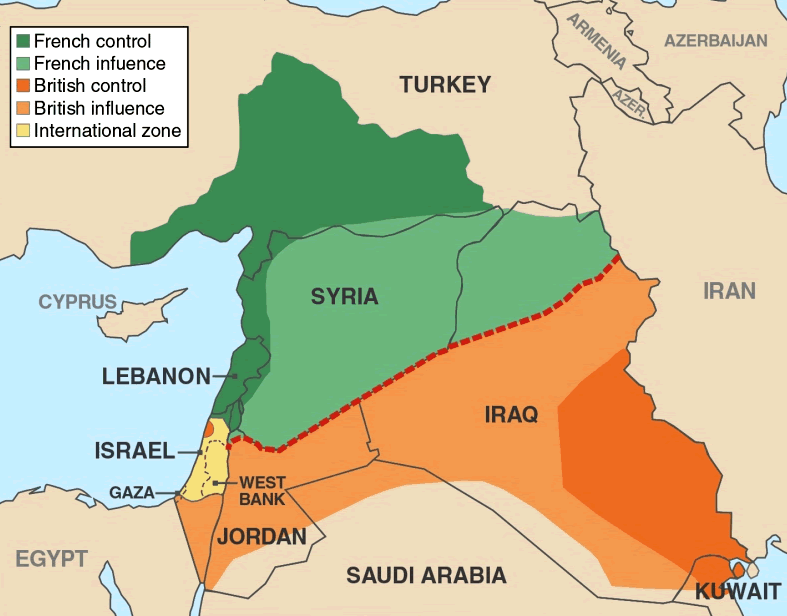
Sykes-Picot Agreement (1916)

Sykes-Picot Agreement

The Sykes-Picot Agreement was a secret agreement between the British and the French regarding the dispensation of Ottoman territory in the Middle East. François Georges-Picot represented the French and Mark Sykes represented the British.

Formalized in May 1916 at the height of World War I, the agreement was based on the assumption that the Allies would win the war (by no means certain in 1916), and as a result, the Ottoman Empire that had sided with the Germans would be dismembered.

Under the Sykes-Picot Agreement, France was to gain spheres of influence, or direct control, over most of the Arab territories of present-day Syria and Lebanon as well as southeastern Turkey, including the area around Alexandretta. The British were to gain control over much of present-day Iraq and Jordan and areas in Palestine around the northern port of Haifa.


The rest of Palestine, including the holy cities of Jerusalem and Bethlehem, was to fall under international control. At the time none of these areas existed as independent states but had been ruled as provinces of the Ottoman Empire since the 16th century.

Under later terms, Russia, an ally in the war at the time, was to receive Armenia and parts of Kurdistan. Russia also hoped that this would mean the realization of its long-held dream to control access into the Mediterranean from the Black Sea through the Strait of the Dardanelles.

The Italians, also allies, were to expand in the Aegean and western Turkey around the major city of Izmir. The area of present-day Saudi Arabia was not included in the arrangement because in 1916 oil had not yet been discovered there and the territory was not considered of economic or political importance.

The portions of the agreement involving Russia were nullified when Russia dropped out of the war early through a separate treaty with Germany. Owing to Mustafa Kemal Atatürk's successful military defense of the Anatolian Peninsula, Turkey was not partitioned after the war, nor was it occupied for any length of time.

As some British foreign office officials warned at the time, portions of the Sykes-Picot Agreement contradicted the secret agreements made with the Arabs in the Sherif Husayn–McMahon correspondence. The Balfour Declaration regarding Zionist, or Jewish national, aspirations in Palestine, issued publicly in 1917, further complicated the issue of control over that territory.

The terms of the Sykes-Picot Agreement involving Arab territories were formalized in the 1920 San Remo Treaty and in the League of Nations in 1922, whereby Syria and Lebanon became French mandates and Palestine, Jordan, and Iraq became British mandates.

Consequently, in the post–World War I era, the Arabs not only failed to receive independence, but they were also divided into separate nations ruled by two different imperial powers. Nor did the Zionists realize their dreams of an independent Jewish state. The consequences of these decisions continued to cause conflict in the region into the 21st century.