Good Neighbor Policy (1933 - 1945)

This is a picture of FDR with the Nicaraguan dictator in 1939. He had to visit or host many leaders from the region to ensure the Good Neighbor Policy would succeed for him.
FDR and the Good Neighbor Policy

The Good Neighbor Policy, announced by President Franklin Delano Roosevelt (FDR) during his first inaugural address on March 4, 1933, at the height of the Great Depression, was a response to the powerful backlash against U.S. military intervention in the Caribbean and Central America over the previous 35 years.

"In the field of world policy I would dedicate this Nation to the policy of the good neighbor," Roosevelt declared, "the neighbor who resolutely respects himself and, because he does so, respects the rights of others ...." In effect, FDR's policy shift amounted to a repudiation of his cousin Theodore Roosevelt's 1904 corollary to the Monroe Doctrine.

From 1898 to 1933, the United States had intervened militarily, economically, and politically in Cuba, Panama, Nicaragua, Mexico, Haiti, the Dominican Republic, and elsewhere, creating an informal empire in its "backyard," with the aim of creating "order" and "stability" and asserting U.S. economic and geopolitical domination of the region, to the exclusion of European powers. This openly interventionist policy had generated a firestorm of protest throughout much of Latin America and Europe.


By the late 1920s it was clear that the unintended consequences of U.S. intervention were overshadowing its intended effects. The Good Neighbor Policy has thus been interpreted as a new stage in U.S. efforts to dominate the region, in the context of the Great Depression, the rise of fascism in Italy and Germany, and the threat to U.S. interests in Asia posed by imperial Japan.

Overall the policy proved very effective, disarming critics, dampening opposition, and garnering important allies across the hemisphere. Its most important effects arguably came during World War II, when governments throughout Latin America backed the Allies in their war against Germany and Japan.

The short-term antecedents to the policy have been traced to president-elect Herbert Hoover's tour of Latin America in late 1928, following the sixth Pan-American Conference in Havana in January (at which U.S. policy came under heavy criticism), when he announced his hope that the nations of the Western Hemisphere might get along like "good neighbors." Under FDR the Good Neighbor Policy assumed military, economic, political, and cultural dimensions.

Militarily, the United States withdrew its troops from Nicaragua (January 1933, an event predating formal announcement of the new policy, and in the works since late 1928) and Haiti (1934) and refused to send troops to help stabilize Cuba during the crisis of 1933–34. Also in 1934, the United States abrogated the 1901 Platt Amendment to the Cuban constitution, thus forfeiting its right to intervene militarily in Cuban affairs.

Economically, the United States actively encouraged trade and investment throughout the hemisphere while also wielding the carrot and stick of U.S. economic aid, loans, and technical assistance.

In 1934, emblematic of the policy shift, Congress created the Export-Import Bank to assist U.S. firms doing business overseas and passed the Reciprocal Trade Agreements Act, which authorized bilateral trade agreements with individual countries. Politically, the United States affirmed its commitment to nonintervention in Latin American affairs at the 1933 Pan-American Conference in Montevideo and in 1936 at the Buenos Aires Conference.

The policy was put to a major test in the Mexican and Bolivian oil crises of 1938–39, when FDR refused to respond militarily to nationalist expropriations of U.S. property. The refusal overturned decades of U.S. policy toward its southern neighbors, in which the U.S. government's right to protect U.S. "lives and property" was used to justify military intervention.

The policy had an important cultural dimension as well, ranging from music, film, and printed texts to joint resolutions at inter-American conferences emphasizing the unity and distinctiveness of the nations of the Western Hemisphere.

After World War II, the policy was subsumed under the rubric of "national security" and hemispheric security in the context of the cold war and the fight against the perceived menace of international communism. The origins, characteristics, and consequences of the Good Neighbor Policy have spawned an expansive literature.

Worldwide Great Depression

Worldwide Great Depression

The most dramatic economic shock the world has ever known began on October 24, 1929, "Black Thursday." After years of large-scale speculations, with millions of investors borrowing money to chase the dream of easy riches and hundreds of banks willing to accept stocks as collateral, stock prices eventually far exceeded the companies' actual productivity, and the bubble burst.

The collapse of the New York stock exchange continued through October 29 ("Black Tuesday"), and during the following days and weeks countless investors found themselves broke, while hundreds of banks were forced to default on their loans.

By the early 1940s Dow Jones stock prices were still approximately 75 percent below the 1929 peak, a level that was only reached again in 1955. The Federal Reserve refused to provide emergency lending to help key banks to at least partially recover from their losses, so that the number of banks in operation almost halved over the next four years, driving thousands of business owners to the wall as their banks called in loans to stay afloat.


Furthermore, because the banking system could no longer supply the necessary liquidity, new business enterprises could not be undertaken, and millions of workers lost their jobs with little hope of regaining them in the near future.

In 1933 and 1934 one-half of the total U.S. workforce was jobless or underemployed. To make things worse, home mortgages and loans had produced a huge amount of consumer debt, and although incomes decreased, debts did not. Predictably, consumer spending declined dramatically: Between 1929 and 1933 expenses for food and housing went down by more than 40 percent, with crop prices following the same downward path.

The crisis in the financial markets had set off a domino reaction, but U.S. president Herbert Hoover was a steadfast advocate of laissez-faire principles and believed that the "invisible hand" of the market and the moral fiber of the American people would ensure that everything would eventually work out.

In keeping with the contemporary tendency to manage economic problems by trade measures, Hoover adopted austerity policies, and on June 17, 1930, he signed the Hawley-Smoot Tariff Act, which doubled import duties on selected goods, causing other Western countries, already burdened by war debts and reparations dating back to the Versailles Treaty of 1919, to react by raising their own import tariffs. This provoked a major disruption of world trade.

World Economic Disaster

Internationally, a combination of high external debt, falling export prices, government fiscal difficulties, and internal banking crises spelled disaster for the world economy. Latin American countries, the most dependent on selling raw materials to U.S. industries, were the first to default on their debts.

Bolivia defaulted in January 1931, Peru in March of the same year, Chile in July, and Brazil and Colombia in October. Europe was hit in 1931, when several banking crises translated into foreign exchange and fiscal crises. Hungary, Yugoslavia, and Greece were forced to default in 1932, followed by Austria and Germany in 1933.

Austria's largest bank, Vienna's Kreditanstalt, failed in May 1931, an event that sent shockwaves across Europe. Depositors rushed to withdraw their money from banks that were perceived to be in weak financial conditions and, in so doing, they compromised the stability of the entire banking systems of several countries. By mid-June, many German banks had collapsed. The three largest Italian banks were rescued by the Fascist regime.

One of the main consequences of this chain reaction was that trust in sovereign loans was shattered. The social and political repercussions were catastrophic. Industrial unemployment in the United States averaged 37.6 percent in 1933, while Germany reached its highest rate at 43.8 percent, the United Kingdom at 22.1, Sweden at 23.7, Denmark at 28.8, and Belgium at 20.4 percent. In western Canada more than one-fifth of the labor force remained unemployed throughout the 1930s. Meanwhile, in the United States, the penal system became increasingly punitive.

More executions were carried out than in any other decade in U.S. history, and there was also a sharp rise in imprisonment. Crime rates did not significantly rise, but the mass media popularized the idea that the social order was on the verge of collapse, generating a "crime wave" frenzy among the public.

Slump Stabilized

By the early 1930s, the economic slump had destabilized the international political order, the erosion of liberal values was at an advanced stage, and welfarist costbenefit analysis had gained appeal and credibility.

Prompted by the need to cut down on public spending and by the moral panic generated by the Great Depression, several governments of the most advanced democratic countries lost confidence in the effectiveness of social reforms and undertook programs for the involuntary sterilization of thousands of citizens.

It was argued that under exceptional circumstances, basic rights could be withheld and that in order to reduce the burden on the public purse, social services should only be granted to those whose social usefulness and biological capability were past doubt. In the Weimar Republic, the country hardest hit by the depression, this ideological shift produced a radicalization of medical views on racial hygiene and "euthanasia."

Trade protectionism, nationalism, and the growing appeal of fascism were among the most tragic results of the depression. Earlier enthusiasm for internationalism, cosmopolitan law, and international institutions completely disappeared, replaced by the feeling that large-scale conflicts between powers were once again inevitable.

In the Far East during the 1920s, hundreds of villages in the Chinese hinterland had seen their consumption patterns change dramatically as a consequence of the marketing campaigns of transnational corporations, which employed hundreds of thousands of Chinese peasants. However, the progressive internationalization and connectedness of the Chinese economy meant that it became increasingly vulnerable to trade fluctuations.

When the depression took place, the entire structure of Chinese agricultural production was hit with unprecedented force: The process of pauperization of the countryside population seemed unstoppable. Two major consequences ensued, the strengthening of the Communist Party and a major diaspora of Chinese emigrants seeking a better future abroad.

In Japan, a country that was heavily dependent on foreign trade, unemployment soared, and labor disputes became more and more frequent and violent, as did anti-Japanese insurgent movements in Korea and Taiwan. Rural debt forced poor tenant farmers to sell their daughters as prostitutes, and thousands of small businesses were gradually absorbed by the zaibatsu, huge financial combines that pushed for more authoritarian and imperialistic policies.

In the United States, Hoover's seeming idleness was interpreted by millions of U.S. voters as callousness, and the presidential candidate for the Democrats, Franklin D. Roosevelt, who evoked a more interventionist and caring state, won a landslide victory in 1932. His presidency will be forever identified with the New Deal, a series of Keynesian relief, recovery, and reform measures.

This program revitalized the economy by reinvigorating mass consumption through deficit spending and restored psychological confidence and people's trust in U.S. institutions and in the future by effectively reshaping their expectations. Ultimately, the U.S. economy was reinvigorated by these measures but also by the industrial demands brought about by the coming of World War II.

Deficit spending for government-funded public works programs was successfully used to aid economic recovery in Social Democratic Sweden but also in Nazi Germany, Fascist Italy, and imperialist Japan. These countries were among the first to overcome the crisis.

On the other hand, in Britain and France, two countries whose currencies were pegged to the gold standard, mostly for reasons of national pride, a genuine recovery only began when large-scale rearmament was under-taken as a reaction to the National Socialist threat. It is noteworthy that those countries that remained on the gold standard fared far worse than those that did not.

In the final analysis, the depression lasted for about a decade and was aggravated by a steadfast and selfdefeating loyalty to the gold standard, as well as by increased wealth inequality and financial speculation. It was brought to an end not by the concerted effort of fair-minded and judicious leaders committed to the cause of world prosperity and peace, but by a vast military buildup leading straight into World War II.

Greater East Asia Co-Prosperity Sphere

Greater East Asia Co-Prosperity Sphere

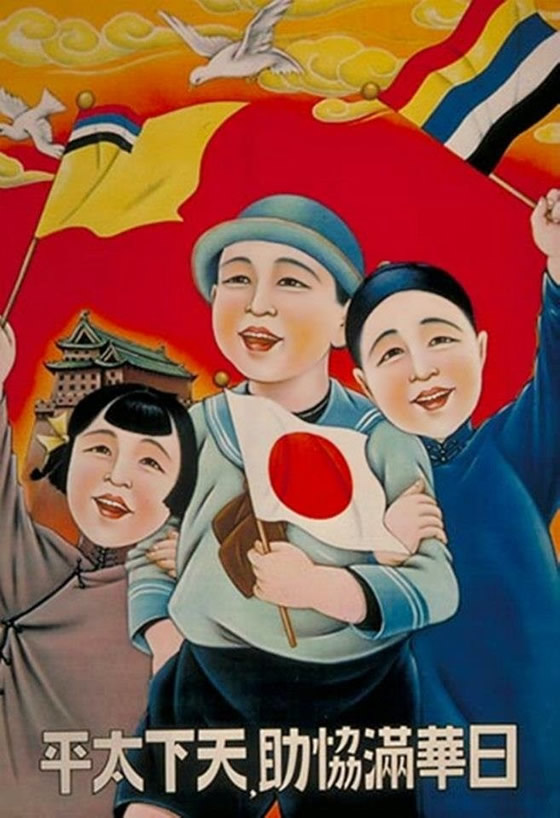
The formal concept of the Greater East Asia Co-Prosperity Sphere was announced at a press conference on August 1, 1940, by Japanese prime minister Matsuoka Yosuke. It was to be an autarkic bloc of Japanese-led Asian nations free from Western influence or control. Greater East Asia included both East Asia and Southeast Asia.

Japan's imperialist leaders regarded its values and ideals as superior to those of the rest of the world, including its East Asian neighbors. They took upon themselves the right to replace what they regarded as the conservative and negative influences of China and India within its borders. Japan would "civilize" the rest of Asia. The method chosen to spread the "benefits" of Japanese civilization was the Greater East Asia Co-Prosperity Sphere.

The Meiji Restoration of 1868 brought Japan back into diplomatic contact with the West. Exposure brought awareness that the West far surpassed Japan technologically. Japanese leaders realized that to avoid the humiliation of being treated as a second-class country Japan would have to modernize on the Western model.


To develop a "rich economy and strong army," Japan began modernizing its political, economic, and military systems. As early as the 1880s Japanese intellectual leaders such as Fukuzawa Yukichi encouraged the idea that Japan had a manifest destiny to be Asia's leader. Imperialist groups such as the Black Dragon Society and Kita Ikki became popular forums for those who wanted to expel the foreigners.

Japanese Imperialism

Japan believed it had earned its right to be as imperialistic as Western nations. As a result, Japan began subjecting its neighbors to its rule. It expanded into Hokkaido, subdued the indigenous Ainu, established treaty ports with extraterritoriality in Korea, took the Ryukyus, and fought a successful war with China.

Expansion was to gain prestige, materiel, and markets, similar to the goals of imperialism of the Western nations. Indicating how successfully it had mastered the Western ways of imperialism and modernism, Japan beat Russia soundly in the Russo-Japanese War in 1905.

But the Western nations still looked down on Japan, which it resented. At the Paris Peace Conference in 1919, the Western powers rejected a Japanese demand for insertion of a racial equality clause in the League of Nations covenant.

As a result, Japan felt the need to prove that it was as superior. By 1932 Japan had subjected Taiwan, Korea, and Manchuria to its control. The local populations of the conquered lands were exploited for the benefit of Japan.

After nearly half a century of conquest and exploitation, Japan enunciated the concept of the Greater East-Asia Co-Prosperity Sphere as justification for its aggression. Anticipating a long struggle to develop the new Asia under Japan, its war planners established a multistage process to acquire resources of the region as follows: Raw materials and surplus food would come from the southern region, while Manchuria and North China would provide the resources for heavy industry. The remaining areas of the sphere and parts of Asia outside it would serve as Japan's market. Japan would oversee the whole by providing planning, tools, skills, and military control.

Geographic Boundaries

The geographic boundaries of the sphere were fluid, varying over time and political circumstance. They encompassed the Micronesian mandates and often Melanesia and Polynesia and consistently included Hawaii. It had three concentric rings.

The innermost one included Japan, Korea, and Manchuria. A second ring would include China and extend to Hawaii. A third ring would include whatever area was necessary to guarantee the total economic self-sufficiency of greater East Asia.

Areas of the sphere were divided into four categories. Some lands were to be annexed outright; they included Guam, Mindanao, and Hawaii. Others, including Indochina and the Dutch East Indies, were to become protectorates.

Some would be independent but would have unbreakable economic and defense bonds with Japan; these would be Hong Kong, Thailand, and the Philippines. The fourth group was independent states with economic ties to Japan; they would include Australia, New Zealand, and India.

Japan had economic rationale for enlarging the sphere. It felt heavy pressure to find sources to become economically self-sufficient due to a Western embargo on key resources. It needed the oil of the Dutch East Indies and the rubber of Indochina to support its industries and its military venture in China. It also justified its imperialism by a perceived need for guaranteed markets for its manufactured goods as well as space for colonization by its people.

The Japanese had to sell their exploitative venture to the exploited. Their slogan was "Asia for Asians," and their message was the imperative of freeing Asia from the Western yoke. They promised economic equity and growth. To provide cover for their conquest, they installed puppets, local people who had the power to declare independence from the Western powers but not the power to exercise independence from Japan.

On December 12, 1941, Japanese media announced that the just-begun war it had instigated by attacking the United States, Britain, and the Netherlands in Asia was the "Greater East Asia War," a crusade to rid greater East Asia of Chiang Kai-shek, communism, and Westerners.

Defeat by the United States and the Allies in 1945 ended Japan's imperial dream and the Greater East Asia Co-Prosperity Sphere.

Haganah

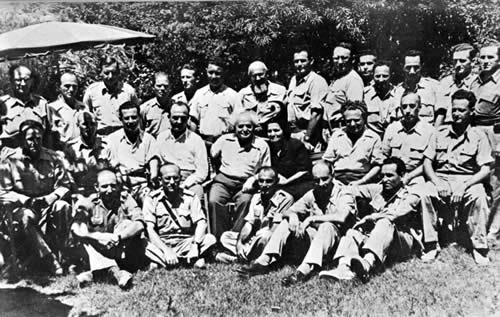
Haganah command
Haganah command

The Haganah (Hebrew for "defense") was an underground Jewish paramilitary organization created during the British mandate in Palestine in 1920. The Haganah began as a small voluntary body of men called Ha Shomer, formed to guard Jewish settlements, or kibbutzim.

The Haganah consisted of soldiers who had fought for the British in World War I as well as local farmers who were determined to defend their property from Arab attacks. After the Arab riots of 1920 and 1921, when Jews and their property fell under attack, the Jewish population realized that the British administrators would do nothing to guarantee their safety and that they had to learn to defend themselves.

At this time, the Haganah was poorly armed and not well coordinated. Its duties mainly consisted of guarding the borders between Arab and Jewish populations. In the Arab-Jewish clashes of 1929, the Haganah improved as a defense organization by securing their three main sectors in Jerusalem, Tel-Aviv, and Haifa as well as in other settlements of Palestine.


The Haganah became a countrywide organization including men and women of all ages from both kibbutzim and the cities. Training programs as well as officers' training began, while a steady stream of weapons started to arrive from Europe. The underground production of weapons also began.

During the Arab revolt in 1936–39, the Haganah matured and developed from a militia into a military body to successfully defend Jewish quarters and settlements from Arab attack. The British did not officially recognize the Haganah, but in the midst of the uprising they did help to organize several special forces groups trained in different tactics to help defend British interests.

In April 1937, a revisionist splinter group of the Haganah known as Irgun Zvai Leumi, or simply Irgun, began its own operations. Irgun's policies differed from those of the Haganah in that Irgun targeted the British as well as Arab Palestinians. The British 1939 White Paper, restricting Jewish immigration into Palestine, added to Jewish anger toward the British.

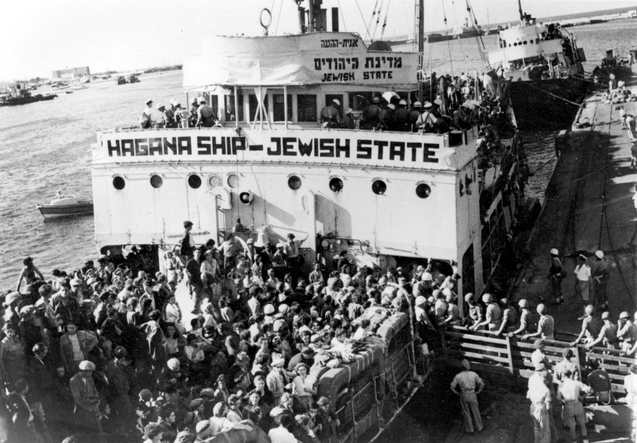
Haifa, Mandatory Palestine, The Jewish State, a Haganah ship captured by the British

The White Paper was viewed by Zionist leaders as a betrayal of British intentions stated in the Balfour Declaration of 1917. As a result, the Haganah began helping to guard illegal immigrant ships as they arrived along the Palestinian coast. In the process, many illegal Jewish immigrants died due to drowning and overcrowding on the tiny ships and also ended up in Nazi camps after being turned away by the British upon arrival.

In June 1940, a splinter group of the Irgun left the organization after a disagreement on the decision to suspend its armed campaign against the British during World War II. These members established a more radical group called Lehi, also known as the Stern Gang, named after its new leader.

The Haganah itself was evolving into a national and relatively nonpartisan clandestine Jewish army. At this time it wished to distance itself from the Irgun's and Lehi's methods. The Haganah was officially an illegal organization, too, and yet at the same time the British cooperated with it during the Arab revolt (1936–39) and yet again during World War II.

In 1941, select members of the Haganah under British training became an elite command force, the Palmah, which was created to counter an anticipated Nazi takeover of Vichy-held Lebanon and Syria. At the conclusion of World War II, it became apparent that Britain would not change its policies in Palestine, nor would it allow a mass Jewish migration into the region. The Haganah then decided to join in on the actions of the Irgun and Lehi by attacking the British in commando raids and sabotage attacks.

The Haganah membership consisted of illegal immigrants as well as over 26,000 Palestinian Jews who had served with the British in World War II. Some of the strengths of the Haganah included its bravery, its initiative, and its ability to improvise during battle. It developed an impressive military intelligence system that allowed it to spy on the British and the Palestinian Arabs.
It also became very skilled in covert operation tactics such as stealing weapons from the British and hiding the many immigrants it helped smuggle into the region. Training activities and the purchase of weapons abroad were stepped up after the 1947 UN partition plan, which called for the partition of Palestine between the Palestinian Arabs and the Jews.

Shortly after this, the Haganah, along with Irgun and Lehi, began concerted attacks on Palestinian Arabs in an attempt to force them out of the Jewish areas that were outlined in the UN plan. Some 300,000 Palestinian Arabs were displaced from their homes in five weeks, including an all-day attack on Deir Yasin village resulting in the deaths of over 250 men, women, and children.

Haganah in the 1948 Arab-Israeli War

Days after the British mandate ended, Israel was declared an independent state, and in the 1948 Arab-Israeli War, also known as the War of Independence, Israel held on to the territory that had been allotted to it in the partition plan and also extended its territory by approximately one-third.

At the time of the Israeli declaration of independence, the new government, led by David Ben-Gurion, decided that the new state would not have any armed militias or partisan groups, and the Haganah dissolved into the Israeli Defense Force, or IDF.

Haitian Massacre (1937)

Haitian Massacre (1937)

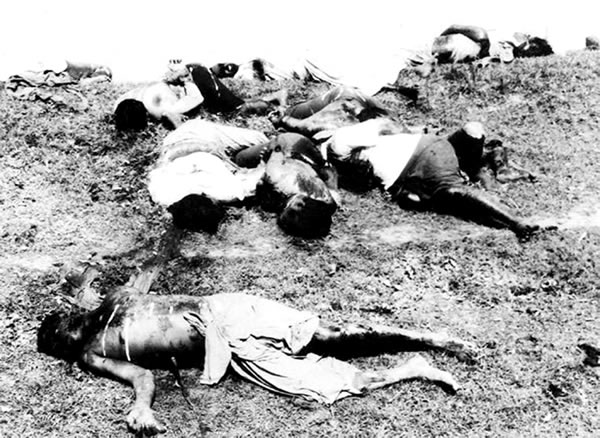
For seven bloody days during October 1937, the Dominican army massacred thousands of Haitian men, women, and children living in the northwestern frontier region of the Dominican Republic. Thousands more fled for their lives across the border into Haiti.

Many of the victims were Dominican-born and thus were accorded Dominican citizenship, as guaranteed by the country's constitution. Some came from families that had lived in the Dominican Republic for generations.

The country's president-dictator, Rafael Trujillo, ordered this wave of genocidal violence and justified his actions as an act of national self-preservation, declaring that an invasion of Haitians threatened the Dominican Republic.


Trujillo, reflecting the view of many other Dominicans, defined Dominican national identity according to its difference from Haitians. Dominicans, especially the elite, identified themselves as a white and Hispanic nation, in stark opposition to the black and African Haiti.

The borderlands region dividing Haiti and the Dominican Republic represented a porous boundary marked by a transnational, bilingual, and bicultural community of Haitians and Dominicans, some of whom intermarried.

Unlike Haitians living in the eastern regions of the Dominican Republic, the Haitians in the borderlands were mostly independent small farmers. Many Haitians had immigrated to the Dominican Republic in the second half of the 19th century in search of land in the sparsely populated western region of the country.

Their descendants, although ethnically and culturally Haitian, were born on Dominican soil and considered it their home. The residents of this region did not regard the border between the two countries as a concrete boundary and frequently traveled back and forth several times a day.

The porous and transnational Haiti-Dominican border troubled Trujillo and the Dominican elite, and soon after his rise to power he worked to formalize the border. He feared that the open border provided an easy passageway for exiled revolutionaries to launch an attack on his regime.

Trujillo signed a boundary treaty with Haitian president Sténio Vincent in March 1936. Trujillo and his elite Dominican officials actively engaged in a program of nation building and national identity dedicated to a strict geographic and cultural national boundary between Haiti and the Dominican Republic.

When the massacre began on October 2, both Haitians and Dominicans living in the borderland region feared for their lives, having been caught completely unaware by the killing spree. No policies or actions by the Trujillo regime prior to the massacre had foreshadowed such an event.

Some Dominicans risked their own lives to help their Haitian neighbors, while others aided the army in identifying Haitians. The fluidity of culture and language in this borderlands region made it difficult to distinguish Haitian from Dominican.

Soldiers employed crude methods based on racially constructed stereotypes about Haitians to determine who lived and died, such as determining a person's ethnicity based on their pronunciation of the Spanish "r." The soldiers avoided the use of firearms, preferring machetes, clubs, and bayonets, suggesting to many scholars that Trujillo hoped to characterize the killings as a popular uprising, not government-sponsored genocide.

The massacre forever changed the borderlands region by imposing a strict dichotomy between Haitian and Dominican. Word of the government-sponsored massacre spread quickly as journalists and foreigners reported the atrocities. Trujillo set about creating an atmosphere of anti-Haitian sentiment to justify his military actions.

President Sténio Vincent of Haiti feared a Dominican military invasion and called on the United States, Mexico, and Cuba to act as mediators between the two countries. Trujillo refused to submit to an inquiry, claiming that the incident was not a matter of international concern. The dictator subsequently offered Haiti $750,000 to settle the matter, and President Vincent readily accepted the money.

Hara Kei

Hara Kei (Hara Takashi)

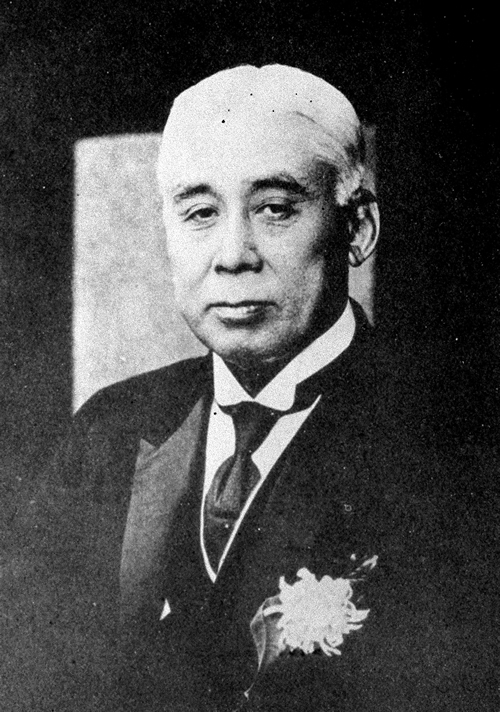
Hara Kei (Hara Takashi) was a leading member of the Seiyukai political party in Japan in the early 20th century and the prime minister of Japan from 1918 to 1921.

Hara was born into a family of samurai background in northern Japan in 1856. After working in fields as diverse as diplomacy and journalism, Hara joined the Seiyukai, a political party founded by Ito Hirobumi in 1900, and quickly became one of its leading members.

Although political parties were the leading force in the lower house of Japan's parliamentary body, the Diet, the key posts in the Japanese cabinet, including the position of prime minister, remained dominated at the turn of the century not by party officials but rather by elder statesmen. Hara became one of the foremost champions of allying the Seiyukai with the cabinet.


In 1904, Prime Minister Katsura Taro needed Seiyukai support in the Diet for budget increases in order to fight the Russo-Japanese War. Hara and Katsura made a bargain whereby Hara delivered the necessary assistance in exchange for the future appointment of Seiyukai's president, Saionji Kinmochi, as prime minister.

Saionji eventually served twice as prime minister, from 1906 to 1908 and then from 1911 to 1912. As home minister in Saionji's first cabinet, Hara worked to strengthen the party by recruiting members of the civil bureaucracy into the organization.

In addition, he built support for the party beyond the ranks of officialdom by providing funds for local economic development. By increasing spending on local schools, roads, harbors, and transportation, he gained a following for the Seiyukai among the electorate.

Hara became president of the Seiyukai in 1914 and was selected to serve as prime minister of Japan in the aftermath of the well-known 1918 rice riots, marking the first time that a career party politician held that leading office in the Japanese government. Although Japan had undergone an economic boom as a result of World War I, those on the lower rungs of the social hierarchy struggled with inflation and falling wages.

Hara was in many ways the only leader with significant support in both the Diet's party-dominated lower house and its upper house, the House of Peers, still largely the preserve of nonparty elites, despite the fact that some upper-house delegates had joined political parties. His connections with nonparty elites proved vital to his accession to prime minister.

Upon becoming prime minister, Hara did not embark on a program of sweeping, wholesale changes. The tax qualification for voting was lowered in a move that doubled the size of the electorate, but most of the newly enfranchised were small landholders largely favorable to the Seiyukai.

In a more overtly partisan manner, Hara's government remapped electoral boundaries to benefit the Seiyukai, and his appointments within the bureaucracy were often made with blatantly partisan motives. His government likewise supported defense spending, and Hara made significant efforts to improve relations with the military leadership.

Responding to protests against Japanese imperial rule, Hara attempted to replace the military administrations of Japan's colonial holdings with civilian officials, though the military successfully resisted those efforts in Korea. He also called for assimilation of colonial populations, representation for colonies in the Diet, and the granting of greater civil liberties to colonials.

Hara's career came to a violent conclusion when he was assassinated by a right-wing fanatic in Tokyo Station in 1921, but Hara Kei had played an immensely important role in transforming the Seiyukai into a leading force in Japanese politics in the early 20th century.

Harlem Renaissance

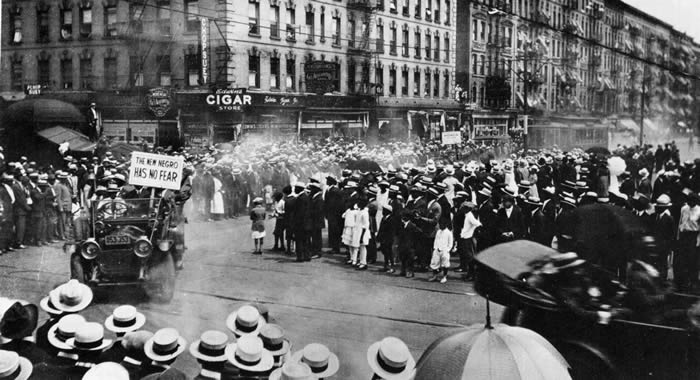
The new negro has no fear - A parade in Harlem 1924

The Harlem Renaissance is the name that was attached to the African-American literary, artistic, and intellectual movement that was centered in Harlem, a neighborhood in Upper Manhattan, New York.

Many African Americans had migrated from the South to northern cities in the years after 1916 in what is known as the Great Migration, and Harlem, which had been developed as a residential area for whites, became the cultural capital of the African-American United States during the 1920s.

The movement's participants knew it as "The New Negro Movement," after the title of art historian Alain Locke's book The New Negro (1925), in which Locke expressed the hope that the black artist would become "a collaborator and participant in American civilization."


Like any cultural movement, the Harlem Renaissance had antecedents, as the cultural life of African Americans in New York City was already well developed. Harlem, acknowledged as the black capital of the United States, was home to advocacy groups such as Marcus Garvey's Universal Negro Improvement Association, the NAACP (National Association for the Advancement of Colored People), and the National Urban League, and most nationally known African Americans, including Garvey, W. E. B. DuBois, and A. Philip Randolph, lived there. The intellectual center of Harlem was the local branch of the New York Public Library, which had the most extensive collection of material concerning African Americans in existence.

Scholars of the movement have placed its onset in 1910, when the NAACP began to publish Crisis, edited by W. E. B. DuBois. Others argue that it began in 1919, when black soldiers returned from World War I and U.S. cities experienced an unprecedented amount of racial violence, or in the early 1920s, which saw the publication of James Weldon Johnson's Book of American Negro Poetry (1922), Jean Toomer's Cane (1923), and the launching of the newspaper Opportunity (1923), edited by sociologist Charles S. Johnson for the National Urban League. Both Crisis and Opportunity published fiction and poetry and sponsored contests to encourage African-American writers.

The Harlem Renaissance is remembered as a chiefly literary movement. Poetry constituted its first literary output, but prose forms, notably fiction, replaced poetry as the dominant literary form after 1924. Although the movement included visual arts, it excluded jazz, which, although it was performed in Harlem, had other antecedents (it should be noted that the 1920s dance craze the Charleston was first performed in Harlem).

Louis Armstrong Cotton Club

As artists and writers began to speak in terms of a "New Negro," they developed a definition of African Americans as a militant, self-assertive, and urbane group of people capable of speaking for themselves.

Some writers, like Langston Hughes, were at the beginning of long and distinguished careers, and some, like Jean Toomer, never wrote anything else of significance. The literary movement did not have a consistent recognizable style, as it encompassed a debate over tradition and the nature of African-American culture.

Wallace Thurman, Claude McKay, Arthur Huff Fauset, and Zora Neale Hurston, among others, stressed the distinctiveness and vitality of black ethnicity, particularly among working-class African Americans, while James Weldon Johnson, Jessie Fauset, Nella Larsen, and Alain Locke were more likely to write about middleclass African-American life as a means of ensuring that it would be seen as an integral part of U.S. culture as a whole. Langston Hughes and Countee Cullen found themselves agreeing with both sides of this debate.

Hughes (1902–67) and Hurston (1891[?]–1960) are the best-known writers of the movement. Hughes, born James Langston Hughes in Joplin, Missouri, worked at a variety of jobs, traveled in the Americas and Europe, and published his first volume of poetry, The Weary Blues, in 1926.

Seen as the prototypical New Negro, Hughes used the rhythms and language of jazz and blues in his poems, and his essay "The Negro Artist and the Racial Mountain" (1926) stands with The New Negro as a principal statement of the movement's ideology.


Hurston, who grew up in the all-black hamlet of Eatonville, Florida, graduated from Barnard College, where she studied with the anthropologist Franz Boas. Hurston's literary output interpreted African-American folktales she had gathered in the rural South in collections and novels published during the 1930s.

Visual artists connected with the Harlem Renaissance are less renowned. Aaron Douglas is best known for his illustrations in The New Negro and in James Weldon Johnson's God's Trombones: Seven Negro Sermons in Verse. Palmer Hayden, who was trained in both New York and Paris, is best known for his paintings of African subjects.

Other artists associated with the movement were Malvin G. Johnson and William H. Johnson. The best known sculptor is Augusta Savage, and photographers James Van Der Zee and Roy DeCarava are also associated with the movement.

The Harlem Renaissance contributed to placing black art and literature at the center of American life, but the incorporation was not entirely the work of African Americans. For African Americans, the movement was a response to calls from critics like Randolph Bourne and Van Wyck Brooks for a U.S. culture independent of European tradition. For white literary America, Harlem was exotic. When Harlem was embraced by white critics like H. L. Mencken and Carl Van Vechten, it was in part as a result of their own iconoclasm.

Van Vechten's book Nigger Heaven (1926) "promoted" Harlem to white Americans (and caused anger and resentment among many African Americans), but Van Vechten also served as a patron to Langston Hughes and introduced other black writers to patrons such as Mrs. R. Osgood (Charlotte) Mason, Albert Barnes, Louise Bryant, the William E. Harmon Foundation, the Julius Rosenwald Fund, and the General Education Fund. Mencken published the work of African-American artists in the American Mercury.

As the Great Depression set in, resources available to African Americans in Harlem dwindled, making cultural activities even harder to maintain. The end of the Harlem Renaissance came in 1935, when a racially based riot convulsed Harlem.

There has been a good deal of debate concerning what was seen as the failure of African American artists and writers to create and maintain independent cultural institutions, but it is generally agreed that the movement provided subsequent African-American writers and artists with a cultural base upon which later generations could build.