Amritsar Massacre

Amritsar Massacre
Amritsar Massacre

The Amritsar massacre (April 13, 1919) helped many moderate Indian nationalists become fiercely anti-British. The Rowlatt Acts, enacted by the British government, had outraged politically minded Indians.

Extending wartime emergency legislation, the Rowlatt Acts gave the British viceroy in India the authority to silence the press, make arrests without a warrant, and imprison without trial. The Indian members of the viceroy's legislative assembly opposed this legislation, and several of them resigned (including Mohammad Ali Jinnah, later the founder of Pakistan).

To protest the Rowlatt Acts, Mohandas K. Gandhi called for a national hartal, a day of prayer and fasting, that on April 6 closed most shops and businesses in the northwestern province of the Punjab. The British administration in the Punjab, headed by Sir Michael O'Dwyer, was notoriously stern, and the province had long seethed with unrest.

In Lahore there were large anti-British demonstrations and a railroad strike. On April 10, on O'Dwyer's order, British officials in Amritsar arrested Dr. Saif-ud-Din Kitchlew, a Muslim lawyer, and Dr. Satyapal, a Hindu who had served as a medical officer in the British army. They were leaders of the Amritsar nationalist movement.

In the angry reaction against these arrests, violence broke out resulting in destruction of property and looting in Amritsar. Five British civilians and 10 Indians were killed. A school superintendent, Marcella Sherwood, was trapped by a mob, badly beaten, and left for dead. This mistreatment of a British woman outraged officials.

The villain in the story of the Amritsar massacre was Reginald E. H. "Rex" Dyer. Dyer was a colonel who held the temporary rank of brigadier general while commanding an infantry brigade in the Punjab. Born in India, he was competent in several Indian languages, including Hindi and Punjabi. Before the Amritsar massacre, he had not had a reputation of being more racist than other British officers.

In fact, early in 1919 he had resigned from the officers' club that served his brigade because he objected to the exclusion of Indians who held commissions as officers. He appears to have been lacking in self-confidence while at the same time being stubborn and rash. He did not always obey orders. Unfortunately, he was stationed near Amritsar.

Apparently, Dyer acted on his own initiative in moving his brigade to Amritsar on April 11. On the next day he reissued an earlier government order that banned any meetings or gatherings.

Amritsar Massacre painting

He did not continue the previous policy of slowly extending British military and police control over one part of the city after another. He preferred to parade large forces through Amritsar as a demonstration of strength and then withdraw them.

Despite the proclamations against meetings, thousands of Indians flocked to the Jallianwala Bagh on April 13, most of them in support of the imprisoned Kitchlew and Satyapal. Some arrived after the police had closed a nearby fair held in honor of the Sikh new year. By late afternoon a huge throng was present, a rather quiet crowd and not an angry mob.

Estimates vary, but there certainly were more than 10,000 people. The Bagh was a trap for them. Enclosed by the walls of surrounding buildings, it had only a few narrow openings for entrance or exit, some of them locked.

Dyer made no attempt to prevent the meeting at the Jallianwala Bagh or to disperse it peacefully. He decided to make an example of those who had violated the British prohibition of large gatherings.

For this purpose he assembled a small force of 90 men that included no British soldiers. Instead he chose Baluchis, Gurkhas, and Pathans, "native" soldiers but ones who lacked sympathy for local Indians.

He brought with him two armored cars equipped with machine guns. He later said that he did not use them because the entrances to the Bagh were too narrow. Even without the machine guns, the carnage was great. Without any warning Dyer's soldiers fired on the crowd for 10 to 15 minutes.

There was only one exit available for the thousands. In desperation many of those in the Bagh jumped into a deep well. After his troops had fired 1,650 rounds, Dyer ordered an end to the slaughter because he feared that his men would run out of ammunition and not be able to protect their withdrawal.

Nobody knows how many people were killed. An official estimate made by the British authorities says 379. An Indian investigation says 530. The wounded numbered over 1,000.

After the facts of the massacre became known, Dyer was dismissed. He returned to Britain, where a special commission of investigation censured him in 1920. Despite the official censure, some in Britain saw Dyer as a hero who took decisive action to prevent a rebellion that might have shaken British rule throughout the subcontinent.

For many members of the upper and middle classes and military officers, Dyer was a victim of the government's need to appease Indian nationalists. Dyer died of natural causes in 1927. An embittered Indian assassinated O'Dwyer in 1940.

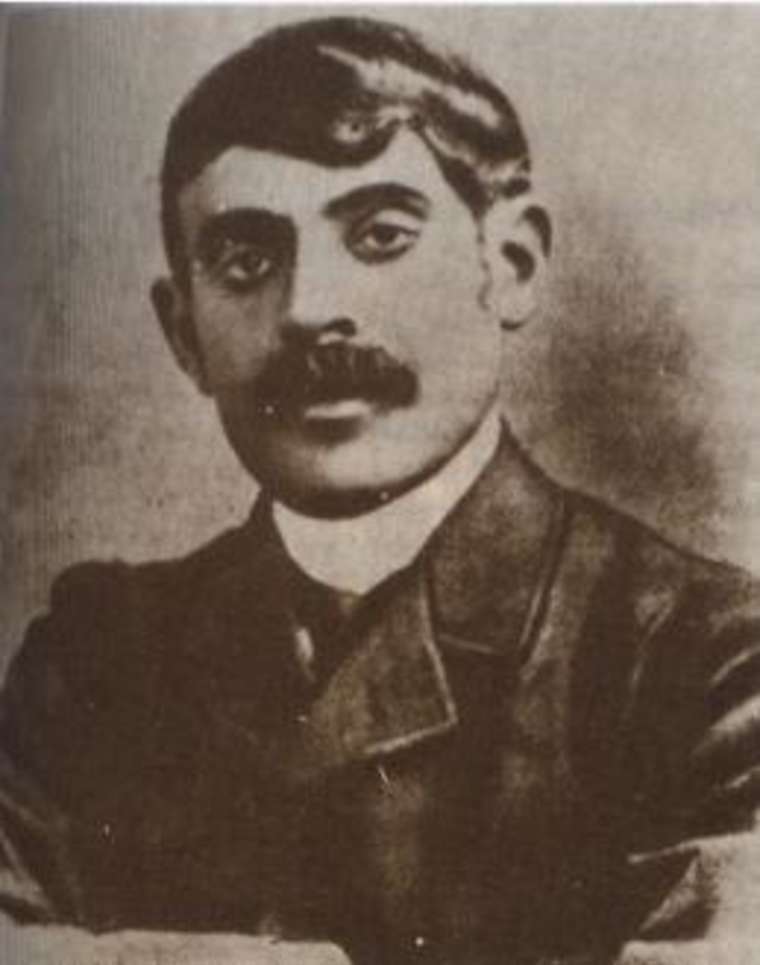
Qasim Amin

Qasim Amin
Qasim Amin

Qasim Amin was a noted Egyptian intellectual and advocate of reform in the later 19th and early 20th centuries. His father was a Turkish Ottoman official and landowner married to an Egyptian woman. Amin was educated in Cairo and at the School of Law and Administration.

He was a follower of the earlier reformer Muhammad Abduh, who sought to resolve the conflict of Islamic practices and tradition with the adoption of Western scientific thought and development.

As a highly respected lawyer, Amin was sent on a government educational mission to France, where he spent several years in the 1880s. Amin wrote a number of works on social issues, and in Les Egyptiens he focused on the national rights of Egyptians. He was best known for his works on the status of women.


He addressed the issues of polygamy, marriage laws, education for women, seclusion, and veiling in The Liberation of Women, published in 1899. Amin argued that sharia (Islamic law) and Islamic custom did not mandate either the seclusion of women in the home or veiling. Both were commonly practiced among upper and middle classes of the era.

Poor peasant families could not afford the luxury of secluding or veiling women who commonly worked alongside men in the fields. Amin emphasized that sharia granted legal rights to women and that the corruption or decline of morals by outside forces had been responsible for the decline of Islamic societies.

He stressed the importance of women in building modern nations and in national struggles and advocated improved education for women. According to Amin, education for women should not be limited to matters of household management but should include subjects that would enable them to participate in life outside the home.


Although by contemporary standards Amin's advocacy of gradual reform was not revolutionary, his book on the status of women aroused massive public debate about the role of women and Islam. Amin was severely criticized by conservative religious leaders and the palace.

Amin repudiated his critics in a second more radical—for the age—book, The New Woman, in 1900. In this second book he dropped a discussion of Islamic law and tradition to justify reforms and instead applied Western thought to augment his arguments. Amin stated that with education and reforms in status, women would ultimately have almost the same rights and status as men.

Amin supported the Egyptian nationalist movement, in which both men and women were full participants, in his memoirs, Kalimat. He also stressed the need for scientific knowledge in order for nations to advance. An early Egyptian nationalist, Amin was friendly with Sa'd Zaghlul and Tal'at Harb, both of whom became leaders of the Egyptian nationalist movement.

Analytic Philosophy

Analytic Philosophy
Analytic Philosophy

Since its beginnings in ancient Greece, one of the motivations driving Western philosophy has been the conviction that concepts such as "knowledge," "mind," "justice," and "beauty" are obscure and that it is the business of philosophers to achieve a clearer understanding of their meanings.

Analytic philosophy seeks this elevated understanding through a clarification of "ordinary," that is, nonphilosophical, language that is believed by most analytic philosophers to be vague and obscure, at least in regard to concepts of interest to philosophers.

In the early decades of the 20th century, the founders of the analytic tradition, Bertrand Russell and Ludwig Wittgenstein, sought to use newly developed techniques in symbolic logic to produce ideally simple "atomic statements," the meanings of whose component terms were absolutely clear.

These component terms would, they believed, directly match, or, to use Wittgenstein's term, "picture," "atomic facts," thereby yielding absolutely certain truths about "reality." Russell called this technique "logical atomism." During the 1920s and 1930s, this methodology, especially as embodied in Wittgenstein's book, Tractatus Logico-Philosophicus, inspired the short-lived analytic movement known as logical positivism.

In this view science represents the standard of what is to count as knowledge, and, positivists claimed, science itself ultimately rests on statements of the sort sought by Russell and Wittgenstein, namely, simple statements the truth or falsehood of which can be verified, in principle, by direct sensory experience.

Utterances that cannot be analyzed and verified in this way, for example, those containing religious or ethical terms, were dismissed by logical positivists as meaningless, or at the very least as outside the boundaries of possible knowledge.

Though Russell never lost faith in some form of "logical analysis" as the proper approach to the solution of philosophical problems, over time most philosophers in the analytic tradition, including the logical positivists, came to doubt the feasibility of arriving at absolutely clear and simple statements whose truth could be conclusively verified by basic sensory experiences.

Wittgenstein also began to question his own "picture theory" of language. Later in his life he authored a radical critique not only of his and Russell's earlier work, but of virtually all of previous philosophy and in the process inspired a second movement within the analytic tradition, one that came to be known as ordinary language philosophy.

Through the presentation of extensive "reminders" about how concepts actually function in "ordinary" language, the later Wittgenstein sought to wean philosophers away from the perception that our ordinary concepts are obscure and in need of philosophical analysis and clarification.

With regard to our familiar concepts, Wittgenstein claimed that "nothing is hidden." A concept's meaning, he said, is fully visible in the ways in which it is used in ordinary language.

If we remind ourselves of how words such as knowledge, mind, and the rest are used in the push and pull of life, he argued, we can see all there is to see about what they mean. The outcome of this realization should then be that philosophers' traditional problems are not solved, but dissolved, that is, shown not to have been genuine problems in the first place.

In spite of the widespread influence in the mid-20th century of this critique of the need for philosophical analysis, philosophers' faith in the legitimacy and profound urgency of their ancient puzzles reasserted itself, and it has for the most part prevailed, at least for the foreseeable future.

The vast majority of analytic philosophers are today fully engaged in attempts to "shed light" on concepts of traditional philosophical interest, though without resorting to the kind of rigorous, but discredited, logical analysis envisioned by Russell and Wittgenstein in the early decades of the 20th century.

Anarchist Movements in Europe and America

Anarchist Movements
Anarchist Movements

Anarchism is a political belief that rejects organized government and asserts that each individual person should govern himor herself. Anarchists believe that all forms of rulership and government over a people are detrimental to society because they interfere with individual action and responsibility.

The term is distinguished from the word anarchy, which means the actual absence of any form of organized government. The origin of anarchism can be traced to the Age of Enlightenment in the 18th century, when movements supporting intellectualism and reason became influential. Some of the effects of the ideas of this age were radical changes in government ideals and values.

The ideas of Jean Jacques Rousseau (1712–78), a Swiss-born philosopher, influenced the inciters of the French Revolution. Some of these groups applied the term anarchist to themselves as a positive label referring to people who were opposed to old and undesirable forms of government.

Anarchist ideas can be found in the writings of William Godwin (1756–1836), the father of Frankenstein author Mary Shelley. Godwin attributed the evils of mankind to societal corruption and theorized that it was better to reduce organized government. Godwin felt that humans' possession of a rational mind would be spoiled should external controls interfere.

The person who is most often credited as the father of modern anarchism is Pierre-Joseph Proudhon (1809–65). He was the first to coin the words anarchism and anarchist to refer to his belief system. In 1840 he published his first significant work, What is Property? He was also opposed to both capitalism and communism, though his beliefs and writings put him under the socialist umbrella.

Proudhon, when he settled in Paris, found people who had already accepted his ideas. However, the movement soon evolved into several types of anarchism mainly due to views on economics. Most of the concepts of anarchist groups are based on the treatment of the industrial worker, as this was a primary concern at the time these groups were founded, and workers were the ones who most commonly formed anarchist groups.

The major types of anarchism that have evolved since then are:
  • Mutualism—Although this started as a set of economic ideas from French and English labor groups, it later became associated with Proudhon. It bases its ideas on Proudhon's assertion that a product's true price should be determined by the amount of labor spent to produce it without considering materials. Therefore, mutual reward is achieved when people are paid for their labor no matter what economic conditions will apply. However, private ownership of production facilities is maintained. Collectivist Anarchism—This movement is mostly attributed to Russian anarchist Mikhail Bakunin (1814–76). For collectivist anarchists private ownership of the means of production is opposed, and ownership is collectivized. Workers should be paid according to the time spent on production work.
  • Anarchist Communism—Also called communist anarchism, this movement suggests that a worker is not necessarily entitled to the products that he or she worked to produce and that mere satisfaction of needs is the payment. Instead of a general government, selfgoverning communes can be organized that are ruled by actual democracy, based on constituent voting. Joseph Déjacque (1821–64) is considered the first figure of this subgroup, while the most influential is Peter Kropotkin (1842–1921). Like in communism, private ownership is opposed.
  • Anarcho-Syndicalism—This movement promotes the power of trade unions to override capitalism and seeks to abolish the wage system and private ownership. It borrows heavily from collectivist and communist modes of anarchism. Workers' groups are to have a heavy degree of solidarity and are able to self-govern without external controls. The most prominent anarcho-syndicalist was Rudolf Rocker (1873–1958).
  • Individualist Anarchism—This is the most common form of anarchism in the United States. Individualist anarchism is influenced mainly by the writings of Henry David Thoreau (1817–62), although his writings are mainly philosophical and do not recommend any kind of action. Other U.S. anarchists, such as Josiah Warren, Lysander Spooner, and Benjamin Tucker had more explanation on their courses of action. However, another kind of individualist anarchism, egoism, was presented by German philosopher Max Stirner (1806– 56) in the mid-1800s.
Other anarchist forms were anarcho-capitalism, which enjoys a strong following in the United States, and anarchism without adjectives, a uniquely named form championed by the most prominent female anarchist in history, Voltairine de Cleyre (1866–1912).

Russian writer Leo Tolstoy (1828–1910) promoted a religion-based form of anarchism, Christian anarchism, advocating that since God is the ultimate government there should be no human governments organized.

Anarchist ideals had gained a significant following by the 19th century but had lost mass appeal by the turn of the 20th century. In the Russian Revolution and Civil War of 1917, anarchists participated alongside communists but were turned against by the communist government. This led to the 1921 Kronstadt Rebellion, and anarchists were either jailed or made to leave the country.

In the 1930s, anarchists were opposed to the Fascist government of Italy under Benito Mussolini. Anarchists were active also in France and Spain. In 1937, the Confederación Nacional del Trabajo was a generally anarchist labor union that participated in events leading to the Spanish civil war.

Anglo-Japanese Treaty

Anglo-Japanese Treaty

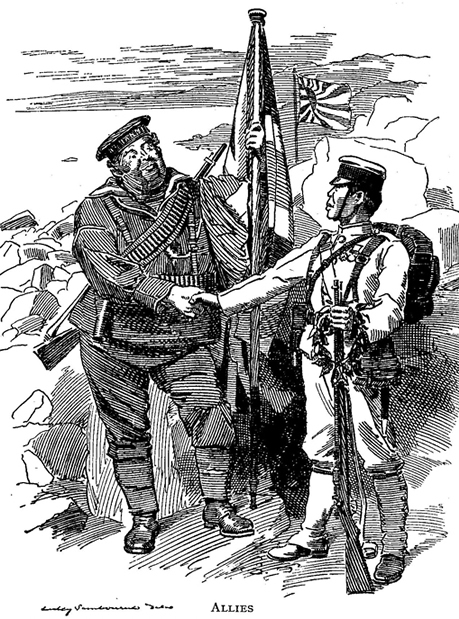
The Anglo-Japanese treaty was signed between Lord Lansdowne (1845–1927), the British foreign secretary, and Hayashi Tadasu (1850–1913), the minister of Japan, on January 30, 1902, in London to create an alliance scheduled to last five years. Its terms gave Japan an equal partnership with a great power of the Western world.

The purpose of this first military agreement was stabilization and peace in northeast Asia. On Japan's side it was to prevent Russian expansionism in northeast Asia, and on Great Britain's side it protected British interests and its commerce in China.

Japan felt vulnerable due to Russian influence in Manchuria and interest in Korea. The Anglo-Japanese treaty allowed Japan to become a more powerful player in world diplomacy and in negotiations with Russia.

It allowed Japan to go to war against Russia in February 1904 and to ask for financial support from Great Britain. The Russo-Japanese War (1904–05) astounded the world because of the success of Japan. It ended the menace of Russia and helped Great Britain to play a greater role in Europe.

The revision of the Anglo-Japanese treaty was signed on August 12, 1905, between Lansdowne and Hayashi in Lansdowne's residence. The new terms included an extension of the area covered by the alliance to include India, British recognition of Japan's right to control Korea, and Japan's recognition of Great Britain's right to safeguard her possessions in India.

It also provided that in the event of any unprovoked attack neither party would come to the assistance of its ally. The alliance would remain in force for the following 10 years. The new terms showed Japan had increased its status in international society after winning the war over Russia.

The third Anglo-Japanese alliance agreement was negotiated in 1911 after Japan's annexation of Korea. Important changes concerned the deletion of the articles related to Korea and India and the extension of the alliance for 10 more years. The second revision accommodated Japan's annexation of Korea but also, at Britain's request, excluded the United States from the region. The alliance enabled Japan to participate in World War I as a British ally.

With World War I beginning in the summer of 1914 and with political changes in China, Anglo-Japanese relations entered a new era. The new situation in the Far East restulted in a closer relationship between the United States and China.

With the outbreak of the Russian Revolution and Civil War in 1917, U.S. participation in the war, and later the publication of President Woodrow Wilson's Fourteen Points on how to end the war, the groundwork was set for new national relations.

These new circumstances brought changes in Anglo-Japanese relations after World War I. Great Britain no longer feared the Russian expansion in China and had developed a close relationship with the United States. The United States had also started to view Japan as a competitor in East Asia. The problems of China were also affecting international politics.

As a result, the United States decided to call a conference whose aim was to prevent expansion in China. At the Washington Conference (1921–22) Anglo-American cooperation in Asia allowed the United States to force Japan to accede to an end of the Anglo-Japanese alliance. The official termination of the alliance took place on August 17, 1923.

Anti-Communist Encirclement Campaigns in China (1930 - 1934)

Chiang Kai-shek and his army 1933

In 1923 Sun Yat-sen (d. 1925), leader of the Kuomintang (KMT), or Chinese Nationalist Party, then out of power, made an agreement with Adolf Joffe, Soviet representative in China.

It became the basis of an entente between the KMT and the Russian Communist government whereby Russia sent advisers to help Sun and the KMT and allowed Chinese students to go to Russia to study. It also allowed members of the newly formed Chinese Communist Party (CCP) to join the KMT. This entente ushered in what became known as the first united front.

In 1926 the KMT launched a campaign called the Northern Expedition, commanded by Sun's lieutenant Chiang Kai-shek, to oust the warlords and unite China. Its spectacular success led to a power struggle between the Soviet-supported CCP and the anti-CCP faction of the KMT, led by Chiang.


Chiang won the showdown, expelling the Soviet advisers, purging the CCP, and then defeating most of the remaining warlords. Between 1928 and 1937 the KMT ruled from China's new capital, Nanjing (Nanking), under an unstable coalition led by Chiang.

Remnant CCP members fled to the mountains in Jiangsu (Kiangsu) province, where they established the Chinese Soviet Republic with its capital at Ruijin (Juichin). Chiang's new government was too preoccupied with dissident KMT leaders to worry about the CCP between 1928 and 1930, which allowed the CCP to expand to parts of Hunan, Hubei (Hupei), Anhui (Anhwei), and Fujian (Fukien) provinces and increase its army to 120,000 men plus paramilitary units.

Between 1930 and 1934 the Nationalist government launched five encirclement and extermination campaigns against the Communists (First Campaign, from fall 1930 to April 1931; Second Campaign, from February to May 1931; Third Campaign, from July to September 1931; Fourth Campaign, from January to April 1933; and Fifth Campaign, from October 1933 to October 1934).

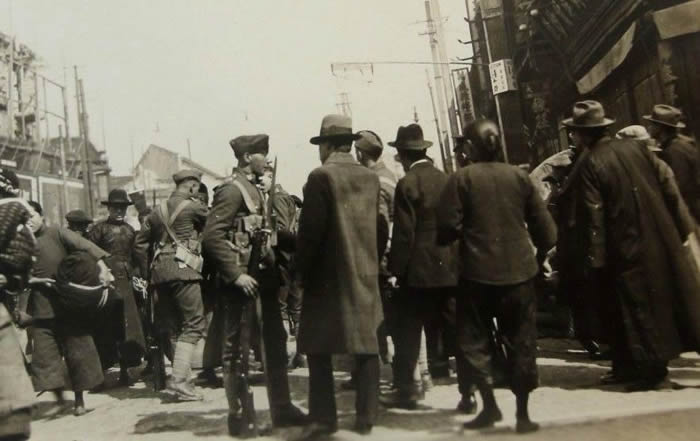
soldiers are looking for Communists

The first four campaigns failed because they were commanded by generals of varying ability and loyalty, because the government simultaneously had to deal with more serious revolts by dissident KMT generals, and because of Japan's attack on Manchuria and Shanghai (1931–32).

Meanwhile, Chiang consolidated his leadership and improved the central government's army with the help of German military advisers. He personally led the 700,000-strong army in the Fifth Campaign and adopted new strategies that were "70 percent political, 30 percent military."

Militarily, he emphasized good training and improved morale for his officers and soldiers. As they advanced, his men constructed forts and blockhouses that blockaded the Communist-ruled areas. The political aspect of his strategies stressed economic reform, rural reconstruction, and neighborhood organization for security.


These measures eliminated many of the abuses that had allowed the Communists to win the loyalty of the people of the contested region. The combination of military success and economic blockade effectively strangled the Communist-controlled land, reducing it to six counties by September 1934.

On October 2 the central Chinese Soviet government headed by Mao Zedong (Mao Tse-tung) and its main army under Zhu De (Chu Teh) decided to abandon Ruijin. They broke through the western sector of the blockade, where a general not loyal to Chiang had not completed building the blockhouses. Thus began the Long March.

Appeasement Era

Appeasement Era
Appeasement Era

In October 1925 British, French, Belgian, and Italian representatives met in Locarno, Switzerland, to settle postwar territory claims in eastern Europe and normalize diplomatic relations with Weimar Germany. Germany also sought to establish guarantees protecting its western borders as established by the Treaty of Versailles that ended World War I.

Under the Locarno Pact, Germany, France, and Belgium agreed not to attack each other, while Great Britain and Italy signed as guarantors to the agreement. As such, all parties pledged assistance if Germany, France, or Belgium took any aggressive action against any of them.

Additionally, Germany agreed with France, Belgium, Poland, and Czechoslovakia to handle any disputes diplomatically through the League of Nations, while France guaranteed mutual aid to Poland and Czechoslovakia in the event of a German attack.


Under the terms of the Treaty of Versailles, Germany was forced to disarm, lost all territorial gains, and had to pay reparations as part of the acceptance of guilt in starting the war. Germans resented the treaty, considering it far too harsh and demeaning.

Many blamed the treaty for compromising Germany's economy, so much so that by 1923 the Weimar Republic could not make the required reparation payments. The situation worsened when the Great Depression hit in the 1930s, heightening the already-bleak socioeconomic pressures of the country.

As a result, Germans faced a complete disintegration of their society, as a majority of citizens became disillusioned about the future of the country. Upon his ascension to the chancellorship in January 1933, Adolf Hitler sought changes to the treaty that would allow for German lebensraum (living space).

With that in mind, Hitler formally repudiated the Treaty of Versailles in March 1935, using it as both scapegoat and propaganda for the ills of the nation. He set about restructuring the economy and, more importantly, rearming the military in violation of the treaty.

Industrial production and civic improvements were expanded, the results of which were both positive and negative: The unemployment rate fell with continued arms production and construction projects, while inflation increased due to currency manipulation and deficit spending.

The German military (Wehrmacht) reintroduced conscription, which helped to lower the unemployment rate further, and reorganized to include a new navy, the Kriegsmarine, and an air force, the Luftwaffe—both of which were severe violations of Versailles.

Hitler made the argument that rearmament was a necessity for Germany's continued security. At the time, European leaders felt such allowances simply corrected certain wrongs that bitter victors had set in the aftermath of a brutal world war; thus, Germany faced no repercussions other than formal protests.

Neville Chamberlain holding the paper containing the resolution to commit to peaceful methods signed by both Hitler and himself on his return from Munich. He is showing the piece of paper to a crowd at Heston Aerodrome on 30 September 1938

When France and the Soviet Union signed a treaty of alliance in 1936, Hitler's aims became even more significant. In response to the Franco-Soviet treaty, Hitler pressed for the stationing of German troops in the Rhineland. In accordance with the Treaty of Versailles, the entire Rhineland area was demilitarized to serve as a buffer between Germany and France, Belgium, and Luxembourg.

By 1930 Allied forces had completely withdrawn under the terms of the treaty, which equally prohibited German forces from entering the area. Further, the Allies could reoccupy the territory if it was unilaterally determined that Germany had violated the treaty in any way.

France was not prepared militarily to dispute any claim over the territory without British aid. Great Britain could not provide such support. As a result, both countries had no choice but to allow Germany to retake the region.


Thus, a policy of appeasement toward Germany was officially born under British prime minister Stanley Baldwin (1935–37), though it had already begun under his predecessor, Ramsey McDonald (1929–35).

Guided by the growing pacifist movement, both Ramsey and Baldwin realized that national consensus did not favor military action. In spite of pressure from outspoken critics like Winston Churchill, who recognized the dangers of German rearmament, both were determined to keep the country out of war.

Hitler's ambitions grew greater. Unwilling to assist the Republican government, Baldwin initiated a pact of nonintervention with 27 countries, including Germany and Italy.

Despite being signatories, Hitler and Italy's Benito Mussolini, in violation of the agreement, sent weapons and troops to support General Francisco Franco and his nationalist forces. By December both countries were fully involved in the Spanish conflict, having agreed two months earlier to an alliance, known as the Axis, to solidify their positions in Europe.

Using the war as a test for its armed forces and methods, particularly the Luftwaffe and blitzkrieg tactics, Germany demonstrated how far its remilitarization efforts had advanced. On April 26, 1937, the town of Guernica came to symbolize and foreshadow the German advancements. German and Italian forces in a joint operation began a bombing campaign against the town.

The attack happened so swiftly that it appeared as one continuous assault, with no other intent than the complete decimation of the civilian population. However, several thousand refugees had come to the town in the wake of the war; by all estimates the number of dead stood near 1,700, consisting mainly of women, children, and elderly, with over two-thirds of the town in ruins.

Anschluss

As the Axis powers continued to lend support in Spain, Hitler forced his native Austria to unify politically (Anschluss) with Germany in March 1938. Despite the Treaty of Versailles's prohibition of union between Germany and Austria, again the Allies' response to the Anschluss went no further than formal diplomatic protests.

A month earlier, on February 12, Austrian chancellor Kurt Schuschnigg had met with the führer in Berchtesgaden, Bavaria. Hitler had demanded the ban on the Austrian Nazi Party be lifted and that they be allowed to participate in the government, or Austria would face military retaliation from Germany.

With little choice, Schuschnigg complied with the demands by appointing two Nazis to his cabinet, Arthur Seyss-Inquart and Edmund Glaise-Horstenau. He also announced a referendum to decide independence or union with Germany—a stall tactic aimed at preserving Austrian autonomy.

However, the gradual usurpation of authority by Schuschnigg's newly appointed ministers and pressure from Germany—in the form of an ultimatum from Hitler that threatened a full invasion—forced Schuschnigg to hand power over to Seyss-Inquart and the Austrian Nazi Party. When Hitler further threatened invasion, Miklas reluctantly acquiesced.

On March 12 the German Wehrmacht 8th Army entered Vienna to enforce the Anschluss, facing no resistance from the Austrians. Many Austrians gave their support to the Anschluss with relief that they had avoided a potentially brutal conflict with Germany. Others fled the country in fear of the Nazi seizure of power.

Austria was only the beginning. When Neville Chamberlain became prime minister of Great Britain in May 1937 he adhered to the policy of appeasement that his two predecessors had cultivated. He believed that the continued consent of changes to the Treaty of Versailles could prevent another war with Germany.

To that end, Chamberlain, France's Édouard Daladier, and Italy's Benito Mussolini met with Hitler in Munich, Germany, in September 1938 to settle a dispute over the German speaking Sudetenland, which both Czechoslovakia and Germany claimed.

Hitler claimed that the Czech government was mistreating Sudeten Germans in Czechoslovakia, despite no evidence of such treatment and adamant denials from government officials; the same argument was made for German minorities living in Hungary and Poland. Exploiting ethnic tensions as a pretext to gain a foothold in eastern Europe, Germany demanded the incorporation of the region into Nazi Germany.

The Allies urged the Czech government to comply. In what is known as the Munich Pact, the parties agreed on September 29, 1938, without Czech representation, to the transfer of the Sudetenland to German control. Terms of the agreement included the allowance of German settlements in the region, with Germany exacting no further claims of Czech lands.

Triumphant that the situation had been resolved and war resoundingly avoided, Chamberlain and Daladier returned to England and France, declaring that the peace had been preserved. Feeling abandoned by its allies, particularly France, Czechoslovakia had no choice but to capitulate to Hitler.

As German troops moved into the newly acquired territory, the Czech population fled to central Czechoslovakia. Six months later Germany violated the Munich agreement by invading Czechoslovakia itself. Despite an alliance with France and the Soviet Union, neither came to Czechoslovakia's aid. Hitler's main motivation for the invasion involved the seizure of Czech industrial facilities.

However, Hitler's intentions to invade Poland following the breakdown of negotiations over territorial concessions deemed it necessary that he eliminate Czechoslovakia first. Accordingly, on March 15, 1939, German forces entered the Czech capital of Prague, proclaiming the regions of Bohemia and Moravia as German protectorates.

Chamberlain and the Allied nations now faced a major international impasse. They had granted concessions to Hitler, with no repercussions when Germany violated the agreements. If Hitler were to continue that course of action, the Allies would find themselves in a difficult position in regard to other international commitments. In particular, both Great Britain and France pledged aid to Poland were Germany to invade it.

The scenario became a reality when Germany invaded Poland on September 1, 1939. In a final attempt to avert war Great Britain and France lodged formal warnings and diplomatic protests against the invasion, to no avail. As a result, notwithstanding the Soviet-German agreement, both countries were forced to declare war on Germany.